


Global Markets Rattled as Oil Prices Surge Above $100 Amid Middle East Tensions
Rising Energy Costs Spark Economic Concerns
The global economy found itself on shaky ground this week as oil prices climbed back above the psychologically significant $100-per-barrel mark, sending shockwaves through financial markets worldwide. This surge in energy costs came despite an unprecedented coordinated effort by international authorities to stabilize prices through massive releases of strategic oil reserves. The situation has created a perfect storm of economic uncertainty, with investors around the world grappling with the reality that geopolitical tensions in the Middle East continue to threaten global economic stability. The spike in oil prices represents more than just a number on trading screens—it signals potential increases in everything from gasoline at the pump to heating costs for homes and the price of goods transported across the globe. As Thursday’s trading sessions unfolded across different time zones, it became increasingly clear that markets were deeply concerned about the trajectory of events in the Middle East and their ripple effects on the broader global economy.
Unprecedented Reserve Release Fails to Calm Markets
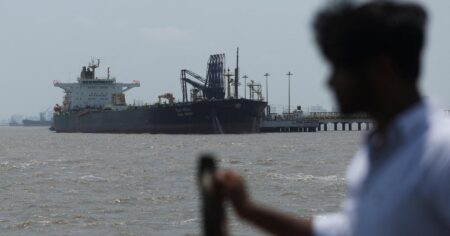
In what can only be described as an extraordinary intervention in global energy markets, the United States and its international partners announced a massive release of oil from strategic reserves in an attempt to keep prices under control. U.S. Energy Secretary Christopher Wright revealed on Wednesday that America would tap its Strategic Petroleum Reserve for 172 million barrels—a significant draw on reserves meant to protect the nation during emergencies. This move was coordinated with the International Energy Agency, an organization representing 32 member nations including the United States, which announced it would release a staggering 400 million barrels from collective reserves. This combined release represents one of the largest coordinated interventions in global oil markets in history, demonstrating just how seriously world leaders are taking the current crisis. However, despite the scale of this intervention, markets responded with skepticism. U.S. benchmark Brent crude, which serves as the international standard for oil pricing, was trading 5.3% higher at approximately $97 per barrel on Thursday, after actually touching $100.50 during Wednesday’s trading session. The fact that prices remained elevated despite such a massive injection of supply into the market speaks volumes about investor concerns regarding the ongoing conflict and its potential to disrupt oil production and shipping routes in one of the world’s most critical energy-producing regions.
Stock Markets Stumble Across Multiple Continents
The anxiety over Middle East tensions and rising oil prices translated directly into broad-based selling across global stock markets, with investors fleeing to safer assets amid the uncertainty. American market futures pointed to a difficult opening on Wall Street, with the future for the S&P 500 losing 0.4% and the Dow Jones Industrial Average future down 0.5% ahead of Thursday’s trading session. These declines suggested that American investors were bracing for continued volatility and economic headwinds. European markets, opening their trading day earlier, immediately reflected this pessimistic sentiment. Germany’s DAX, representing Europe’s largest economy, lost 0.4% to settle at 23,533.60 during Thursday trading. France’s CAC 40 index performed slightly worse, dropping 0.7% to 7,982.64, while Britain’s FTSE 100 sank 0.7% to 10,285.91. These losses across Europe’s major markets demonstrate how interconnected the global economy has become and how quickly concerns in one region can spread to affect investors thousands of miles away. The selling wasn’t confined to American and European markets—it was truly a global phenomenon that highlighted how modern financial markets are inextricably linked across borders and time zones.
Asian Markets Lead Global Decline
Asian markets, which closed their trading sessions on Thursday before European markets even opened, set the tone for what would become a globally difficult day for equity investors. Japan’s Nikkei 225, one of Asia’s most closely watched indices, closed down 1% at 54,452.96, reflecting deep concerns among Japanese investors about the implications of Middle East instability for their export-dependent economy. South Korea’s Kospi lost 0.5% to close at 5,583.25, while Hong Kong’s Hang Seng gave up 0.7% to close at 25,716.76. Even mainland China’s Shanghai Composite index couldn’t escape the downdraft, shedding 0.1% to close at 4,129.10. Australia’s S&P/ASX 200 suffered one of the region’s steepest declines, dropping 1.3% to close at 8,629.00. These widespread losses across Asian markets underscored a fundamental truth about the current geopolitical situation: when oil prices spike due to Middle East tensions, it affects economies around the world, regardless of their geographic location or specific economic circumstances. Asian nations, many of which are heavily dependent on imported oil to fuel their manufacturing sectors and keep their economies running, are particularly vulnerable to sustained periods of elevated energy prices.
Persistent Conflict Overshadows Presidential Assurances
What made Thursday’s market action particularly noteworthy was that it occurred despite repeated public assurances from President Trump that the conflict between the United States, Israel, and Iran would soon come to an end. Investors, it seems, have chosen to trust their own assessment of the situation on the ground rather than optimistic statements from political leaders. The ongoing tensions involve Iran’s attempts to disrupt oil supplies in the Middle East, a strategy that has historically proven effective at causing economic pain far beyond the immediate region of conflict. The fact that markets continued to sell off and oil prices remained elevated suggests that professional investors and traders see few signs that the situation will resolve itself quickly or peacefully. This disconnect between official government messaging and market sentiment creates its own form of uncertainty, as businesses and consumers struggle to determine whether they should prepare for a prolonged period of elevated energy costs or whether relief might be just around the corner. The market’s verdict appears clear: skepticism reigns, and until concrete steps toward de-escalation are visible on the ground, investors will continue to price in risk and uncertainty.
Broader Economic Implications and Future Outlook
The current situation presents serious challenges for the global economy at a particularly sensitive time. Higher oil prices act like a tax on economic activity, reducing the purchasing power of consumers and increasing costs for businesses across virtually every sector. When people spend more to fill their gas tanks, they have less money available for other purchases. When businesses face higher energy and transportation costs, they must choose between accepting lower profit margins or passing those costs along to customers through higher prices—potentially fueling inflation just as many central banks thought they had that problem under control. The combination of geopolitical uncertainty and rising energy costs could force policymakers to make difficult choices about whether to focus on supporting economic growth or fighting inflation, two goals that can sometimes be in conflict with each other. As this situation continues to unfold, businesses, investors, and ordinary citizens around the world are watching closely to see whether diplomatic efforts can bring about a resolution to the tensions in the Middle East, whether the massive release of strategic oil reserves will eventually have its intended effect on prices, and whether the global economy can weather this storm without sliding into a more serious downturn. For now, the message from global markets is clear: uncertainty is high, concerns are real, and investors are positioning themselves defensively until they see convincing evidence that the situation is improving rather than deteriorating further.