


Federal Judge Orders Restoration of Voice of America Operations
Court Ruling Puts Hundreds of Employees Back to Work
In a significant legal victory for press freedom and government accountability, a federal judge has ordered the Trump administration to bring Voice of America back to full operations after it had been effectively dismantled over the past year. U.S. District Court Judge Royce C. Lamberth issued the ruling on Tuesday, directing the U.S. Agency for Global Media to develop a comprehensive plan within one week to restore the broadcaster’s normal functioning. The decision affects hundreds of employees who have been sitting idle on administrative leave since President Trump signed an executive order to shut down large portions of the organization. Voice of America had been limping along with only a skeleton crew maintaining minimal operations, a shadow of its former self as one of America’s most important international broadcasting services.
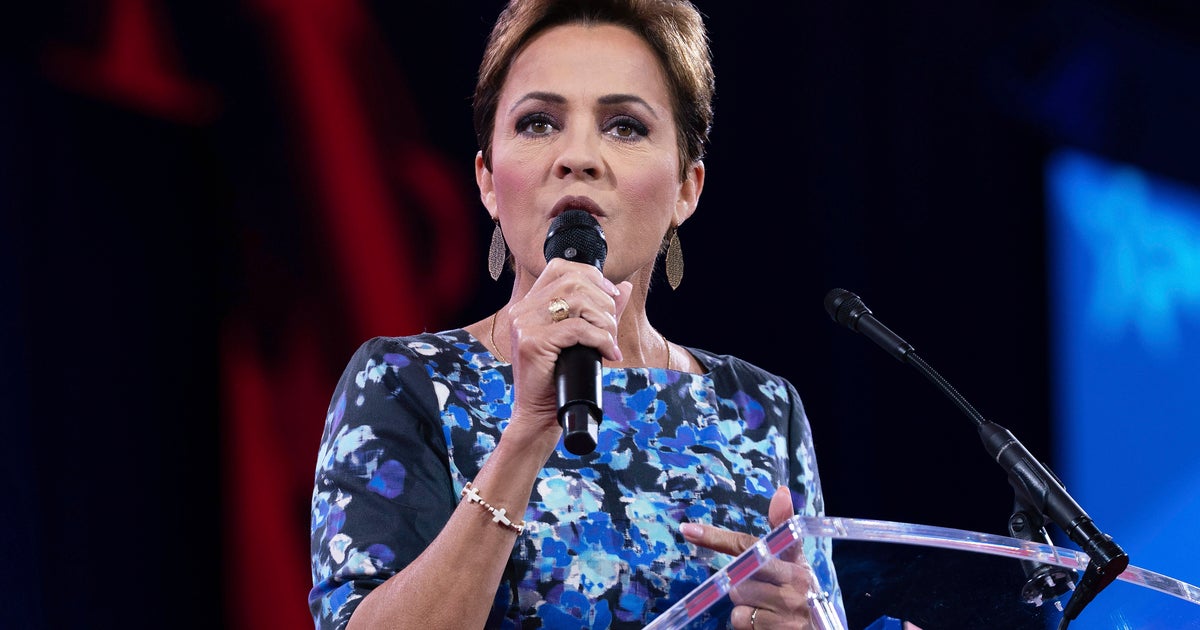
The legal battle reached a critical turning point when Judge Lamberth previously ruled that Kari Lake, Trump’s appointee to lead the agency, lacked the legal authority to implement the sweeping changes she had ordered at VOA. Lake never received Senate confirmation for her position, which meant her actions to dismantle the organization were legally questionable from the start. In his latest ruling, Judge Lamberth went further by examining the specific actions Lake took in response to Trump’s executive order, finding them fundamentally flawed. The administration had sidelined an astonishing 1,042 of VOA’s 1,147 employees and attempted to shrink the entire operation down to what they claimed was the “statutory minimum” required by Congress. This drastic downsizing forced Voice of America to severely cut back its programming across the globe, silencing American voices in dozens of countries and languages where independent journalism is desperately needed.
Judge Condemns Administration’s Actions as “Arbitrary and Capricious”
Judge Lamberth didn’t mince words in his assessment of the administration’s handling of Voice of America. He characterized the moves as “arbitrary and capricious,” using legal terminology that essentially means the government acted without proper justification or rational basis. The judge found that the administration completely failed to consider federal laws that specifically outline what languages Voice of America must broadcast in and which regions of the world it must serve. These aren’t minor administrative details—they’re congressional mandates that carry the force of law. In his written decision, Judge Lamberth was particularly critical of the lack of reasoning behind the administration’s actions, stating bluntly: “Defendants have provided nothing approaching a principled basis for their decision.” This language suggests the judge found the government’s explanations for gutting VOA to be not just inadequate, but almost nonexistent.
The legal framework surrounding Voice of America exists for important reasons. Congress established specific requirements for the broadcaster’s operations because VOA serves a unique and vital role in American foreign policy and the global promotion of press freedom. The judge’s ruling reinforces the principle that executive orders cannot simply override congressional mandates without proper legal justification. When administrators make decisions that fundamentally alter how a congressionally-mandated agency operates, they need to show they’ve carefully considered the legal requirements and have sound reasons for their actions. In this case, the Trump administration apparently failed to meet even this basic standard of governmental decision-making.
Political Fallout and Leadership Changes
The political implications of this case continue to unfold. Kari Lake, who has been a controversial figure throughout this saga, publicly denounced Judge Lamberth’s initial ruling on March 7th and promised that the decision would be appealed. However, the situation has become more complicated since then. President Trump has now nominated Sarah Rogers, who currently serves as undersecretary of state for public diplomacy, to take over leadership of the U.S. Agency for Global Media. Importantly, Rogers’ nomination requires Senate approval—the very step that was skipped with Lake’s appointment, which ultimately undermined the legal basis for her actions. This change in leadership strategy suggests the administration may have learned from its earlier misstep, though it remains to be seen whether Rogers will continue the same policies if confirmed, or whether this legal setback will prompt a different approach to Voice of America’s mission.
The failure to secure Senate confirmation for Lake now appears to have been a critical error that has cost the administration dearly in its efforts to reshape Voice of America. Senate confirmation isn’t just a formality—it’s a constitutional check on executive power that ensures key government officials have been properly vetted and have sufficient support to carry out their duties. By bypassing this process, the administration left Lake’s actions vulnerable to exactly the kind of legal challenge that has now succeeded. Whether the appointment of Rogers represents a genuine change in approach or simply a more legally careful attempt to achieve the same goals remains an open question that will likely be answered in the coming months.
Voices from the Inside: VOA Employees Respond
The human impact of this legal battle becomes clear when hearing from the journalists and staff who have been caught in limbo for the past year. Patsy Widakuswara, who serves as Voice of America’s White House bureau chief and was one of the plaintiffs in the lawsuit seeking to restore the broadcaster, expressed deep gratitude for Judge Lamberth’s decision. Her response captured both the relief felt by VOA employees and the enormity of the challenge ahead. “We are eager to begin repairing the damage Kari Lake has inflicted on our agency and our colleagues, to return to our congressional mandate, and to rebuild the trust of the global audience we have been unable to serve for the past year,” she told The Associated Press. These aren’t just abstract institutional concerns—they represent a year of professional uncertainty for more than a thousand employees and a year of silence where American voices should have been heard around the world.
Widakuswara’s comments also acknowledge that the road ahead won’t be easy. “We know the road to restoring VOA’s operations and reputation will be long and difficult,” she admitted. Rebuilding an organization after such disruption takes more than just bringing people back to their desks. Trust must be reestablished with audiences who may have turned to other sources. Professional relationships with journalists, sources, and partner organizations around the world need to be rekindled. Technical infrastructure and programming schedules must be reconstructed. Perhaps most importantly, Widakuswara emphasized a core principle that lies at the heart of this entire controversy: “We hope the American people will continue to support our mission to produce journalism, not propaganda.” This distinction—between journalism and propaganda—represents the fundamental divide in how different people view Voice of America’s proper role in the world.
The Mission and History of Voice of America
Understanding what’s at stake in this legal battle requires appreciating Voice of America’s unique history and mission. The organization was founded during World War II as a way to broadcast truthful information to people living under authoritarian regimes where independent journalism didn’t exist. For more than eight decades, VOA has transmitted news coverage to countries around the world, often serving as the only source of uncensored information for people living under oppressive governments. Before President Trump’s executive order disrupted its operations, Voice of America was broadcasting in 49 different languages, reaching an estimated 362 million people across the globe. That’s an audience larger than the entire population of the United States, spread across every continent and representing countless cultures and communities.
The scope of VOA’s mission reflects America’s commitment to press freedom and the free flow of information as fundamental values worth promoting globally. In countries where journalists face imprisonment, torture, or death for reporting truthfully, Voice of America has provided an alternative—a news source backed by American credibility and protected by its status as a U.S. government broadcaster. The organization operates under a congressional charter that requires it to present accurate, objective, and comprehensive news while also presenting a balanced view of American society and policies. This balance—serving American interests while maintaining journalistic integrity—has always created a certain tension in VOA’s mission, but it’s a tension that the organization has historically managed by prioritizing factual reporting over propaganda. The current controversy essentially revolves around whether that tradition should continue or whether VOA should become more explicitly an instrument of government messaging, regardless of which party controls the White House.