


Justice Department Admits Major Error in Immigration Courthouse Arrest Policy
A Significant Legal Mistake Comes to Light
In a stunning admission that has sent shockwaves through the immigration law community, the Justice Department this week acknowledged to a federal judge in New York that it had been fundamentally misrepresenting the legal basis for one of the Trump administration’s most controversial immigration enforcement practices. The department confessed that it had been incorrectly citing an internal Immigration and Customs Enforcement memo to justify the arrests of immigrants inside immigration courthouses—a practice that has affected thousands of people simply trying to attend their legally required court hearings. This wasn’t a minor technicality or a subtle misinterpretation of complex legal language. Instead, Justice Department lawyers revealed in a letter submitted on Tuesday that they had completely misunderstood which facilities a May 2025 ICE memo applied to, citing it as legal justification for arrests in immigration courts when the memo actually didn’t cover those venues at all. The government’s attorneys attributed this significant oversight to what they called a “regrettable error” made by an “agency attorney,” presumably someone working within ICE, though they didn’t provide specific details about how such a fundamental mistake could have gone unnoticed for so long during active litigation.
The Impact on Ongoing Legal Challenges
The admission carries profound implications because it came after months of costly litigation and after U.S. District Court Judge Kevin Castel had already issued a ruling that relied, at least partially, on the very memo that the Justice Department now admits was improperly cited. In their letter to Judge Castel, Justice Department lawyers expressed deep regret that the error emerged “at this late stage, after the parties have expended significant resources and time to litigate this case and this Court has carefully considered Plaintiffs’ challenge to the 2025 ICE Guidance.” This timing is particularly problematic because Judge Castel had largely denied a motion from advocacy groups challenging the courthouse arrests back in September, meaning his decision was influenced by legal arguments that the government now concedes were based on faulty information. Despite acknowledging that Judge Castel relied in part on the incorrectly cited May 2025 ICE memo when making his ruling, Justice Department lawyers attempted to minimize the damage by insisting in their letter that this error doesn’t undermine their other legal arguments supporting the legality of conducting arrests inside immigration courts. However, legal experts and advocacy groups are questioning whether a ruling can stand when one of its supporting pillars has been revealed to be built on misinformation, whether intentional or accidental.
The Human Cost of the Policy
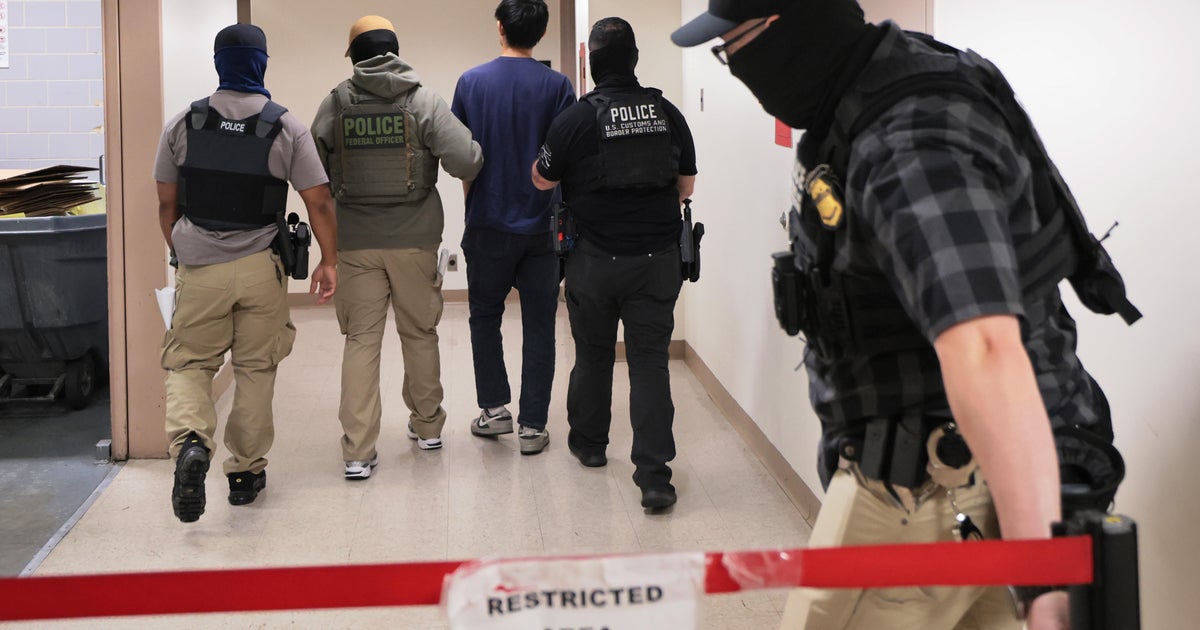
Behind the legal technicalities lies a human story that affects real people trying to navigate an already complicated and often frightening immigration system. The arrests at immigration courthouses, which have been a central component of President Trump’s aggressive crackdown on illegal immigration, have drawn sharp criticism from immigrant advocates who argue that the practice fundamentally undermines the integrity of the legal process itself. These critics point out that the policy effectively punishes people who are actually trying to comply with immigration law by showing up to their required court hearings—creating a cruel catch-22 where immigrants must choose between attending legally mandatory proceedings and risking immediate arrest and detention. According to data analyzed by CBS News last year, Manhattan’s immigration courts experienced more of these arrests than any other major city in America, with plainclothes federal agents routinely stationed in courthouse hallways, waiting to apprehend asylum-seekers and other immigrants as they left their hearings. The typical pattern involves an immigration judge granting the government’s request to dismiss deportation proceedings against an individual, while ICE officers wait nearby in the building to immediately take that person into custody. Once detained, these individuals are typically transferred into an expedited removal process and often shipped to detention facilities that may be hundreds of miles away from their families, lawyers, and support networks.
The Government Doubles Down Despite the Error
Despite the embarrassing admission of error, the Department of Homeland Security, which oversees ICE, made clear on Thursday that the policy itself isn’t changing. In a defiant statement, the department declared, “There is no change in policy,” and emphasized that “we will continue to arrest illegal aliens at immigration courts following their proceedings.” The statement went on to frame the arrests as simple common sense, arguing, “It is common sense to take them into custody following the completion of their removal proceedings. Nothing prohibits arresting a lawbreaker where you find them.” This framing, however, glosses over the complex reality that many people arrested at immigration courts haven’t yet been found to be “lawbreakers” in any final sense—they’re in the middle of legal proceedings that are supposed to determine their immigration status. The government’s steadfast commitment to continuing the arrests despite the acknowledged legal error suggests that officials view the courthouse arrest policy as too important to their broader immigration enforcement strategy to abandon, regardless of questions about whether the original legal justification was sound. This determination to proceed also highlights a fundamental tension in how different parties view immigration courts: the government increasingly treats them as convenient locations to find and arrest people it wants to deport, while advocates argue they should be neutral forums where people can seek legal remedies without fear of immediate detention.
Judicial Response and Demands for Transparency
Judge Castel’s response to the Justice Department’s admission suggests he takes the error seriously and wants to understand exactly how it happened. On Thursday, he issued an order requiring the Justice Department to preserve all records related to both the case and the May 2025 memo that was incorrectly cited, including any communications between department lawyers and ICE officials. This preservation order is significant because it suggests the judge may want to investigate whether the error was truly an innocent mistake or whether there might have been some level of awareness within the government that the memo was being misapplied. By specifically requiring preservation of communications between Justice Department lawyers and ICE, Judge Castel has opened the door to potentially discovering whether anyone raised concerns about the memo’s application that were ignored or dismissed. Such document preservation orders are often the first step in a deeper inquiry into what went wrong and who knew what and when. The New York Civil Liberties Union, which filed the original lawsuit challenging ICE’s courthouse arrests on behalf of several advocacy groups, submitted its own letter to Judge Castel on Wednesday, arguing that the federal government’s admission has “far-reaching” consequences that extend well beyond the courtroom.
Looking Forward: Implications for Immigration Enforcement and Justice
The broader context makes this error even more concerning for those worried about the state of immigration justice in America. The immigration courts where these arrests have been taking place were established in 1952 and operate under the Executive Office for Immigration Review (EOIR), which is controlled by the Justice Department rather than being part of an independent judicial branch. This structure means the Attorney General has the power to override immigration judges’ decisions and to hire or fire judges, creating inherent concerns about judicial independence. These concerns have intensified dramatically since the start of the Trump administration, with approximately 100 immigration judges being fired nationally as of December, while nearly an equal number have taken early retirement options, resigned, or otherwise left their positions during the same period. This massive turnover in the immigration judiciary, combined with the policy of arresting people at their court hearings, has created what critics describe as a crisis of confidence in the immigration court system. The NYCLU noted in its letter to Judge Castel that “in the months since the Court relied on the government’s representation to deny Plaintiffs preliminary relief, Defendants have continued arresting noncitizens at their immigration court hearings, resulting in their detention—often in facilities hundreds of miles away.” This means that while the government now admits it was citing incorrect legal authority, the policy continued to separate families and disrupt lives based on that faulty justification. The case raises fundamental questions about government accountability, the treatment of immigrants, and whether people can trust that they’ll receive fair hearings in immigration courts without facing immediate arrest simply for showing up.