

Tragic Collision at LaGuardia Airport: A Comprehensive Look at the Devastating Incident
The Crash That Shook New York’s LaGuardia Airport
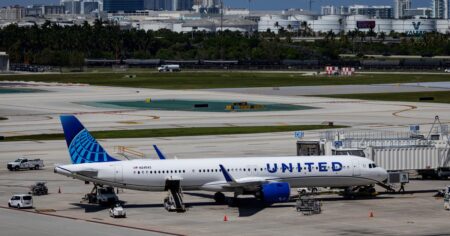
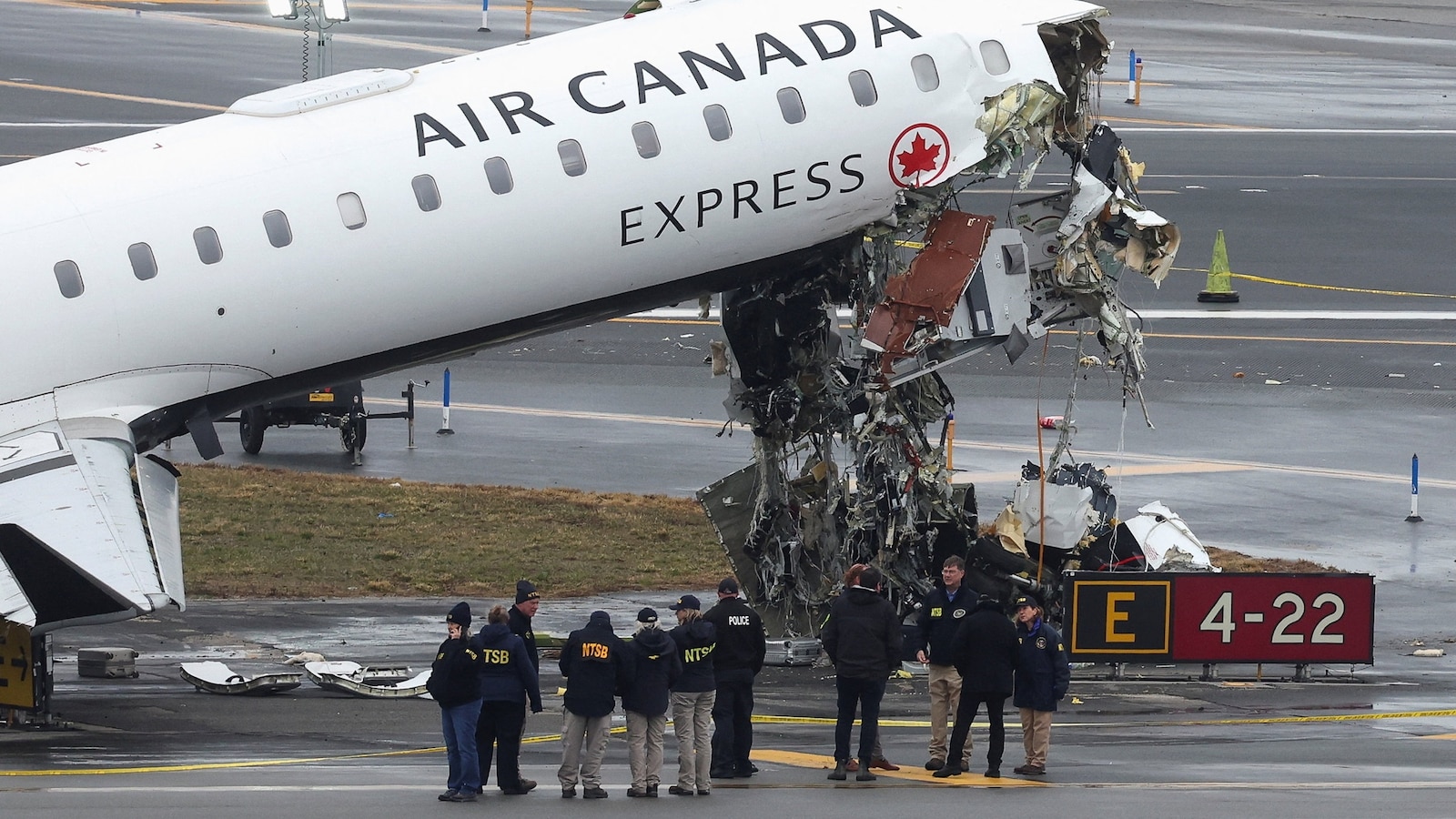
Late Sunday night, around 11:45 p.m., what should have been a routine landing turned into a devastating tragedy at New York City’s LaGuardia Airport. An Air Canada Express regional jet, operated by Jazz Aviation and carrying 72 passengers and four crew members from Montreal, collided with a Port Authority rescue-and-firefighting vehicle on the runway. The impact was catastrophic, completely demolishing the front of the aircraft and resulting in the deaths of both the pilot and co-pilot—two young men just beginning their aviation careers. The collision sent shockwaves through the aviation community and forced the complete closure of one of the nation’s busiest airports. At least 43 people were rushed to local hospitals with injuries, including two Port Authority officers who were in the firefighting vehicle. This marked LaGuardia’s first fatal incident in 34 years, occurring eerily on the exact anniversary of the airport’s last deadly crash. Port Authority Executive Director Kathryn Garcia confirmed that all passengers were accounted for following the accident, including an unaccompanied minor who was safely reunited with their family.
How the Collision Unfolded
Understanding how this tragedy occurred requires piecing together the sequence of events that led to the devastating collision. Air Canada Flight 8646 had just touched down safely after its journey from Montreal when everything went terribly wrong. The Port Authority firefighting vehicle wasn’t simply driving around the airport—it had been dispatched to respond to a completely separate emergency involving another aircraft that had experienced an aborted takeoff. Audio recordings reveal that the firefighting vehicle had properly requested and received clearance from air traffic control to cross Runway 4 at taxiway Delta. However, moments after that permission was granted, the situation deteriorated rapidly. Air traffic controllers can be heard on the recordings urgently telling the vehicle to stop multiple times, their voices growing increasingly frantic in the seconds before impact. According to preliminary data from FlightRadar24, the Air Canada jet was traveling at a ground speed between 93 and 105 miles per hour when it struck the fire truck. The force of the collision at that speed explains the complete destruction of the aircraft’s front section and the tragic loss of life in the cockpit. Weather conditions may have also played a role, as officials noted there was mist and fog at LaGuardia at the time of the crash, potentially reducing visibility for both pilots and ground personnel.
The Immediate Aftermath and Emergency Response
The hours following the collision were chaotic as emergency responders mobilized to care for the dozens of injured passengers and assess the full extent of the damage. LaGuardia Airport was immediately shut down completely, grounding all flights and leaving thousands of travelers stranded. The airport remained closed overnight and throughout Monday morning, finally reopening at 2 p.m. on Monday afternoon with limited operations. However, passengers shouldn’t have expected business as usual—the airport could only operate with a single runway while investigators worked at the crash site, meaning significant delays and cancellations continued throughout the week. Major airlines responded by waiving rebooking fees and issuing travel alerts to help affected passengers make alternative arrangements. The runway where the collision occurred was expected to remain completely closed until 7 a.m. Eastern Time on Friday, giving investigators nearly a full week to document and examine every piece of evidence. Terminal screens displayed endless lists of canceled flights as travelers waited in crowded terminals, many facing significant disruptions to their travel plans. The two pilots who lost their lives became the focus of mourning within the aviation community. While their identities weren’t immediately released, FAA Administrator Bryan Bedford described them as young men at the beginning of promising careers, calling their deaths “an absolute tragedy” that resonated deeply with pilots and aviation professionals nationwide.
The Investigation Takes Shape
Within hours of the collision, the National Transportation Safety Board (NTSB) mobilized its investigative teams to begin the painstaking work of determining exactly what went wrong. NTSB Chair Jennifer Homendy provided crucial updates during a press briefing Monday evening, outlining the extensive evidence-gathering process underway. Investigators successfully retrieved both the cockpit voice recorder and the flight data recorder from the damaged aircraft—these “black boxes” would prove crucial to understanding the final moments before impact. The recorders were immediately transported to NTSB laboratories in Washington, D.C., where specialists began their analysis. Early reports confirmed that the cockpit voice recorder had not been damaged in the collision and would provide investigators with audio from inside the cockpit. The flight data recorder was scheduled for examination on Tuesday, where technicians would extract detailed information about the aircraft’s speed, altitude, engine performance, and control inputs. Beyond the black boxes, investigators collected surveillance video from airport cameras that captured the collision from multiple angles. The runway itself became a massive crime scene of sorts, with debris scattered across a wide area. Homendy emphasized that every piece of that debris represented potential evidence that needed to be carefully documented before removal. Teams from Air Canada and Jazz Aviation also traveled to New York to participate in the investigation, and Canadian authorities joined the effort since the aircraft was operated by a Canadian carrier, though the NTSB maintained lead investigative authority since the accident occurred on U.S. soil.
Questions About Air Traffic Control and Safety Protocols
As the investigation progressed, attention naturally turned to the air traffic control operations at LaGuardia and whether proper protocols were followed. Transportation Secretary Sean Duffy addressed staffing concerns, revealing that LaGuardia’s air traffic control was operating with 33 certified controllers and seven in training, slightly below the target of 37 controllers. However, Duffy characterized the facility as “very well-staffed,” though he notably didn’t specify exactly how many controllers were working during the late-night shift when the collision occurred. The NTSB confirmed it was working to verify the precise number of controllers on duty at the time. The audio recordings raised critical questions about communication and decision-making in those final seconds. Why was the firefighting vehicle cleared to cross an active runway? Did the controllers have full visibility of both the landing aircraft and the ground vehicle? Why was the stop command issued so late, and did the vehicle operators hear it in time to react? These questions would take weeks or months to answer definitively. The visibility conditions—mist and fog—added another layer of complexity to the investigation. Did weather reduce the pilots’ ability to see the vehicle on the runway ahead? Did ground personnel have adequate visibility to assess the danger? New York City Mayor Zohran Mamdani pledged that investigators “will not rest until the conclusion of this investigation,” reflecting the public’s demand for answers and accountability. The incident also raised broader concerns about runway safety at busy airports and whether existing protocols adequately prevent ground collisions during complex operations involving multiple aircraft and emergency vehicles.
Looking Forward: Industry Response and Safety Implications
The collision sent ripples throughout the aviation industry, with airlines and airport authorities examining their own safety procedures in light of the tragedy. Air Canada CEO Michael Rousseau released a video message expressing the airline’s sorrow and acknowledging the many unanswered questions surrounding the incident. “We know this is a difficult day for everyone,” Rousseau said, adding that while many questions remained, the circumstances were still being assessed. He emphasized that Air Canada’s immediate priority was caring for the passengers, crew members, and their families during this devastating time. Canadian Prime Minister Mark Carney also weighed in, calling the collision “deeply saddening” and confirming that Canadian officials were working closely with their U.S. counterparts on the investigation. His thoughts, he said, were with the victims, their families, and everyone affected by the tragedy. The incident inevitably sparked conversations about runway safety technology and whether additional safeguards could prevent similar accidents in the future. Many major airports have implemented ground radar systems and runway status lights designed to prevent runway incursions, but questions remained about whether such systems were active at LaGuardia or whether they could have prevented this particular collision. The coming weeks and months would bring a comprehensive examination of every factor that contributed to the crash—human error, mechanical systems, communication protocols, weather conditions, and airport design. The families of the two young pilots faced unimaginable grief, having lost loved ones in a profession that, statistically speaking, remains one of the safest forms of transportation. For the dozens of passengers who survived with injuries, both physical and psychological recovery lay ahead. The aviation industry would ultimately learn from this tragedy, as it has from past accidents, implementing new safety measures designed to ensure that such a devastating collision never happens again. But for now, the immediate focus remained on supporting those affected and uncovering the truth about what went wrong on that foggy night at LaGuardia Airport.