


A Family’s Trauma: Five-Year-Old Liam’s Story After ICE Detention
The Lasting Scars of a Child Caught in Immigration Enforcement
In Minneapolis, a heartbreaking story continues to unfold months after images of a five-year-old boy in a blue bunny hat and school backpack being detained by Immigration and Customs Enforcement shocked the world. Liam Conejo Ramos, now back home with his family, carries invisible wounds that his parents say may take years to heal. In their first in-depth interview since the January incident, Adrián Conejo Arias and Erika Ramos shared the painful reality of watching their once-happy child struggle with trauma. Their story represents not just one family’s ordeal, but raises profound questions about the human cost of immigration enforcement policies, particularly when young children become collateral damage in a system designed for adults.
The detention of Liam and his father on January 20th became a flashpoint in America’s ongoing immigration debate, reigniting conversations about the balance between border security and human dignity. What happened that day in Minnesota wasn’t just a policy matter or a political talking point—it was a terrifying experience for a kindergartener that has fundamentally changed who he is. Adrián Conejo Arias explains that his son now requires regular psychological counseling, something the family never imagined would be necessary for such a young child. “As parents, it worries us a lot that he’s no longer as he was before and we’re worried this could last a long time,” Conejo Arias said through translation during the Sunday interview. “It does worry us that this will not heal quickly.” These aren’t abstract concerns about future possibilities—they’re the daily reality of parents watching their child struggle with experiences no five-year-old should have to process.
A Child Changed: The Psychological Impact of Detention
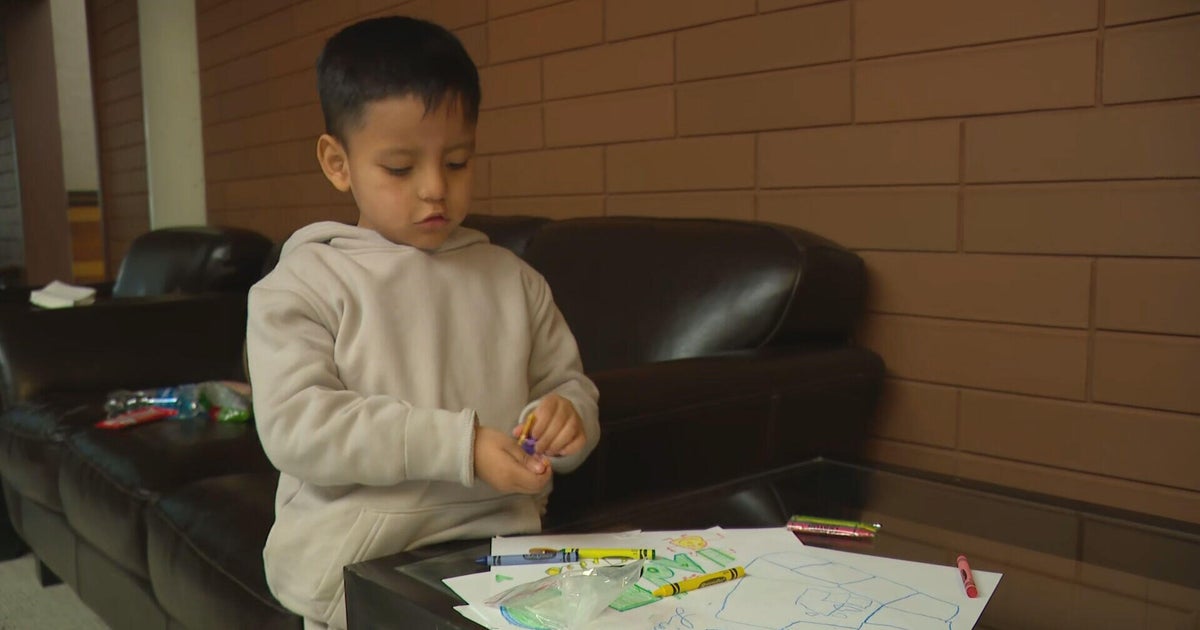
The transformation in Liam’s behavior paints a disturbing picture of childhood trauma. Erika Ramos, his mother, describes a boy who is fundamentally different from the playful, happy child he was before January. The changes manifest in heartbreaking ways throughout his daily life. At school, where he once eagerly participated and played with friends, Liam now withdraws, refusing to attend certain classes or engage with other children. The hypervigilance—a classic trauma response—means he’s constantly on alert, unable to relax into the carefree existence that should define childhood. His mother notes he’s more prone to acting out and behavioral problems, responses that mental health experts would recognize as a traumatized child’s way of expressing feelings too complex and frightening to articulate.
Perhaps most telling is Liam’s reaction to seeing police officers in his community. “He sees police officers, and he says, ‘It’s ICE, Mommy,'” Erika Ramos shared. This single statement reveals how profoundly the experience has altered his perception of safety and authority. At an age when children should be learning to trust the adults and institutions around them, Liam has learned fear instead. When asked what scares him most, the five-year-old’s answer was simple and devastating: “la inmigración”—the term Spanish speakers use for federal immigration agents. His answer demonstrates that the two weeks he spent in an ICE holding facility in Texas have created a lasting imprint that continues to shape his emotional world. The family is now trying to help him process these experiences through professional psychological care, but healing from such trauma is neither quick nor guaranteed, especially for someone so young.
The Detention and Its Immediate Aftermath
The events of January 20th unfolded during Operation Metro Surge, a massive deployment of federal immigration agents in the Minneapolis area that drew national attention and criticism. ICE agents took Liam and his father into custody in an operation that the agency said targeted Conejo Arias for being in the U.S. illegally. The images and videos of the arrest—showing a small child in winter clothes and a backpack being swept into the immigration enforcement system—quickly spread across social media and news outlets worldwide. ICE officials claimed that Conejo Arias had tried to evade arrest and abandoned his son, allegations the father vehemently denies. “It’s not true what people are saying,” he insisted during the interview. When asked directly whether he would ever abandon Liam, Conejo Arias was unequivocal: “I never did and never would.”
The agency also stated that they attempted to release Liam to his mother’s care, but that she refused to take him. Erika Ramos explains her impossible position that morning: she didn’t open the door because she feared being detained herself, leaving her other son, 13-year-old Tadeo, who was still at school, without any parent. She believed ICE was using Liam as “bait” to arrest her as well—a calculation that forced her to make a choice no parent should face. Father and son were then transported to the Dilley family detention center in Texas, where they spent two weeks among other detained families. Conejo Arias described the experience as “horrible,” citing inadequate medical care and food that made Liam and other detainees sick. For Ramos, left behind in Minnesota, the separation was agonizing. “The most difficult thing was I couldn’t do anything,” she said through tears. “My desperation was to go and get them out, because I really did not understand why.”
The Legal Battle and Uncertain Future
After two weeks in detention, Liam and his father were released following a powerful rebuke from a federal judge who minced no words in criticizing the government’s actions. The judge’s ruling stated that their detention had its “genesis in the ill-conceived and incompetently-implemented government pursuit of daily deportation quotas, apparently even if it requires traumatizing children.” This scathing assessment acknowledged what many observers had concluded: that the pursuit of enforcement numbers had taken precedence over the wellbeing of a young child. However, the judge’s order did not end the family’s legal troubles. Despite being physically reunited in Minneapolis, the family remains in serious legal jeopardy, living under the constant threat of a second detention and ultimate deportation.
The federal government has continued its pursuit of the family’s removal from the United States, recently terminating their asylum case and appealing the very court order that secured Liam and his father’s release from ICE custody. The Department of Homeland Security issued a statement asserting that the family had been ordered deported by an immigration judge after receiving “full due process,” and urged parents in similar situations to voluntarily deport themselves alongside their children. The family’s attorney, Danielle Molliver, warns that if the appeal of their asylum case termination fails, deportation is highly likely. Even more concerning, if the Justice Department succeeds in suspending the lower court order, the family could face detention by ICE once again—a possibility that haunts Conejo Arias and represents his greatest fear beyond his concern for his son’s mental health.
The family’s immigration journey began in 2023 when they entered the United States with government permission through the CBP One program, a Biden administration initiative that created a legal pathway for asylum-seekers. This detail is crucial to understanding their sense of injustice—they didn’t cross the border illegally or evade authorities, but rather used an official government program designed specifically for people in their situation. However, when President Trump returned to the White House, his administration immediately shut down the CBP One program, effectively pulling the rug out from under thousands of families who had entered the country believing they were following the proper legal channels. “I think it was an injustice that they did that to us, when in reality we were doing everything right,” Conejo Arias said, expressing the confusion and frustration of someone who tried to navigate the system correctly only to find the rules changed retroactively.
Broader Context and Human Cost
The detention of Liam and his father occurred during a particularly intense period of immigration enforcement that drew criticism from across the political spectrum. Operation Metro Surge, the campaign that led to their arrest, was eventually scaled back after ICE and Border Patrol agents killed two U.S. citizens and Minneapolis residents—Renee Good and Alex Pretti—triggering bipartisan backlash even from lawmakers who typically support strong border enforcement. These deaths highlighted concerns that the aggressive pursuit of immigration targets was leading to situations where insufficient care was taken to verify identities, assess threats, or consider proportionality in enforcement actions. Liam’s case, while not resulting in physical harm, represented a different kind of damage—the psychological trauma inflicted on a child who became entangled in an enforcement system designed without adequate consideration for the vulnerability of young children.
The family’s story also illustrates the precarious position of asylum-seekers who entered under programs that were later eliminated. Thousands of families used the CBP One system in good faith, believing they were establishing a legal presence in the United States while their asylum claims were processed. The subsequent cancellation of the program left them in a legal limbo—they had followed the rules as they existed at the time, but now faced deportation as those rules were erased. For the Conejo Ramos family, now expecting another child, the uncertainty is overwhelming. Erika Ramos, pregnant with another boy, said she longs for “peace” and the chance for her family to simply live and work in the United States without constantly looking over their shoulders, wondering when ICE might come for them again. While she’s grateful her family is physically together again, she acknowledges that their lives have been fundamentally altered since the detention—the sense of security they once had, however tentative, is gone.
As their legal case continues through the courts and their young son works through his trauma in therapy sessions, the Conejo Ramos family represents countless others caught between changing policies, enforcement priorities, and a system that often seems to view people as case numbers rather than human beings with children who will carry these experiences for the rest of their lives. Whether Liam will eventually heal from his ordeal remains uncertain, but what is clear is that the consequences of those two weeks in detention will likely echo through his childhood and perhaps beyond, a lasting reminder of the human cost when immigration policy is implemented without adequate safeguards for the most vulnerable among us.