



Illinois Mom Issues Urgent Warning After Son’s Sensory Toy Explodes, Causing Severe Burns
A Frightening Incident That Changed Everything
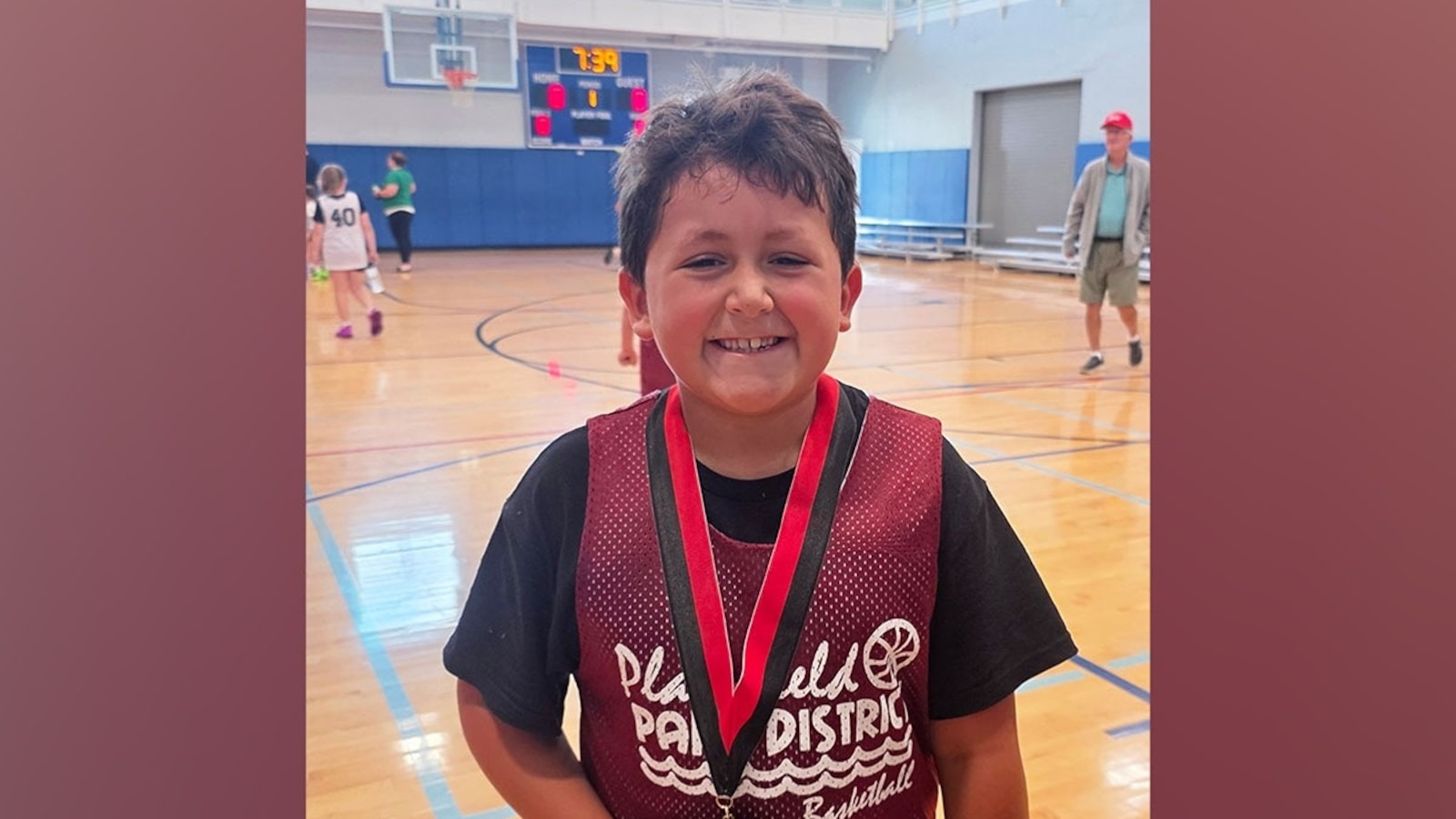
Whitney Grubb never imagined that a popular children’s sensory toy would land her 9-year-old son Caleb Chabolla in a hospital burn center with serious injuries. The Illinois mother is now on a mission to warn other parents about the dangers lurking in what seemed like an innocent viral trend. On January 20th, Caleb decided to warm up his NeeDoh Nice Cube—a squishy sensory toy designed for stress relief—in the microwave for approximately 40 seconds. What happened next was every parent’s nightmare. The toy exploded after Caleb removed it from the microwave, spraying scorching hot gel-like material across his face and hands, leaving him with painful second-degree burns that required specialized treatment at a burn center.
Speaking with ABC News, Grubb explained her motivation for sharing their traumatic experience publicly: “My main goal with this is just to get the warning out about the product and the challenge that’s going on and show it to your kids. This is what can happen if you try some of these silly things that some children unfortunately have gotten hurt with.” As a mother of three, Grubb understands the curiosity that drives children to experiment and try new things, especially when they see their friends or online influencers doing the same. However, she never anticipated that a seemingly harmless toy could cause such devastating injuries to her son, and she wants to ensure that no other family has to endure what they went through.
The Dangerous Social Media Challenge Behind the Injury
The incident wasn’t simply a case of childhood curiosity gone wrong—it was connected to a concerning trend spreading through social media platforms. Grubb revealed that while Caleb initially got the idea to microwave his NeeDoh Nice Cube from a friend, numerous videos circulating online show people heating these toys in microwaves, supposedly to make them more soft and pliable. These videos, often shared without any mention of potential dangers, present the activity as harmless fun, never showing the catastrophic consequences that can result. Young children, who are naturally impressionable and lack the life experience to assess risk properly, see these videos and want to recreate the experiments themselves, not understanding that they’re essentially creating a burning hazard in their own kitchens.
NeeDoh toys are manufactured by Schylling, a toy company that markets them as sensory objects designed to be stretched and squeezed while maintaining their original shape. These colorful, gel-filled cubes have become incredibly popular among children and even adults seeking stress relief through tactile stimulation. To their credit, Schylling has included safety warnings on their website for NeeDoh Nice Cube products, specifically stating: “CHOKING HAZARD — Small parts. Not for children under 3 yrs., Do NOT heat, freeze, or microwave, may cause personal injury.” However, as Caleb’s case tragically demonstrates, these warnings aren’t always reaching children before they attempt dangerous experiments, particularly when social media trends encourage exactly the behavior manufacturers warn against. The disconnect between official safety guidance and what children are seeing online creates a perfect storm for preventable injuries.
A Mother’s Terrifying Experience
Grubb vividly recalls the moment when everything changed. “I just heard him screaming and yelling, ‘It burns. It burns,'” she remembered about that horrifying January afternoon. “He stopped in front of me, and I saw the right side of his face was just covered in this clear, kind of really thick gel.” The image of her son in such pain, his face covered in the toy’s superheated contents, will likely stay with her forever. In those critical moments, Grubb’s maternal instincts kicked in as she assessed the situation and realized this was far more serious than a typical childhood accident. The gel-like substance from the exploded toy had adhered to Caleb’s skin, continuing to burn as it remained in contact with his face, ear, and hands.
Understanding the severity of the situation, Grubb didn’t waste any time. She immediately rushed Caleb to their local emergency room, where medical staff quickly determined that his injuries required specialized care beyond what they could provide. Caleb was then transferred to the Loyola University Medical Center’s Burn Center in Maywood, Illinois, a facility equipped to handle serious burn cases and provide the advanced treatment he desperately needed. The transfer itself speaks to how serious Caleb’s injuries were—emergency room doctors recognized that these weren’t minor burns that could be treated with basic first aid, but rather significant second-degree burns requiring expert intervention from burn specialists who could properly assess the damage and prevent complications like infection or scarring.
A Disturbing Pattern Emerges
Perhaps the most alarming revelation came from medical professionals at Loyola University Medical Center’s Burn Center. Paula Petersen, a nurse at the facility, disclosed to ABC News that Caleb’s case wasn’t an isolated incident. “Unfortunately, Caleb’s is the fourth case we have seen this year with NeeDoh cubes,” Petersen stated, revealing a disturbing pattern. “Caleb is very lucky he didn’t sustain greater injuries. These trends can be extremely dangerous for young people who are less likely to consider or unable to understand the serious consequences.” The fact that four children have already been treated at just one hospital for the exact same type of injury in a single year suggests this problem is far more widespread than many parents realize.
This information transforms Caleb’s story from an unfortunate individual accident into evidence of a public health concern affecting multiple families. When medical professionals at a specialized burn center begin seeing repeated cases of the same type of injury from the same product and activity, it indicates a systemic problem that needs immediate attention. Children across different communities are attempting this dangerous experiment, likely influenced by the same viral videos and peer pressure. The nurses and doctors treating these young patients have a front-row seat to the consequences of these social media challenges, witnessing firsthand the pain, trauma, and potential long-term effects these injuries can cause. Their warnings carry particular weight because they’ve treated multiple victims and understand just how serious the outcomes can be.
The Road to Recovery
After being admitted to the burn center, Caleb remained hospitalized overnight while medical staff treated his second-degree burns and monitored him for complications. Burn injuries, particularly those to the face, require careful management to prevent infection, minimize scarring, and ensure proper healing. The two-week recovery period that followed was undoubtedly challenging for both Caleb and his family. Beyond the physical pain and medical treatments, there was likely emotional trauma from the frightening experience, not to mention the disruption to his normal childhood activities. Missing school, dealing with visible injuries, and coping with the realization of what happened can be difficult for a 9-year-old to process.
Fortunately, Grubb reports that Caleb has been making good progress. He was able to return to school for the first time on Wednesday, marking an important milestone in his recovery and return to normalcy. “He’s doing good,” Grubb shared. “He’s kind of getting back into the normal swing of his life.” While the physical wounds are healing, this experience has undoubtedly left an impression on Caleb and his family. Grubb’s decision to speak publicly about what happened, sharing photos of the damaged toy and discussing their ordeal with media outlets, demonstrates her commitment to turning their painful experience into something positive—a warning that might prevent other children from suffering similar injuries. By being willing to relive the trauma of that day and expose their private medical crisis to public scrutiny, the Grubb family is performing a valuable public service for parents and children everywhere.
An Urgent Message for All Parents
The Chabolla family’s experience serves as a critical wake-up call for parents everywhere about the hidden dangers that can lurk in seemingly innocent toys and viral trends. While we often worry about obvious threats to our children’s safety, we might not think twice about a colorful sensory cube sitting in our child’s toy box. This incident highlights several important lessons: First, manufacturer warnings exist for critical safety reasons and should be taken seriously and communicated to children. Second, social media trends can encourage dangerous behavior, and parents need to maintain awareness of what challenges and experiments their children are seeing online. Third, peer influence remains powerful, and children may attempt risky activities simply because their friends suggested them, without any malicious intent or understanding of potential consequences.
Parents should take time to talk with their children about Caleb’s story and use it as an opportunity to discuss critical thinking when it comes to online trends. Help children understand that not everything they see on social media is safe to replicate, and encourage them to ask an adult before trying any experiment or challenge, no matter how harmless it might appear. Check the toys your children already own for warning labels you might have overlooked, and make sure kids understand what those warnings mean and why they matter. ABC News has reached out to Schylling for additional comment, but regardless of any company response, the responsibility ultimately lies with us as parents and caregivers to educate our children about these risks. Whitney Grubb’s courage in sharing her family’s painful experience gives all of us the chance to learn from Caleb’s injuries without our own children having to suffer first. Her message is clear: pay attention, stay informed, and never assume that a popular toy or trending activity is automatically safe for your child.