



Lindsey Vonn’s Journey Home: A Champion’s Courage After Olympic Crash
The Road to Recovery Begins
Lindsey Vonn, the legendary American ski champion, is preparing to return home to the United States following a devastating crash during the women’s Olympic downhill competition. Sophie Goldschmidt, president and CEO of the U.S. Ski and Snowboard Association, confirmed to The Associated Press that the team’s medical staff has been working tirelessly to coordinate Vonn’s recovery and travel arrangements. The 41-year-old athlete has already undergone multiple surgeries in Italy to repair a complex tibia fracture in her left leg sustained during her fall at the Milan Cortina Games. The medical team is now making arrangements to accompany her on the flight home, where she will receive further surgical treatment. This incident has shaken the skiing world, reminding everyone of the incredible risks these athletes take every time they push themselves to compete at the highest level.
A Shocking Moment on the Mountain
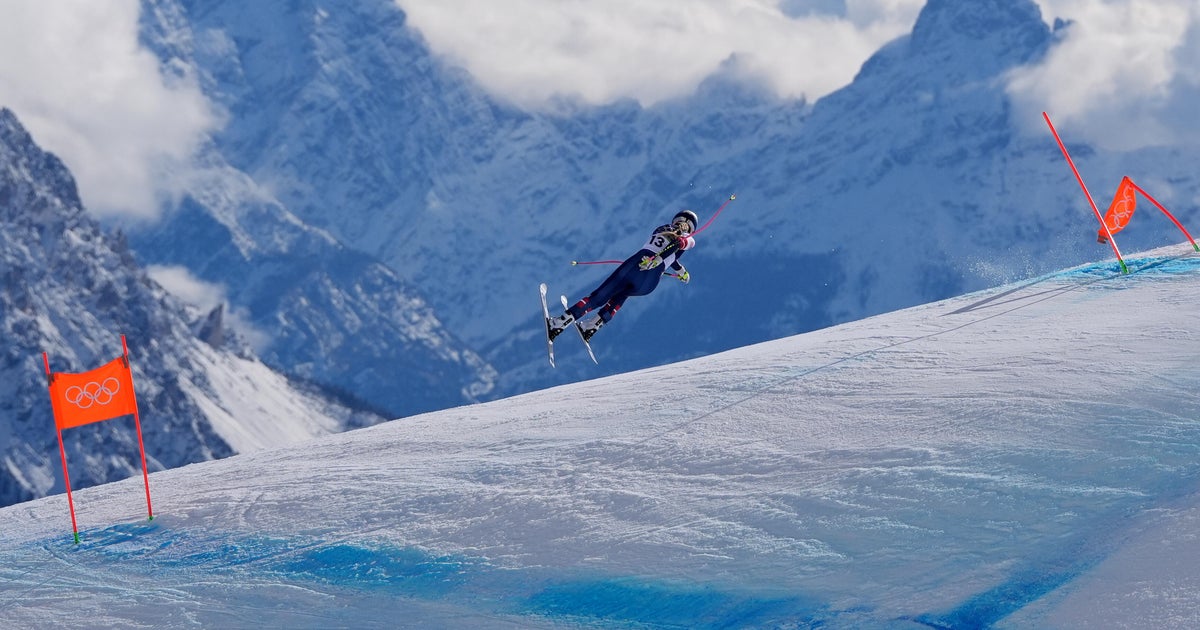
What was supposed to be an inspiring comeback story quickly turned into a moment of horror for spectators watching Vonn’s Olympic run. Just 13 seconds into her downhill attempt, the American standout caught a gate, launching her into a violent, spinning crash that sent her tumbling down the Dolomite mountain. Goldschmidt, who witnessed the fall firsthand, described the immediate aftermath as shocking and deeply unsettling. “The impact, the silence, everyone was just in shock. And you could tell it was a really nasty injury,” she recalled. The severity of the crash was immediately apparent, leading to Vonn’s evacuation from the mountain by helicopter. For those who had tuned in to watch Vonn attempt to make history at age 41—already competing with a torn ACL in her left knee and a partial titanium replacement in her right knee—the crash served as a stark reminder of just how dangerous alpine skiing can be, even for the most experienced and decorated athletes in the sport.
The Superhuman Nature of Alpine Athletes
Goldschmidt’s reflections on the incident highlight a truth that television broadcasts often fail to capture: the extraordinary physical demands and dangers of competitive skiing. “There’s a lot of danger in doing all sorts of Alpine sports but it gives more of an appreciation for how superhuman these athletes are,” she explained. The speeds at which these competitors travel, combined with the unforgiving nature of the mountain terrain, create an environment where split-second decisions and minor miscalculations can have catastrophic consequences. Goldschmidt noted that while broadcasts try to convey the intensity of the sport, it’s incredibly difficult to communicate the true physicality and risk involved. She acknowledged that while the danger can be captivating for viewers and draw fans to the sport, injuries like Vonn’s are a sobering reminder of the price athletes sometimes pay. Despite the hope that such serious injuries can be avoided, Goldschmidt admitted they remain “unfortunately part and parcel of our sports,” an inherent risk that comes with pushing human performance to its absolute limits on snow and ice.
Multiple Surgeries and Ongoing Medical Care
The extent of Vonn’s injuries has required extensive medical intervention. By Friday, just days after her crash, Vonn revealed through social media that she was preparing for yet another surgery on her leg, scheduled for Saturday. This would be her fourth surgical procedure since the accident. In a video message to her followers, the champion skier explained that if this latest surgery went well, she might be able to return to the United States shortly afterward. The complex nature of her tibia fracture has necessitated this series of operations, each one carefully planned to ensure the best possible outcome for her recovery. Goldschmidt provided some reassurance by confirming that Vonn was in stable condition and not experiencing pain during her hospital stay in Italy. The U.S. Ski Team president visited Vonn twice at the hospital, witnessing firsthand her resilient spirit during this challenging time. The medical coordination between the Italian healthcare providers and the U.S. team’s medical staff demonstrates the level of care being dedicated to ensuring Vonn receives the best possible treatment as she transitions from emergency care in Italy to long-term recovery planning in the United States.
No Regrets: A Champion’s Mindset
Despite the severity of her injuries and the long recovery ahead, Lindsey Vonn has made it clear she harbors no regrets about her decision to compete in the 2026 Olympics. In a powerful Instagram post shared late Saturday, Vonn reflected on the conscious choice she made to take the risk. “When I think back on my crash, I didn’t stand in the starting gate unaware of the potential consequences,” she wrote. “I knew what I was doing. I chose to take a risk. Every skier in that starting gate took the same risk. Because even if you are the strongest person in the world, the mountain always holds the cards.” Her words reveal the mindset of a true competitor—someone who understands the dangers but refuses to let fear prevent her from pursuing her dreams. Vonn continued by acknowledging that preparation doesn’t guarantee success or safety: “But just because I was ready, that didn’t guarantee me anything. Nothing in life is guaranteed. That’s the gamble of chasing your dreams, you might fall but if you don’t try you’ll never know.” This philosophy reflects the attitude that has defined Vonn’s remarkable career and her decision to return to competitive skiing after previous injuries and setbacks. Her willingness to accept the outcomes, whatever they may be, demonstrates the courage that has made her one of the greatest alpine skiers in history.
A Legacy Beyond Medals
While Vonn’s crash prevented her from adding another Olympic medal to her already impressive collection, Goldschmidt believes the champion’s legacy has actually been enhanced by how she’s handled this adversity. “She took an aggressive line and was all in and it was inches off what could have ended up a very different way,” Goldschmidt observed, noting how close Vonn came to either success or the crash that occurred. The U.S. Ski and Snowboard Association president emphasized that Vonn’s contributions to the sport extend far beyond her competitive achievements. “What she’s done for our sports and the sport in general, her being a role model, has gone to a whole new level,” she said. Goldschmidt added a profound observation about character being revealed during difficult times: “You learn often more about people during these tough moments than when they’re winning.” Indeed, Vonn’s grace, honesty, and lack of self-pity in the face of this devastating injury may inspire more people than another medal ever could. Her willingness to compete at 41 with already compromised knees, her acceptance of the risks involved, and her thoughtful reflection on the experience demonstrate qualities that transcend athletic achievement—courage, self-awareness, and an indomitable spirit that refuses to be defined by setbacks. As she prepares to return home for further treatment, Vonn leaves behind not just memories of a crash, but a powerful example of what it means to pursue excellence without guarantees, to risk greatly because the attempt itself holds value, and to face consequences with dignity and perspective.