



The Controversy Behind Madison Chock and Evan Bates’ Olympic Silver Medal
A Heartbreaking Finish at the 2026 Winter Olympics
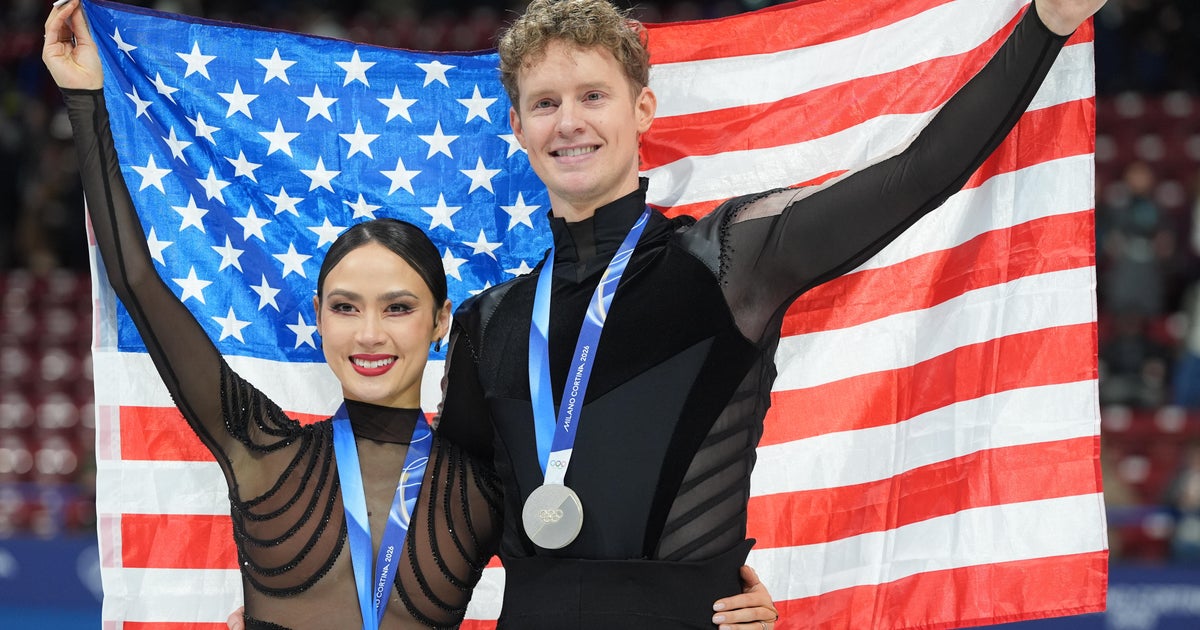
The ice dance competition at the 2026 Winter Olympics has concluded, but the conversations surrounding the final results are far from over. American ice dancers Madison Chock and Evan Bates delivered what many considered to be a flawless performance, yet found themselves standing on the second step of the podium with silver medals around their necks. The French team of Laurence Fournier Beaudry and Guillaume Cizeron took home gold despite visible mistakes during their routine, leaving fans and skating enthusiasts questioning the judging system. The margin of victory was razor-thin – just 1.43 points separated gold from silver – making the controversy all the more intense. For Chock and Bates, who entered the free dance as favorites and gave what they described as their “absolute best performance,” the outcome was difficult to accept. The married couple had skated together for fifteen years and were competing in their first Olympics as husband and wife, making this moment particularly significant in their storied career.
Calls for Transparency and Reform in Figure Skating Judging
In the aftermath of the competition, Madison Chock spoke candidly about the need for changes in how ice dance is judged. With grace and professionalism, she suggested that making the judging process more transparent and understandable for viewers would be beneficial for everyone involved in the sport. “I think it’s also important for the skaters, that the judges be vetted and reviewed to make sure that they are also putting out their best performance,” Chock explained to CBS News. Her words carried weight, highlighting the enormous pressure athletes face when they step onto the ice and pour their hearts into their performances. She emphasized that when skaters are giving everything they have, they deserve judges who are equally committed to fairness and accuracy. The call for reform isn’t just about one competition or one disappointing result – it’s about the integrity of the sport itself. Figure skating has long faced criticism for its subjective scoring system, and this Olympic competition has brought those concerns back into the spotlight. Chock’s measured response demonstrates not only her disappointment but also her commitment to improving the sport for future generations of skaters.
The Technical Details That Made the Difference
The competition unfolded over two days, with the rhythm dance on Monday and the free dance on Wednesday. Despite posting their world-best score of 89.72 points in Monday’s rhythm dance, Chock and Bates trailed the French pair by 0.46 points after Fournier Beaudry and Cizeron earned 90.18. The Americans then performed an emotionally powerful free dance set to “Paint It Black” from the dystopian series “Westworld,” earning 134.67 points. The French team followed with their interpretation of music from “The Whale,” scoring 135.64 and maintaining their narrow lead. What made the final scores particularly controversial was what happened during the French team’s performance. Cizeron made a noticeable mistake during a twizzle – a technically demanding one-footed moving spin that’s a staple element in ice dance. Despite this error and what many observers described as a generally less clean performance compared to the Americans, the judges didn’t mark the French team down significantly for the mistake. In ice dancing, each element has a base value and receives a grade of execution that can add or subtract points based on quality. The fact that the French team’s twizzle error didn’t result in more substantial deductions left many scratching their heads about how the scoring works and whether it was applied fairly.
Questionable Scoring and National Bias Concerns
Beyond the technical execution scores, the French team also received higher marks for artistic presentation and interpretation of the music – categories that are inherently more subjective than technical elements. Perhaps most concerning was the scoring pattern among the judges themselves. Five of the nine judges favored the Americans in their scoring, which would normally indicate a clear preference for Chock and Bates’ performance. However, the French judge scored the Americans more than seven points lower than the French duo – an enormous margin in a sport where fractions of points determine medal placement. This kind of national bias in judging has long been a problem in figure skating, and while systems have been put in place to minimize its impact, this competition showed that the issue persists. The other three judges who favored France did so only slightly, making the French judge’s scoring even more conspicuous. Canada’s Piper Gilles and Paul Poirier, who took bronze with 217.74 points, were far enough behind that the controversy didn’t affect their placement, but the tight race between gold and silver made every judge’s score critical.
Grace Under Pressure: The Americans’ Response
Despite the disappointment that must have been crushing, Madison Chock and Evan Bates handled the outcome with remarkable composure and dignity. “It’s definitely a bittersweet feeling at the moment,” Chock said immediately after the competition. She reflected on their incredible year together and their fifteen-year partnership, noting that this was their first Olympics as a married couple. “We delivered four of our best performances this week. I think we’re really proud of how we handled ourselves here and what we accomplished,” she added, focusing on what they could control rather than dwelling on what they couldn’t. Evan Bates echoed this sentiment the following day, describing their performance as their “absolute best” and noting that he and Chock hadn’t even studied the detailed scores yet. “It felt like a winning skate to us and that’s what we’re going to hold on to,” he told the Associated Press, choosing to remember the joy and excellence of their performance rather than the frustration of the judging. The couple, who are reigning world champions, said they’re still discussing their future plans, including whether to compete at the World Figure Skating Championships in Prague next month. Their measured, gracious response in the face of what many considered an injustice speaks volumes about their character and professionalism.
The Complicated Backstories of the Medal Winners
The personal histories of the athletes involved add additional layers of complexity to this Olympic story. The gold-medal-winning French team of Laurence Fournier Beaudry and Guillaume Cizeron have been skating together for less than a year, making their Olympic victory even more surprising. Cizeron previously won gold in ice dance at the 2022 Winter Olympics with Gabriella Papadakis, who retired in 2024 amid serious allegations. Papadakis has publicly accused Cizeron of abusive behavior, describing him as “controlling” and “demanding,” though Cizeron has countered that these claims are false and part of a “smear campaign” against him. Laurence Fournier Beaudry, who was born in Montreal and spent most of her career representing Canada, was granted French citizenship only in November, making her eligible to compete for France. She teamed up with Cizeron after her previous partner, Nikolaj Sørensen, was suspended by Skate Canada following sexual assault allegations from an American skater. Though that suspension was later overturned on jurisdictional grounds, the case remains pending. Fournier Beaudry has consistently maintained Sørensen’s innocence and showed support for him as recently as earlier this month. These complicated personal histories don’t have any bearing on how the competition should have been judged, but they do provide context for understanding the individuals involved and the relationships that brought them to this Olympic moment. For Chock and Bates, whose partnership has been characterized by mutual respect, growth, and genuine affection over fifteen years, the loss to a team with such a short history together and surrounded by such controversy must have been especially difficult to process.