



A Battle for Maine’s Soul: The Democratic Primary Fight to Challenge Susan Collins
An Explosive Primary Race Takes Shape
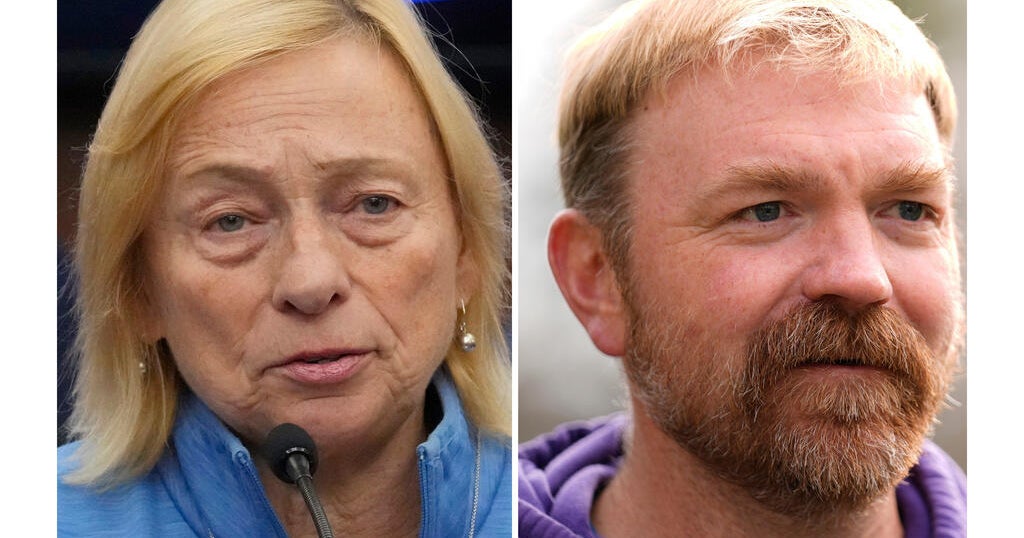
Maine’s Democratic primary has erupted into one of the most contentious political battles of the midterm election season, as two starkly different candidates compete for the opportunity to take on Senator Susan Collins, the five-term Republican incumbent who represents one of the GOP’s most vulnerable seats. On one side stands Janet Mills, the 78-year-old sitting governor who embodies the moderate, establishment wing of the Democratic Party. On the other is Graham Platner, a 41-year-old oyster farmer, military veteran, and former private military contractor who has emerged as the progressive insurgent candidate. This clash isn’t just about political ideology—it’s about the future direction of the Democratic Party itself, pitting experience and proven electability against calls for generational change and a more confrontational political approach. The stakes couldn’t be higher, as Democrats see this race as a rare opportunity to flip a Senate seat in a midterm election cycle where such chances are few and far between.
The race has captured national attention not only because of the candidates’ contrasting profiles but also because of what it represents for both Maine and the Democratic Party nationally. Mills brings a impressive resume to the table: she’s served as a district attorney, attorney general, and has now completed two terms as governor, winning reelection in 2022 with 55% of the vote against former Republican Governor Paul LePage. She’s the candidate that Senate Minority Leader Chuck Schumer personally recruited, representing the party establishment’s bet on a safe, proven winner. Platner, meanwhile, embodies the outsider energy that has animated progressive movements across the country. His background—moving from military service to oyster farming—represents a different kind of American story, one that he’s leveraging to build a grassroots movement. Despite being relatively unknown compared to the sitting governor, recent polling suggests Platner may actually be leading Mills among Democratic primary voters, a stunning development that has sent shockwaves through political circles.
Money, Momentum, and the Changing Democratic Landscape
Perhaps nothing illustrates Platner’s surprising strength more than his fundraising numbers. In a political climate where money often follows establishment candidates, Platner has turned conventional wisdom on its head by raising an impressive $7.8 million last year—dwarfing Mills’ $2.6 million and even exceeding Collins’ $4.6 million haul. This financial advantage reflects genuine grassroots enthusiasm and suggests that Platner has tapped into something real within the Democratic base. His campaign has built momentum through an aggressive schedule of town halls across Maine—nearly 50 at last count—where he’s engaged directly with voters about their concerns, their hopes for the future, and their desire to defeat Susan Collins. This retail politics approach stands in marked contrast to what Platner’s campaign characterizes as Mills’ more traditional, insider-focused campaign strategy.
The fundraising disparity and polling numbers have clearly rattled the Mills campaign, leading to an escalation in tactics that many political observers see as a sign of desperation from what should have been the frontrunner. The generational divide between the candidates has become a central theme, with Platner positioning himself as the fresh face offering “new ideas” to counter Mills’ “old ideas.” In one of his campaign ads, an unnamed supporter captures this sentiment perfectly: “She was a good governor, but I think it’s time for change.” This message of generational change resonates with a Democratic base that has grown frustrated with the party’s leadership and hungry for a more aggressive approach to challenging not just Republicans, but also the party establishment itself. Platner and his supporters argue that in an era where Democrats remain broadly unpopular according to recent polls, the party needs candidates willing to be confrontational, to take risks, and to offer something genuinely different rather than simply promising competent management.
Controversy Erupts: The Reddit Posts Attack
As Platner’s momentum has built, the Mills campaign has gone on the offensive, unveiling a controversial negative advertisement that has dominated headlines and raised questions about how Democrats should handle problematic past statements from their own candidates. The ad, backed by a six-figure statewide buy running across broadcast, cable, and streaming platforms, highlights statements allegedly made by Platner on Reddit over a decade ago. The most damaging quote comes from a 2013 post in which Platner appears to have written that women concerned about rape should “not get so fed up they wind up having sex with someone they don’t mean to” and should “act like an adult for fs sake.” The Mills campaign clearly believes these statements are disqualifying, representing not just youthful indiscretion but a deeper problem with Platner’s character and judgment.
The Platner campaign’s response was swift and framed the attack as a “desperate attempt for relevance from the governor, who is trailing an oyster farmer in every recent poll.” Campaign manager Ben Chin argued that “Mainers know that Graham should not be defined by the worst thing he said on the internet over a decade ago,” contrasting Platner’s direct engagement with voters through dozens of town halls with Mills’ “campaign behind closed doors, rooted in the past, and aligned with the same insiders who have failed this state.” This response attempts to turn the attack into evidence of Mills’ weakness while acknowledging the problematic nature of the posts without allowing them to define the campaign. It’s worth noting that Platner has previously apologized for many of these posts. In an interview with The Atlantic last year, when asked about the rape-related comment, he said he was “f***ing embarrassed.” In an October video message, he offered a fuller apology: “For those of you who have read these things and been offended, have read these things and seen someone that you don’t recognize, I am deeply sorry.”
The Broader Pattern: Multiple Controversies Emerge
The Reddit controversy isn’t the first time Platner’s past has become campaign fodder. Last fall, CNN and several other news outlets uncovered additional Reddit posts in which he allegedly called himself a communist, referred to police officers as “bastards,” and appeared to agree with sentiments characterizing rural White people as racist and stupid. These revelations sparked immediate controversy, particularly in a state like Maine where rural communities represent a significant portion of the electorate and where Democratic success depends on appealing to working-class voters across geographic and demographic lines. Platner’s defense of these posts centered on context: he explained that some reflected the “crude humor” common in military circles, while others were written during a period when he was struggling with depression and post-traumatic stress disorder following his service in Iraq with the Marine Corps and in Afghanistan with the National Guard.
Adding another layer to the controversy, it was revealed last year that Platner had a tattoo resembling a Nazi symbol, which he says he got during a night of heavy drinking in Croatia almost two decades ago without realizing its connotations. He has since covered up the tattoo, but the revelation added to concerns among some Democrats about his electability in a general election against Collins. These multiple controversies raise important questions about how Democrats should evaluate candidates: Should past mistakes disqualify someone who has apologized and demonstrated growth? Do the circumstances—military service, mental health struggles, youthful indiscretion—matter in assessing these incidents? Or do they represent patterns of judgment that should concern voters regardless of context? Different Democratic voters are answering these questions differently, which helps explain why the primary has become so contentious and why both candidates have devoted so much of their public messaging to attacking not each other primarily, but rather their common target: Susan Collins.
The Ultimate Prize: Taking on Susan Collins
All of this Democratic infighting is ultimately about who gets the opportunity to challenge Collins, a political institution in Maine who has represented the state in the Senate for nearly three decades. Collins presents a fascinating and frustrating target for Democrats. She’s carved out an identity as a moderate willing to break with President Trump and GOP leaders when her conscience demands it, and she has deep roots throughout the state, hailing from Aroostook County, Maine’s northernmost and most isolated region. Her political durability is legendary: in 2020, she won reelection by 8.6 percentage points even as Trump lost the state by 9 points, despite being outspent two-to-one by Democratic opponent Sara Gideon. That performance demonstrated her unique ability to appeal to voters across party lines and her skill at distancing herself from her party when politically advantageous.
For Democrats nationally, defeating Collins represents one of their best opportunities to flip a Republican-held Senate seat. The party needs to flip four GOP-held seats to gain a majority, a tall order given that most Republican seats in play this year are in deep-red states. Maine, by contrast, leans Democratic—Trump lost statewide by 7 percentage points in 2024. This makes the seat theoretically winnable, but Collins’ proven ability to outperform her party complicates that calculation. The race is certain to draw massive outside spending from both parties, given its potential to determine Senate control. Mills argues that her proven ability to win statewide—including her 2022 reelection against a formidable Republican opponent—makes her the safer bet. She’s also demonstrated a willingness to confront Trump directly, gaining national attention last year when she verbally sparred with the president about transgender athletes at a White House event, telling him “See you in court” after he threatened to cut federal funding to Maine. This moment showcased her ability to stand up to Trump while maintaining the moderate positioning that has made her successful in Maine politics.
The Choice Before Maine Democrats
As the June primary approaches, Maine Democrats face a fundamental choice about what kind of candidate gives them the best chance to defeat Collins and what that choice says about the party’s future direction. Mills has the backing of Senate Minority Leader Chuck Schumer and represents the establishment view that proven winners with moderate profiles offer the best path to victory. Platner, endorsed by Senators Bernie Sanders of Vermont and Ruben Gallego of Arizona, along with the United Auto Workers and the Maine State Nurses Association, represents the progressive argument that Democrats need fighters willing to challenge not just Republicans but also their own party’s establishment and conventional wisdom. His grassroots fundraising success and strong polling numbers suggest his message is resonating, particularly with younger voters and those frustrated with traditional politics.
The negative turn the campaign has taken, with Mills’ attack ad highlighting Platner’s past Reddit posts, reflects how high the stakes have become and how uncertain both campaigns are about the outcome. Mills clearly believes these revelations could disqualify Platner with voters, while Platner’s campaign believes voters will see past decade-old internet posts and focus on current issues and future vision. The outcome will say much about whether Democratic primary voters prioritize electability and experience or whether they’re willing to take a chance on a candidate who offers something different but carries more risk. It will also test whether apologies for past behavior are sufficient in the current political climate or whether such revelations are permanently disqualifying. Whatever happens in June, the winner will face a formidable challenge in Collins, a skilled politician with deep Maine roots and a proven ability to win even in difficult political environments. The Democratic primary battle may be bitter, but it’s only the opening act in what promises to be one of the most expensive and closely watched Senate races of the entire midterm election cycle.