


The Stalled Nomination: Dr. Casey Means and the Battle for America’s Top Health Role
A Nomination in Limbo
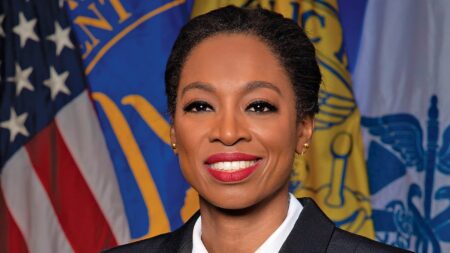
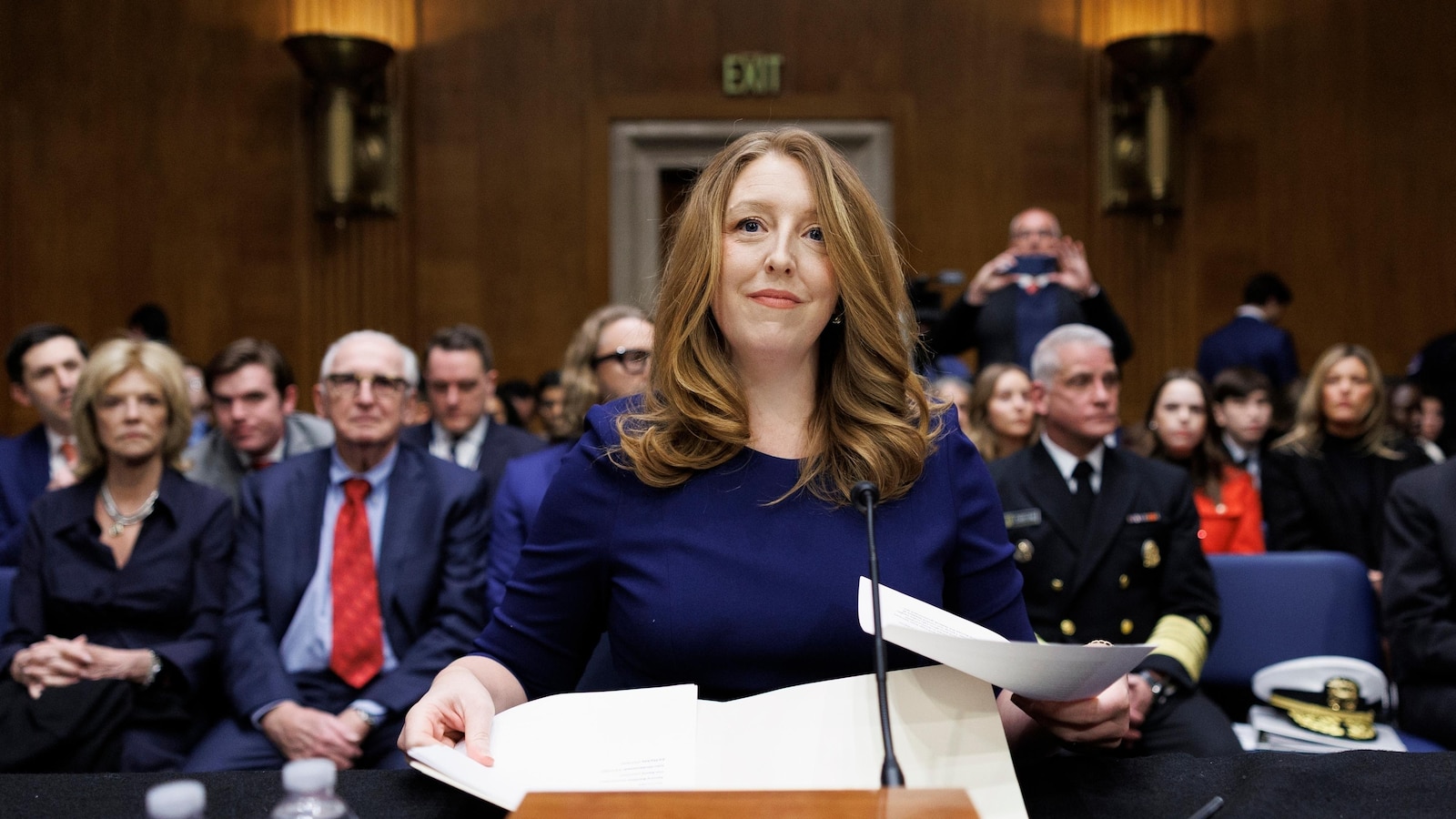
More than a month has passed since Dr. Casey Means sat before senators in what can only be described as a grueling confirmation hearing, yet her nomination to become the next U.S. surgeon general remains stuck in political quicksand. Despite the Trump administration’s full-throated support and aggressive lobbying from the Make America Healthy Again (MAHA) movement, the 38-year-old wellness influencer and Stanford-educated physician finds herself unable to secure the crucial votes needed to advance her nomination. What makes this situation particularly revealing is that it’s happening even as Congress has generally shown willingness to rubber-stamp President Donald Trump’s various agenda items. The holdup demonstrates just how deeply divisive health policy has become in America, cutting across traditional party lines and exposing rifts that even presidential influence cannot easily bridge.
The delay is particularly striking given the swift confirmations other Trump nominees have received—some getting through the entire process in a matter of days. Dr. Means’ journey, by contrast, has stretched to nearly 300 days since her initial nomination in May, making it almost twice as long as the average confirmation process for Trump’s second-term picks. While the birth of her son last October contributed to delays—her original hearing was postponed and not rescheduled until February—the monthlong stall since that hearing is what experts find truly unusual. Typically, candidates move out of committee within a week of their hearing, making the extended silence around Means’ nomination a clear signal that something is fundamentally stuck.
The Vaccine Question and Political Tightrope
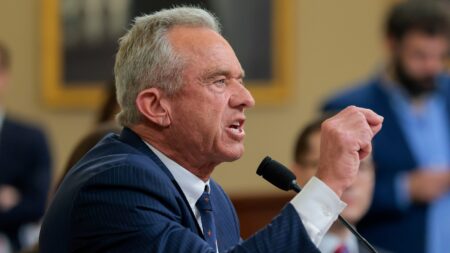
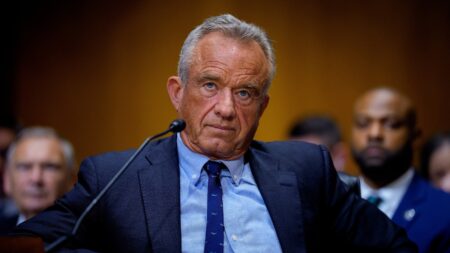
At the heart of Dr. Means’ confirmation troubles lies the explosive issue of vaccines—a topic that has become one of the most contentious in American public health discourse. During her confirmation hearing, senators from both parties pressed her repeatedly on her views about vaccination, particularly in light of her close alignment with Health Secretary Robert F. Kennedy Jr., whose aggressive efforts to scale back vaccine recommendations have alarmed lawmakers across the political spectrum and drawn fierce criticism from the broader medical community. The questions weren’t abstract policy debates; they centered on concrete, urgent public health concerns, including active flu and measles outbreaks sweeping across the country.
Senator Bill Cassidy, a physician from Louisiana who chairs the Senate Health, Education, Labor and Pensions Committee, zeroed in on whether Means would advise Americans to vaccinate against flu and measles amid these outbreaks. Her responses, which emphasized “informed consent” rather than making firm recommendations, didn’t inspire confidence. She also faced tough questions from Senators Lisa Murkowski of Alaska and Bill Cassidy about her past skepticism regarding the hepatitis B vaccine given to newborns—a vaccine the CDC stopped universally recommending late last year before a federal judge temporarily blocked that decision. While Means called the hepatitis B vaccine “important and lifesaving,” she maintained that parents should make their own decisions in consultation with doctors. For senators trying to gauge whether she would be a clear, authoritative voice on vaccines as surgeon general, these nuanced responses raised more questions than they answered.
The vaccine issue is particularly thorny because it forces Dr. Means to navigate between two incompatible positions. On one hand, the MAHA movement that elevated her—and Robert F. Kennedy Jr., who appears to be her primary champion within the administration—has built much of its identity around vaccine skepticism and parental choice. On the other hand, the surgeon general’s role has traditionally involved being an unambiguous advocate for evidence-based public health measures, including vaccination. Dr. Means’ attempts to thread this needle during her hearing appear to have satisfied neither the traditional public health advocates nor convinced fence-sitting senators that she could effectively serve in the role.
Questions of Qualification and Credibility
Beyond the vaccine controversy, Dr. Means faces persistent questions about her fundamental qualifications for the position. Her background raises eyebrows in traditional medical circles: though Stanford-educated, she became disillusioned with conventional medicine and never completed her surgical residency program. Perhaps most controversially, her medical license is currently inactive—she voluntarily placed her Oregon license in this status because she wasn’t seeing patients. While no federal law explicitly requires surgeons general to hold an active medical license, they must be part of the U.S. Public Health Service Commissioned Corps, which does require up-to-date licenses for membership. During her hearing, Means argued that Admiral Brian Christine, who runs the Commissioned Corps, had testified she was eligible to serve despite this issue, but critics remain unconvinced.
Dr. Jerome Adams, who served as surgeon general during Trump’s first term, has been particularly vocal in his opposition, repeatedly using social media to call Means unqualified due to her inactive license. In interviews, Adams has revealed that Republicans in Congress and even within the Trump administration have privately expressed disapproval of her nomination, viewing it essentially as “Bobby’s choice”—a reference to Robert F. Kennedy Jr.’s apparent championing of her candidacy. This behind-the-scenes resistance suggests that even within Trump’s own coalition, there’s significant discomfort with the nomination, though many are reluctant to publicly oppose Kennedy’s preferred candidate.
Additional concerns have emerged about Means’ conduct as a wellness influencer before her nomination. Critics point to instances where she failed to properly disclose financial relationships with health-related brands she promoted—a serious ethical issue that raises questions about potential conflicts of interest. Senators also questioned her about past advocacy for the therapeutic use of psychedelic mushrooms, a topic on which she’s spoken positively based on her own experiences. In her hearing, Means attempted to draw a distinction between her comments as a private citizen and what she would say as a public health official, stating she wouldn’t recommend psychedelics to the general public. However, this pattern of having to walk back or recontextualize previous statements has contributed to an overall impression of a nominee whose past may not align well with the traditionally conservative role of surgeon general.
The MAHA Movement Pushes Back
As doubts about the nomination have solidified, the Make America Healthy Again movement has mounted an aggressive grassroots campaign to salvage Dr. Means’ chances. Once it became clear that key Republican senators like Murkowski and Collins were undecided, MAHA activists orchestrated pressure campaigns targeting these lawmakers. Tony Lyons, head of the Kennedy-aligned group MAHA Action, explicitly urged supporters on a call to flood the senators’ offices with phone calls: “Please call both of them. Call them time after time. Get your friends to call them. This is critical. We need to get this done.”
The intensity of this campaign reflects how important Dr. Means’ nomination has become to the broader MAHA agenda. She’s not just another administrative appointment but a symbol of the movement’s challenge to what it views as an overly medicalized American healthcare system. Means is an enthusiastic and charismatic speaker who has built a significant following by promoting ideas that resonate with MAHA supporters: that Americans are prescribed too many medications, that chronic disease could be largely prevented through diet and lifestyle changes rather than pharmaceutical interventions, and that the healthcare system is fundamentally oriented toward “sick care” rather than genuine wellness. Her confirmation would represent a major victory for this perspective, placing someone with these views in one of the nation’s most visible public health positions.
The White House has remained firmly behind the nomination despite the difficulties. Spokesman Kush Desai emphasized Means’ “elite academic credentials, research background and advocacy on America’s chronic disease epidemic,” framing these as assets for Trump’s MAHA push. Health Secretary Kennedy’s spokesman similarly defended her, arguing she has “communicated a vital public health message that people voted for, that we need to fundamentally transform our health care system.” These statements position Means as not just qualified but as representing a mandate for change—though whether that interpretation of the election results is accurate remains debatable.
The Math Problem in Committee and Beyond
The immediate obstacle facing Dr. Means is mathematical: to advance out of the Senate Health, Education, Labor and Pensions Committee to a full Senate vote, she likely needs every Republican member to support her. With Senators Murkowski and Collins expressing continued reservations, that requirement appears unmet. Murkowski told reporters recently, “I’m just in the same spot” regarding her hesitations, while Collins hasn’t publicly clarified her position despite multiple inquiries. Chairman Cassidy, whose pointed questioning during the hearing suggested deep skepticism, has also remained silent on his intentions.
Even if Means somehow clears the committee hurdle, potentially greater challenges await on the Senate floor. In the full 100-member Senate, she can afford to lose only three Republican votes if all Democrats vote against her—which appears likely given the partisan nature of health policy debates and her controversial positions. Already, at least one Republican has signaled opposition. Senator Thom Tillis of North Carolina, who has announced he won’t seek another term and thus may feel freer to buck party pressure, told reporters he’s leaning against voting for Means if her nomination reaches the floor. “Her resume already puts me on alert—and then I don’t think she did herself any favors in the hearing,” Tillis said bluntly. If other Republicans share his assessment but have been reluctant to say so publicly, the nomination could face a surprisingly difficult floor vote should it ever get that far.
The situation reveals interesting dynamics about Senate power and presidential influence. In an era when Trump has exercised enormous sway over Republican lawmakers, health policy appears to be an area where some senators are willing to maintain independence. This may reflect the high stakes involved—public health decisions literally affect life and death—or the strong pushback these senators are hearing from medical professionals in their states. It may also indicate that the Make America Healthy Again agenda, while energizing a passionate base, doesn’t command the same broad support within the Republican coalition as other Trump priorities. The intractability of these rifts over health policy, as the situation has been characterized, suggests that even a popular president cannot simply dictate outcomes when senators face pressure from multiple directions and when professional medical opinion weighs heavily against a nominee.
What This Means for American Public Health
The extended battle over Dr. Means’ nomination represents more than just one difficult confirmation—it’s a proxy war over competing visions of American public health. On one side stands the traditional medical establishment, with its emphasis on evidence-based medicine, strong vaccination programs, rigorous licensing requirements, and the authority of institutions like the CDC and the surgeon general’s office. This establishment, while acknowledging problems with chronic disease and healthcare costs, generally believes solutions should come through the existing system, with reforms rather than revolutionary change.
On the other side is the Make America Healthy Again movement, which views that same establishment as fundamentally compromised—too close to pharmaceutical companies, too quick to prescribe medications, too dismissive of alternative approaches, and too paternalistic in its relationship with patients. This movement sees chronic disease as a crisis that conventional medicine has failed to address, requiring dramatic shifts toward prevention, lifestyle medicine, and patient autonomy, even on issues like vaccination where public health has traditionally taken a more directive approach. Dr. Means embodies this challenge to orthodoxy: a Stanford-educated physician who stepped away from traditional practice, built a following as a wellness influencer, and now seeks to occupy a powerful platform to spread her message.
The monthlong stalemate, with productive conversations reportedly ongoing but no resolution in sight, suggests neither side has enough leverage to force a conclusion. The White House and MAHA activists cannot compel skeptical senators to support a nominee they view as unqualified or potentially dangerous to public health. But neither can the medical establishment or concerned senators force the withdrawal of a nomination that has become symbolically important to a movement with significant political influence. As this standoff continues, the surgeon general’s office remains without a permanent leader at a time when measles outbreaks are spreading, flu seasons are unpredictable, and public trust in health institutions continues to erode. Whatever the eventual outcome—whether Means is confirmed, defeated, or withdraws—the battle itself has already revealed deep fractures in how Americans think about health, medicine, and whose voices should guide national policy.