



Mikaela Shiffrin’s Olympic Struggle Continues: A Champion’s Journey Through Adversity
The Latest Disappointment in Cortina
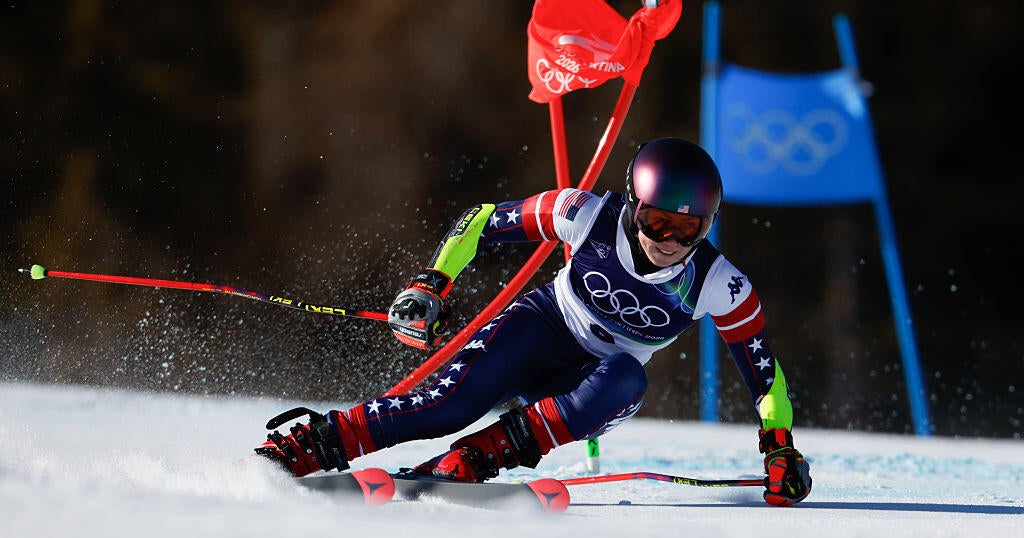
Mikaela Shiffrin’s pursuit of Olympic glory hit another roadblock at the Milano Cortina 2026 Winter Games when she finished 11th in the women’s giant slalom on Sunday. The American skiing superstar, widely regarded as one of the greatest technical skiers of all time, posted a combined time of 2:14.42 across her two runs. While her technique remained characteristically clean and polished, the speed simply wasn’t there to challenge the top competitors for a spot on the podium. What struck observers most wasn’t her performance on the slopes, but her remarkably composed demeanor afterward. Rather than displaying visible frustration or disappointment, the 30-year-old athlete demonstrated grace under pressure, blowing out her cheeks in a gesture of acceptance and enthusiastically waving to the supportive crowd with both hands raised. This moment of sportsmanship encapsulated the maturity and perspective Shiffrin has developed through years of both triumph and heartbreak on the world’s biggest winter sports stage.
An Unprecedented Olympic Drought for a World Cup Titan
The Milano Cortina result extends what has become a puzzling and painful Olympic drought for an athlete who has dominated her sport at virtually every other level. Shiffrin now hasn’t won an Olympic medal in eight consecutive events dating back to the 2018 Winter Games in PyeongChang, South Korea, where she last stood on an Olympic podium. This statistic becomes even more remarkable when contrasted with her absolutely stellar performance on the World Cup circuit, where she holds the record as the winningest athlete in the history of the competition, surpassing legends of the sport with her consistency and versatility. The gap between her World Cup dominance and Olympic results has become one of the most discussed storylines in winter sports, raising questions about the unique pressures of Olympic competition, the role of timing and luck in a sport measured in hundredths of seconds, and the mental challenges that even the most accomplished athletes face when competing on the quadrennial stage. For Shiffrin, who arrived at these Games as one of Team USA’s most recognizable faces and greatest medal hopes, the result represents another chapter in what has become an unexpectedly difficult Olympic journey for someone who appeared destined for multiple gold medals when she burst onto the scene as a teenage prodigy.
Italy’s Golden Moment and an Unprecedented Tie
While Shiffrin’s story dominated much of the pre-race narrative, the day ultimately belonged to Italy’s Federica Brignone, who thrilled the home crowd with a dominant performance that earned her the gold medal. For the 34-year-old Italian veteran, this represented her second gold medal of the Milano Cortina Games and her fifth Olympic medal overall, cementing her legacy as one of the greatest all-around skiers of her generation. The medal ceremony, however, featured a truly remarkable and rare occurrence that added an extra layer of drama to the event. Sweden’s Sara Hector and Norway’s Thea Louise Stjernesund finished in an exact tie for second place, sharing the silver medal after posting identical times in both the first and second runs—a statistical rarity that underscores just how razor-thin the margins are at this level of competition. The celebration that followed Brignone’s victorious run down the course captured the camaraderie and mutual respect among these elite competitors. As Brignone crossed the finish line to thunderous cheers from the passionate Italian fans, both Hector and Stjernesund ran into the finish area and playfully bowed down to the champion, while the crowd erupted in chants of “Fede,” the affectionate nickname for Federica. This spontaneous display of sportsmanship and celebration showcased the best aspects of Olympic competition, where fierce rivals can simultaneously be gracious colleagues who appreciate excellence when they witness it.
Shiffrin’s Gracious Response and Recognition of Excellence
Despite her personal disappointment, Shiffrin demonstrated why she’s respected not just for her skiing ability but also for her character and sportsmanship. In post-race comments, she focused not on her own performance but on celebrating the exceptional level of competition she had just witnessed. “That was, like, the greatest show of GS skiing that we’ve had in a really long time,” Shiffrin told reporters, referring to the giant slalom by its common abbreviation. “And to do it, you know, at the Olympics where people actually have eyes on the sport. Federica skied incredible. That was so cool to watch.” These comments reveal Shiffrin’s deep love for her sport and her ability to appreciate excellence even when she’s not the one producing it. Her recognition that the Olympics provide a rare opportunity for ski racing to capture mainstream attention speaks to her understanding of the bigger picture beyond individual results. While many athletes in her position might have struggled to look beyond their own performance, Shiffrin’s genuine enthusiasm for what Brignone and the other medalists accomplished demonstrates a maturity and perspective that can only come from years of experience at the highest levels of competition, including both spectacular victories and difficult defeats.
Hope Remains: The Slalom Awaits
For Shiffrin and her supporters, all is not lost at these Olympic Games. The article notes that she came in fourth place alongside teammate Breezy Johnston in the women’s team combined event earlier in the week, another near-miss that added to her Olympic frustrations. However, redemption may still be within reach when she competes in the slalom on Wednesday, an event that has historically been her strongest discipline. Shiffrin built her reputation and early success primarily as a slalom specialist, winning her first Olympic gold medal in that event as a 17-year-old at the 2014 Sochi Games. The slalom’s emphasis on technical precision, quick turns, and agility plays perfectly to her strengths and years of specialized training. While the pressure will undoubtedly be immense, with media attention and expectations heightened by her previous disappointments at these Games, the slalom represents Shiffrin’s best opportunity to end her Olympic medal drought and remind the world why she’s considered one of the greatest skiers of all time. The question remains whether she can manage the mental and emotional challenges that come with being the favorite, or whether the weight of expectation will once again prove too heavy.
The Bigger Picture: Legacy Beyond Olympic Medals
As Mikaela Shiffrin’s Olympic journey continues to unfold in ways that few predicted, it’s worth considering what her story tells us about athletic excellence, the nature of competition, and how we measure greatness. In an era where Olympic medals are often considered the ultimate validation of athletic achievement, Shiffrin’s career presents a fascinating paradox: an athlete who dominates her sport at the highest level year after year, breaking records and redefining what’s possible in ski racing, yet struggles to translate that success to the brief, high-pressure moments of Olympic competition. Her experience reminds us that sports, particularly those decided by fractions of seconds, involve elements of chance, timing, and circumstances beyond even the most prepared athlete’s control. The Olympics happen only once every four years, meaning athletes get limited opportunities, and factors like course conditions, weather, scheduling, and simple luck play enormous roles in determining outcomes. Shiffrin’s grace in handling these disappointments, her ability to celebrate others’ successes, and her continued excellence on the World Cup circuit demonstrate that greatness extends beyond medal counts. Whether she finds redemption in the upcoming slalom or continues her Olympic drought, her legacy as one of skiing’s all-time greats remains secure, built on years of sustained excellence rather than performances in a handful of high-profile races. Her story serves as a reminder that the Olympics, while magical and important, represent just one measure of athletic achievement, and that true champions are defined by how they handle both victory and defeat with equal grace.