

Celebrating Beauty Beyond Convention: Romania’s Inspiring Down Syndrome Fashion Show
A Night of Glamour and Inclusion in Bucharest
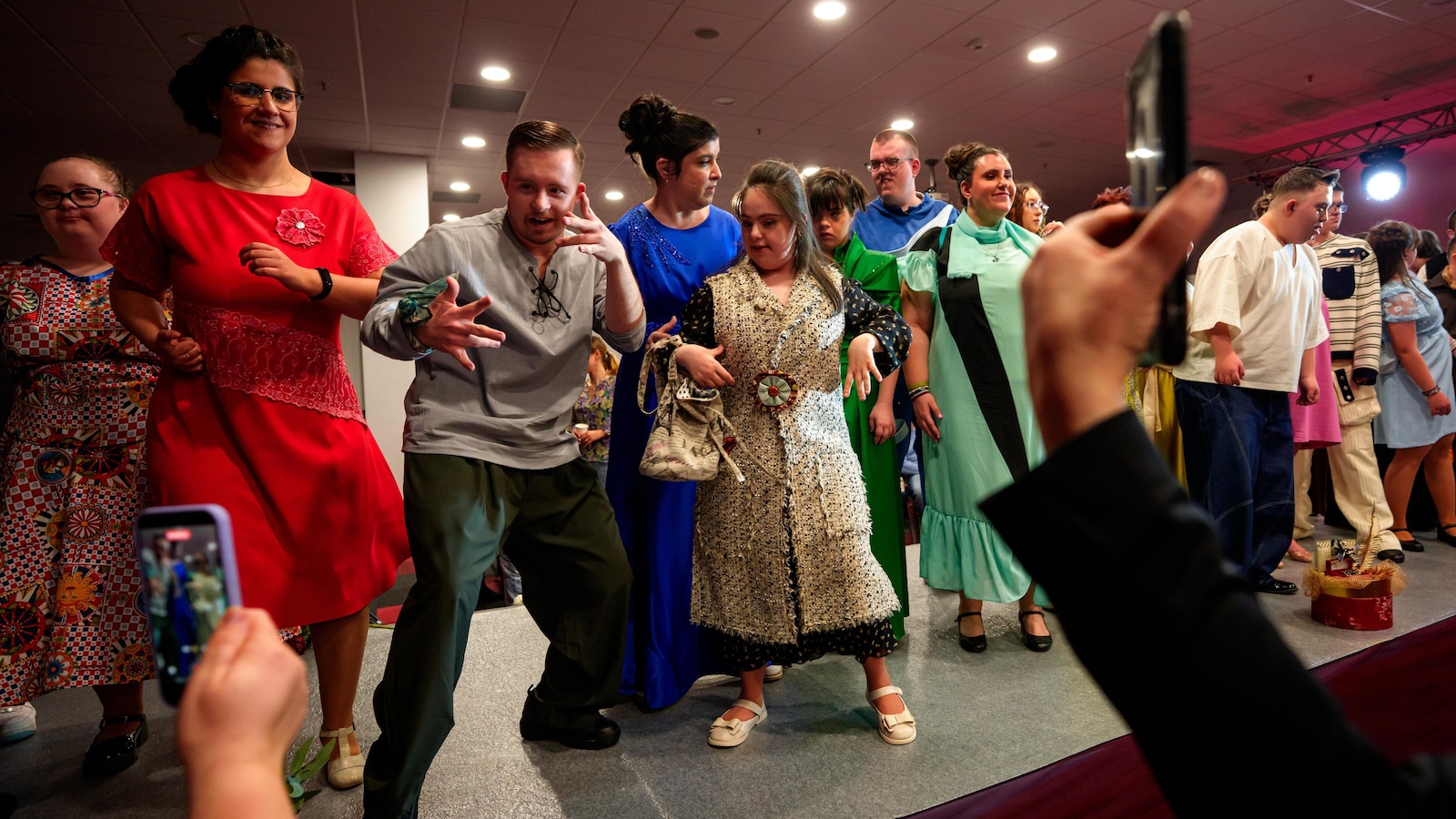
In the heart of Romania’s capital, something extraordinary unfolded on the evening of World Down Syndrome Day. The Romexpo center in Bucharest transformed into a celebration of courage, creativity, and what organizers beautifully termed “atypical beauty.” Dozens of young models with Down syndrome took to the catwalk at the SEEN Anonymous Seamstresses Gala, an event that brought together the entire community in a powerful statement about inclusion and the celebration of differences. This wasn’t just another fashion show—it was a movement, a declaration that beauty comes in all forms, and that every person deserves their moment in the spotlight. The event showcased the work of 50 seamstresses from across Romania, each of whom created a unique costume for a young person they had never met, crafting their designs with what organizers described as “great kindness, care and creativity.” These weren’t just garments; they were wearable expressions of love and acceptance for young people with Down syndrome and other intellectual disabilities.
The Vision Behind the Runway
The driving force behind this remarkable event was Georgeta Bucur, president of Down Plus Association Bucharest, who orchestrated what can only be described as a logistical miracle wrapped in compassion. Imagine the challenge: 50 seamstresses creating costumes for 50 young people without a single fitting, without ever meeting their models, working solely from measurements and their creative instincts. “The costumes were created without anyone trying them on,” Bucur explained, highlighting the leap of faith everyone involved took. But beyond the impressive organizational feat, what mattered most to Bucur was the human connection. “The most important thing is that the people gathered together again,” she reflected. “This event is really special … it’s the most beautiful thing that could happen.” In those words, we hear the true purpose of the evening—not just to put on a show, but to create a community moment where young people with Down syndrome could experience the joy, excitement, and validation that many take for granted. The event served as both celebration and statement, showing that inclusion isn’t just about access, but about creating opportunities for people with disabilities to shine.
Dreams Coming True on the Catwalk
For 19-year-old Antonia Voicu, walking that runway in her puffy green netted dress crowned with red roses was the realization of a lifelong dream. With the confidence of a seasoned model, Antonia shared her excitement: “I feel like I’m always fashionable, and I like to strike a pose, so I like to do like this.” Her words reveal something beautiful—a young woman who sees herself as stylish and capable, who isn’t nervous about taking the stage because she knows she belongs there. Her caretaker, Diana Negres, described the event as “a big step” for Antonia, who had always dreamed of “being a star” on stage. “This event gives her exactly this,” Negres said. “This is her first time, we did no preparation at all, so everything will be spontaneous.” There’s something profoundly moving about that spontaneity—the idea that Antonia could simply show up and be herself, without extensive preparation or training, and still claim her moment. Similarly, nine-year-old Marusika Burlaca, adorned in a pink dress studded with pearls and with her hair styled perfectly, expressed her excitement with childlike directness: “On stage, us children go on a parade, and today I’m dressed in a nice dress and try to do some modeling.” These aren’t just participants in an event; they’re young people experiencing the validation and joy that comes from being celebrated exactly as they are.
A Personal Mission of Love and Understanding
Behind every great initiative is a personal story, and the SEEN Anonymous Seamstresses Gala is no exception. Cristina Bucur, herself a seamstress and one of the organizers, revealed that the inspiration for the fashion show came from her own journey as a parent to a child with a disability. “I wanted the other children to see what it’s like to wear a costume during a fashion show, what it’s like to be cheered on stage,” she explained. Her words carry the weight of a parent who understands both the challenges and the unfulfilled dreams that often accompany disability. “They enjoy it enormously because they see that someone looks at them, that someone does something for them,” she added, touching on something essential—the human need to be seen, to be valued, to know that someone cares enough to create something special just for you. This wasn’t charity; it was recognition of equal worth and dignity. Another organizer, Larisa Bucur, observed the natural star quality these young people brought to the stage: “Maybe they get a bit nervous at times, it’s the emotions, but they really like to be the center of attention. We know that they want to be in the spotlight. I think it’s a very good opportunity for them.” These observations remind us that people with Down syndrome have the same desires as everyone else—to be celebrated, to feel special, to have their moment.
Understanding the Broader Context
In Romania, approximately 12,000 people live with Down syndrome, part of a global community of over 6 million individuals, according to the Romania Down Syndrome Federation. Recent statistics from 2022 indicate that in Romania, approximately one person with Down syndrome is born per 847 births. These numbers represent real people, real families, and real communities navigating a world that doesn’t always make space for those who are different. World Down Syndrome Day, officially recognized by the United Nations General Assembly in 2011, occurs every year on March 21—a date chosen for its symbolic significance (3/21 representing the triplication of the 21st chromosome that characterizes Down syndrome). The day serves multiple purposes: celebrating the lives and contributions of people with Down syndrome, raising public awareness, and advocating for equal freedoms and opportunities. This year’s theme carries particular poignancy: combating loneliness. According to the World Down Syndrome Day website, loneliness has an outsized impact on people living with Down syndrome and other intellectual disabilities. “Everyone feels lonely sometimes,” the organization notes. “But for many people with Down syndrome and other intellectual disabilities, loneliness is a more common and painful experience.” This reality makes events like the Bucharest fashion show even more significant—they combat that isolation by creating community, connection, and moments of genuine inclusion.
The Lasting Impact of Visibility and Inclusion
What happened in Bucharest transcends a single evening of fashion and fun—it represents a shift in how society can choose to see and celebrate people with disabilities. When Antonia Voicu struck her poses on that runway, when Marusika Burlaca paraded in her pearl-studded pink dress, when each of those 50 young people took their turn in the spotlight, they weren’t just modeling clothes. They were modeling possibility. They were showing the world that beauty, confidence, and star quality aren’t limited to those who fit conventional standards. They were proving that with creativity, compassion, and commitment, communities can create spaces where everyone belongs. The anonymous seamstresses who crafted costumes for young people they’d never met performed an act of faith in humanity—believing that their skills and care could bring joy to a stranger, trusting that their work would fit not just bodies but spirits. The organizers who brought this vision to life understood something profound: that inclusion isn’t about lowering standards or making exceptions, but about expanding our definition of excellence to include diverse expressions of human potential. As the lights dimmed on the Romexpo center that night, the impact continued. Families went home with photos and memories that validated their children’s worth. Young people with Down syndrome went to bed knowing they had been celebrated, not pitied. And perhaps most importantly, everyone who witnessed the event—whether in person or through news coverage—received an invitation to reconsider their assumptions about disability, beauty, and belonging. In a world that often feels divided and disconnected, the SEEN Anonymous Seamstresses Gala reminds us that simple acts of creativity and kindness can create profound moments of human connection, proving that when we make room for everyone to shine, we all benefit from the light.