



Artemis II Astronauts Share Profound Easter Message from Space as They Journey Toward the Moon
A Humbling View of Home from the Depths of Space
As the Artemis II spacecraft continues its historic journey toward the moon, the four astronauts aboard have given us a deeply moving perspective on what it means to be human in the vast cosmos. Despite dealing with some frustrating toilet malfunctions, the crew took time on Saturday to share their overwhelming sense of wonder at watching Earth shrink behind them while the moon grows steadily larger ahead. This view is something only a handful of people in human history have ever witnessed, and pilot Victor Glover made it clear just how profound the experience has been. Speaking during an Easter weekend that took on special significance given their unique vantage point, Glover reflected on what he called “the beauty of creation” and urged everyone back home to recognize something important: while people on Earth might think the astronauts are doing something extraordinary by traveling through space, the real miracle is the planet we all share. In his words, we’re all on a spaceship—it’s just called Earth, and it was created to give us a place to live in an otherwise empty universe. The crew’s message was one of gratitude, unity, and the recognition that our home planet is an incredibly rare oasis floating in what Glover called “a whole bunch of nothing.”
Crossing the Cosmic Threshold Between Earth and Moon
There was a particularly special moment early Saturday when mission control called up to inform the crew that they had just crossed an invisible but significant milestone: they were now closer to the moon than they were to Earth. Spacecraft communicator Jacki Mahaffey shared this news with the crew, and astronaut Christina Koch responded with genuine excitement, saying the whole crew experienced “a collective expression of joy” at the realization. At that point, they were about 118,000 nautical miles from the moon and could clearly see it growing larger through their windows. Koch described looking through the Orion capsule’s docking hatch window and seeing more and more of the moon’s far side—a view that remains thrilling no matter how many times they look. Commander Reid Wiseman echoed these sentiments, describing how the sun was beaming through all the spacecraft’s windows, creating beautiful views of a thin crescent Earth with sunlight glinting off the ocean and clouds swirling across the surface. The morale aboard the spacecraft was understandably high as the crew absorbed the magnitude of their journey and the stunning visuals surrounding them in every direction.
An Easter Message About Unity and Our Shared Home
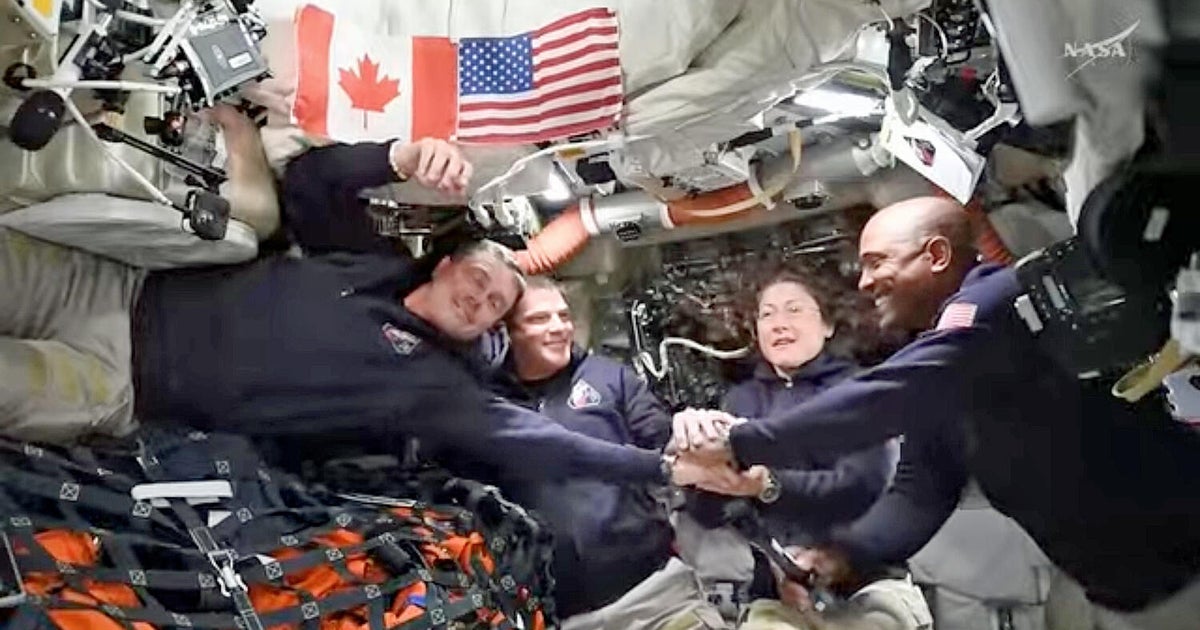
What made the crew’s reflections particularly poignant was the timing—sharing these thoughts during Easter weekend gave their message additional resonance. Glover, speaking for the entire crew, emphasized that regardless of whether people celebrate Easter, believe in God, or follow any particular faith tradition, this moment represents an opportunity for all of humanity to remember where we are, who we are, and that we must get through our shared challenges together. After delivering this impromptu message, Glover, Wiseman, Koch, and Canadian astronaut Jeremy Hansen clasped hands together in a moment of solidarity that was captured on camera and shared with mission control. Christina Koch added her own thoughts about gratitude, explaining that when she first saw Earth isolated against the blackness of space through the window, she was struck by just how dark and empty the surrounding cosmos really is. This made her appreciate even more what an anomaly our planet represents—a vibrant, life-sustaining world in an otherwise barren universe. The crew’s message resonated with people back on Earth who were dealing with their own challenges, reminding everyone that we share something incredibly precious and rare.
Toilet Troubles in Space: The Less Glamorous Side of Space Exploration
While the profound philosophical reflections dominated the emotional tone of the mission updates, the Artemis II crew has also been dealing with a decidedly less inspiring problem: their toilet hasn’t been working properly. Since the launch on Wednesday, the astronauts have experienced intermittent issues with the spacecraft’s waste management system, occasionally being told to avoid using the regular toilet in favor of what NASA calls “contingency collapsible urinals,” or CCUs—essentially sophisticated plastic containers used for urine collection that can later be vented into space. Each crew member has two of these devices available. The problem seems to stem from a frozen vent line that prevents the toilet’s stored urine from being dumped overboard as needed. Early Saturday, as the crew was preparing for bed, flight controllers were unable to empty the waste tank and told the astronauts to use their backup CCUs until the issue could be resolved. Mission control tried a creative solution: they reoriented the entire Orion capsule to allow direct sunlight to warm up the suspected frozen waste water vent line, hoping this “bakeout” would thaw any ice blocking the system. The maneuver was only partially successful—the tank didn’t empty completely, though it did improve somewhat. Flight Director Judd Frieling explained that technically the toilet would work for urination, but they wanted to keep the tanks only half full until they fully understood what was happening with the vent line. He added, somewhat humorously, that it was still “go for number two.”
Public Fascination with Space Plumbing and Practical Solutions
The toilet problems have generated considerable public and media attention, something that Mission Management Team Chairman John Honeycutt addressed directly. He acknowledged that the “fixation on the toilet is kind of human nature,” noting that everyone understands how important bathroom facilities are on Earth and recognizes that managing waste is even more challenging in the weightless environment of space. While Honeycutt expressed his hope that the system would be restored to optimal condition for the crew’s sake, he emphasized that they were managing fine and had trained for exactly these kinds of situations. Veteran astronaut Don Pettit, who wasn’t on this mission but has extensive space experience, took to social media to explain how the contingency urinals work. He described the CCU as essentially an open container that controls the interface between urine and air using capillary forces—similar to a special cup he designed for drinking coffee in weightlessness. Pettit added a practical perspective: “When you are in cislunar space with a broken toilet, you need contingencies and the CCU replaces the need for about 25 pounds of diapers.” This comment reminded everyone that while space exploration inspires us with its grandeur, it also requires solving very earthly problems in creative ways.
Looking Ahead: Lunar Flyby and Scientific Observations
Beyond the toilet troubles, the Orion spacecraft has been performing exceptionally well, with only minor hiccups along the way. In fact, mission planners have had to cancel planned trajectory correction maneuvers for two days running because analysis showed the spacecraft was already on such a perfect path that adjustments weren’t necessary. The crew has been busy with other activities, including manual piloting exercises where Wiseman and Glover took turns flying the Orion capsule to help engineers understand how it handles and to provide hands-on feedback for future Artemis missions. As the mission progresses, all four astronauts are preparing for one of the most anticipated moments: their close pass behind the moon on Monday evening. They’ve been reviewing plans for extensive video recording and camera mapping of the lunar surface, particularly the far side that’s never visible from Earth. Their closest approach will occur on the moon’s far side at an altitude of about 4,100 miles at 7:03 p.m. EDT Monday. While satellites have observed the moon in great detail from lower altitudes, the Artemis II crew will have a unique opportunity to observe features that no human has ever directly witnessed with their own eyes. Kelsey Young, a lunar researcher at NASA’s Goddard Space Flight Center, expressed excitement about the scientifically valuable observations the crew will make, noting they’ve spent many months training specifically for these moments. After looping around the dark side of the moon, the crew will begin their long journey back to Earth, carrying with them not just scientific data and photographs, but also a renewed perspective on how special and fragile our home planet truly is in the vast emptiness of space.