


Major U.S. Military Deployment to Middle East as Iran Conflict Escalates
Massive Troop Arrival Marks Significant American Commitment
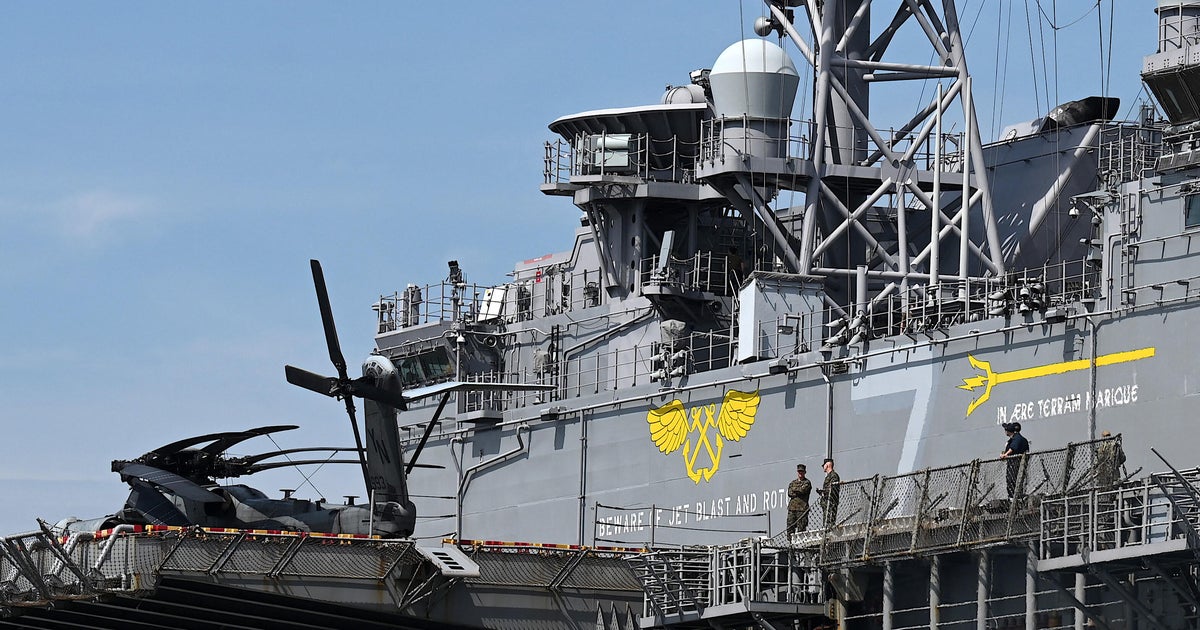
The United States has significantly escalated its military presence in the Middle East with the arrival of more than 3,500 troops this past weekend, marking a substantial increase in American forces as the conflict with Iran continues to intensify. At the heart of this deployment is the USS Tripoli, a state-of-the-art amphibious assault ship carrying approximately 2,500 Marines. U.S. Central Command confirmed the arrival through social media, announcing that the Tripoli, which serves as the flagship for both the Tripoli Amphibious Ready Group and the 31st Marine Expeditionary Unit, has entered its designated area of responsibility in the region. This modern “big deck” amphibious warship represents one of the most advanced vessels in the U.S. Navy’s fleet, specifically designed with expanded capacity to accommodate F-35 Stealth Fighter Jets, Osprey aircraft, and various other military aircraft. Just two weeks ago, the ship was stationed in Japan before receiving urgent orders to redeploy to the Middle East. The deployment includes not just personnel but also critical military assets including transport aircraft, strike fighter jets, and amphibious assault capabilities. Additionally, the USS Boxer and two accompanying ships, along with another Marine Expeditionary Unit, have been dispatched to the region from their home port in San Diego, further demonstrating the scope of America’s military commitment to the escalating situation.
Operation Epic Fury: Unprecedented Scale of Military Strikes
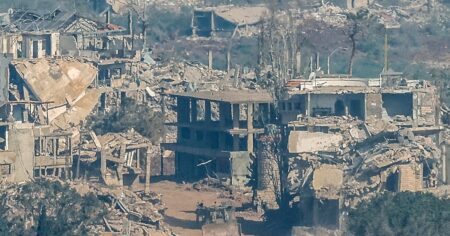
Since the commencement of Operation Epic Fury on February 28th, the scale of military action has been staggering. According to a fact sheet released by U.S. Central Command on Saturday, American forces have struck more than 11,000 targets throughout the operation. This extraordinary number reflects the intensity and breadth of the military campaign against Iranian positions and assets. The operation represents one of the most sustained military efforts in the region in recent years, with strikes targeting Iranian military infrastructure, command centers, and strategic positions. The sheer volume of targets hit demonstrates both the extensive planning that went into the operation and the determination of U.S. forces to significantly degrade Iranian military capabilities. While Secretary of State Marco Rubio emphasized on Friday that the United States can achieve its objectives “without any ground troops,” he also acknowledged that President Trump “has to be prepared for multiple contingencies.” Rubio explained that American forces are being positioned to provide “the president maximum optionality and maximum opportunity to adjust to contingencies should they emerge.” This statement suggests that while the current strategy focuses on air and naval power, the administration is preparing for various scenarios, including the possibility that circumstances might change and require different tactical approaches.
Direct Attack on American Forces Raises Stakes
The urgency of the military deployment became even more apparent following a direct Iranian attack on American personnel. At least ten U.S. troops were injured when Iran launched a coordinated assault on Saudi Arabia’s Prince Sultan air base, firing six ballistic missiles and an alarming twenty-nine drones at the facility. Among the injured service members, two sustained serious wounds, highlighting the very real dangers facing American forces in the region. This attack represented a significant escalation by Iran, demonstrating both their willingness to directly target American military personnel and their capability to launch complex, multi-pronged assaults combining different weapons systems. The strike on the air base served as a stark reminder that despite America’s technological superiority, U.S. forces remain vulnerable to Iranian attacks, particularly those involving ballistic missiles and drone swarms that can overwhelm defensive systems. The incident has likely influenced military planners’ decisions regarding force posture and defensive capabilities in the region, contributing to the rush to deploy additional Marines and naval assets that can provide both offensive strike capabilities and enhanced force protection.
Global Economic Impact: Oil, Shipping, and Strategic Waterways
The conflict between the United States and Iran has triggered severe disruptions to the global economy, affecting everything from international air travel to energy markets. The war has caused fuel prices to soar worldwide as Iran maintains its stranglehold on the Strait of Hormuz, one of the world’s most strategically important waterways. This narrow passage normally serves as a critical chokepoint for global oil shipments, with vast quantities of petroleum passing through daily on their way to markets around the world. With the strait effectively closed, the economic fallout has been substantial and widespread. Countries and shipping companies have been forced to scramble for alternative routes, creating logistical challenges and increasing costs across the supply chain. Saudi Arabia has responded by redirecting millions of barrels of crude oil daily through the Bab el-Mandeb Strait, located at the southern tip of the Arabian Peninsula. This alternative route allows vessels to reach the Suez Canal by traveling through the Red Sea, though it adds distance, time, and expense to shipments. The Bab el-Mandeb Strait normally handles approximately twelve percent of the world’s trade, while the Suez Canal accounts for about ten percent of global maritime trade, including a remarkable forty percent of all container ship traffic. The rerouting of so much additional traffic through these waterways has created congestion and raised concerns about the capacity of these alternative routes to handle the increased volume.
Houthi Involvement Threatens to Expand Regional Conflict
Just when the situation seemed complex enough, Iranian-backed Houthi rebels in Yemen announced their entry into the month-old conflict by claiming responsibility for a missile launch that Israeli forces reported intercepting. This development has sparked serious concerns about the potential expansion of the conflict and its implications for global shipping. The Houthis have demonstrated in the past their willingness and ability to disrupt maritime traffic, having attacked over one hundred merchant vessels with missiles and drones between November 2023 and January 2025, during which they sank two vessels while claiming to act in solidarity with Palestinians during the Gaza conflict with Hamas and Israel. Ahmed Nagi, a senior Yemen analyst at the International Crisis Group, warned that if the Houthis increase their attacks on commercial shipping through the Bab el-Mandeb Strait, it would further destabilize “all of maritime security,” with impacts extending far beyond just the energy market. Their involvement could prove particularly problematic for U.S. naval operations, especially concerning the deployment of the USS Gerald R. Ford aircraft carrier, which arrived in Croatia on Saturday for repairs. Military planners are wary of sending this valuable asset through the Red Sea, where it could face attacks similar to those experienced by the USS Dwight D. Eisenhower in 2024 and the USS Harry S. Truman in 2025. The Houthis have controlled Yemen’s capital, Sanaa, since 2014, and their decision to enter this conflict is significant given that they had maintained an uneasy ceasefire with Saudi Arabia and had stayed out of the current Iran conflict until now.
Diplomatic Efforts and Looming Deadline
Despite the military escalation, diplomatic efforts continue, though with limited success so far. President Trump has issued an ultimatum to Iran, demanding they reopen the Strait of Hormuz by April 6th, though Iranian officials maintain they have not engaged in any negotiations regarding this deadline. Trump envoy Steve Witkoff revealed that Washington delivered a comprehensive fifteen-point “action list” to Iran outlining terms for a possible ceasefire. The proposal includes significant provisions to restrict Iran’s nuclear program, which remains at the heart of tensions between Iran and both the United States and Israel, along with requirements to reopen the strategic strait. However, Tehran rejected this American proposal outright and instead presented its own five-point counter-proposal that includes demands for reparations and international recognition of Iranian sovereignty over the waterway. This fundamental disagreement over who controls the Strait of Hormuz and what compensation might be owed for the conflict represents a significant obstacle to any peaceful resolution. The coming days leading up to the April 6th deadline will be critical, as it remains unclear what actions President Trump might take if Iran refuses to comply. The massive military deployment now arriving in the region suggests the administration is preparing for the possibility that negotiations may fail and that military pressure may need to continue or even intensify to achieve American objectives in this increasingly dangerous standoff.