


Mystery Drone Swarms Over Nuclear Air Base Spark Major Security Concerns
A Week-Long Intrusion at a Critical Military Installation
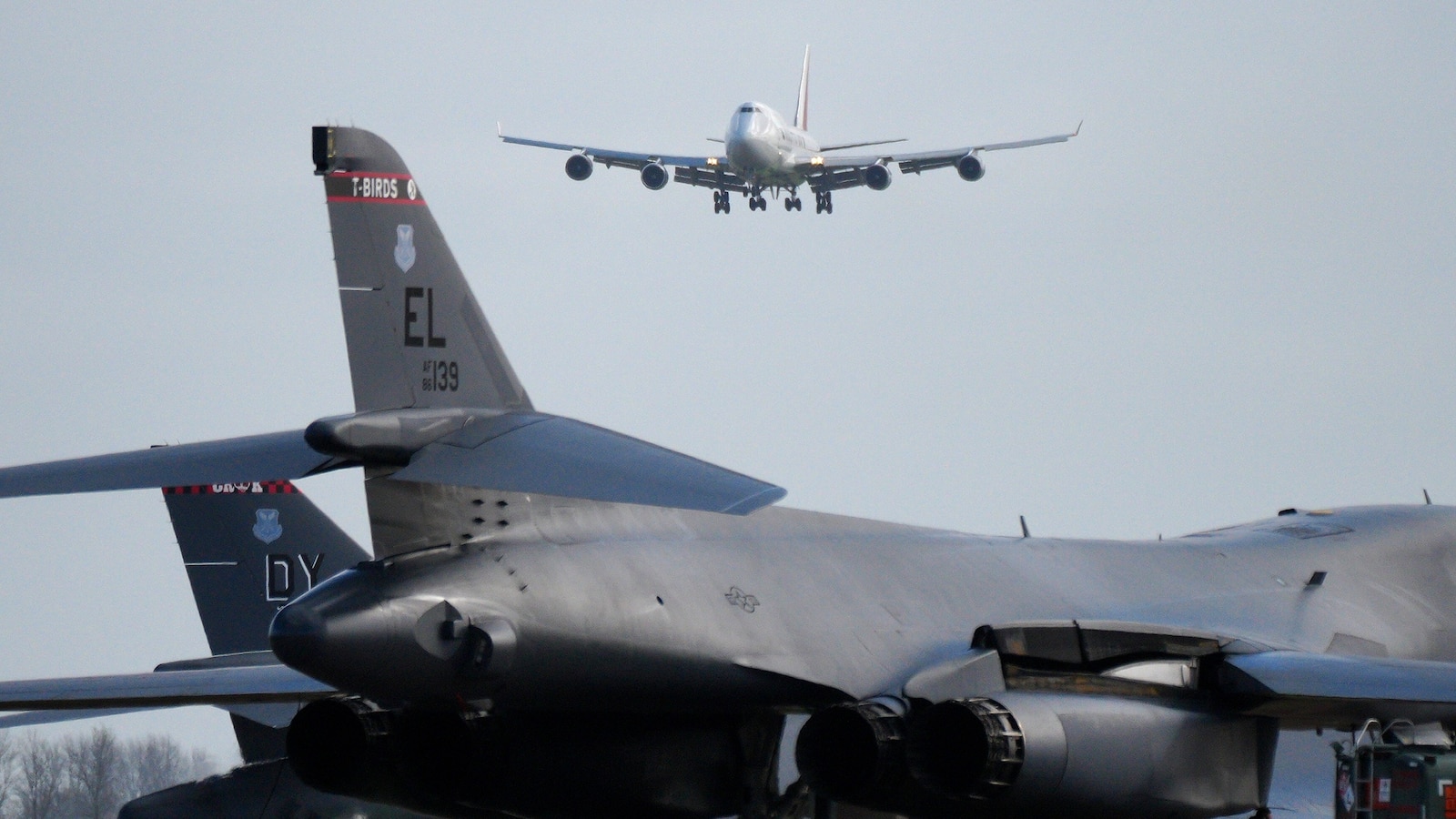
What initially seemed like a single drone incident at Barksdale Air Force Base in Louisiana has turned out to be something far more concerning and sophisticated. According to a confidential internal briefing document obtained by ABC News, the unauthorized drone activity that began on March 9th was not an isolated event but rather a coordinated series of intrusions that lasted nearly a week. The base, which initially issued a shelter-in-place order following the first reported sighting, found itself dealing with multiple waves of unmanned aerial systems operating over some of its most sensitive areas. This revelation has raised serious questions about military installation security and who might be behind such a brazen operation. Barksdale isn’t just any military base—it’s home to long-range B-52 bombers and serves as a critical hub for Air Force nuclear defense command and control operations, making these unauthorized flights particularly alarming for national security officials.
Sophisticated Operations Suggesting Deliberate Intelligence Gathering
The confidential briefing document dated March 15th paints a picture of highly coordinated drone operations that appear far more sophisticated than recreational flying gone wrong. Between March 9th and 15th, base security forces observed multiple waves consisting of 12 to 15 drones operating over sensitive areas including the flight line where aircraft are stationed. What makes these incursions especially concerning is the technical sophistication displayed by the drones themselves. According to military analysts who examined the incidents, these weren’t your typical consumer drones that anyone could purchase from an electronics store. The aircraft displayed non-commercial signal characteristics, utilized long-range control links, and demonstrated resistance to jamming—capabilities that suggest custom-built equipment requiring advanced knowledge of signal operations. The drones entered and exited the base using varied routes and deliberate maneuvering patterns that analysts believe may have been designed specifically to avoid detection of the operators. Even more telling, the lights on the drones and their flight patterns suggested the operators might be testing security responses at the base, essentially probing the installation’s defenses to see how personnel would react.
A Pattern That Suggests Intentional Reconnaissance
Each drone incursion lasted approximately four hours, with the unmanned aircraft dispersing across multiple sensitive locations on the base after reaching various points across the installation. The document notes there was no detected drone activity on March 13th and 14th, creating a brief respite before concerns about future incursions. Mick Mulroy, an ABC News contributor and former deputy assistant secretary of defense, emphasized that this wasn’t the work of some hobbyist who accidentally flew too close to restricted airspace. “Certainly, it seemed to be more than just your average drone enthusiast who just pushed it too far,” Mulroy explained. “It looked like this was deliberate and intentional to see just how they would react.” This assessment aligns with the patterns observed by base security—the systematic approach, the technical sophistication, the timing and coordination of multiple aircraft, and the apparent attempts to map security responses all point toward a deliberate reconnaissance operation rather than accidental airspace violations or amateur drone flying.
Serious Threats to Safety and National Security
The implications of these drone incursions extend well beyond simple airspace violations. According to the confidential briefing document, the drone operations pose a significant threat to both public safety and national security for several critical reasons. When unauthorized drones are detected over the base, the flight line must be shut down as a precautionary measure, disrupting normal operations at a facility that plays a vital role in America’s nuclear deterrent capabilities. Perhaps even more concerning is the risk these drones pose to manned aircraft that may already be in flight in the area—a potential mid-air collision could result in catastrophic loss of life and equipment. The analysts who prepared the briefing stated “with high confidence” that they expected unauthorized drones to continue operating in and around Barksdale Air Force Base in the immediate future, suggesting this is an ongoing threat rather than a resolved incident. This prediction indicates that whoever is behind these operations has not been deterred by the base’s response and may continue to probe its defenses and gather intelligence about its operations and security measures.
Multi-Agency Investigation Underway
Captain Hunter Rininger of the 2nd Bomb Wing confirmed the drone incursions in a statement to ABC News, though the full extent of the week-long activity had not been previously reported to the public. “Barksdale Air Force Base detected multiple unauthorized drones operating in our airspace during the week of March 9th,” he stated. The incident has triggered a multi-agency investigation involving federal and local law enforcement. The Federal Aviation Administration referred questions to the military, while Louisiana State Police, which is assisting with the investigation, declined to comment on the ongoing probe. Captain Rininger emphasized the seriousness with which the military is treating these violations: “Flying a drone over a military installation is not only a safety issue, it is a criminal offense under federal law. We are working closely with federal and local law enforcement agencies to investigate these incursions. The security of our installation and the safety of our people are top priorities, and we will continue to vigilantly monitor our airspace.”
Broader Implications for Military Security in the Drone Age
This incident at Barksdale Air Force Base highlights a growing challenge facing military installations in an era where drone technology has become increasingly accessible and sophisticated. The fact that operators were able to conduct multiple intrusions over the course of a week, despite the base being on heightened alert after the initial March 9th incident, raises uncomfortable questions about the ability of even high-security military facilities to defend against small, maneuverable unmanned aircraft. The resistance to jamming displayed by these drones is particularly concerning, as it suggests the operators anticipated defensive countermeasures and engineered their equipment accordingly. As drone technology continues to advance and proliferate, military planners will need to develop more effective counter-drone capabilities to protect sensitive installations. The systematic nature of these incursions—testing different entry routes, operating over various sensitive areas, timing flights to observe responses—suggests a level of planning and resources that points toward either a well-funded organization or potentially a state actor conducting intelligence gathering operations. Whatever the source, this incident serves as a wake-up call about vulnerabilities in the security of critical military infrastructure in the face of evolving technological threats that don’t require manned aircraft or sophisticated missiles to potentially cause significant disruption or gather valuable intelligence.