


Investigation Into Savannah Guthrie’s Mother’s Kidnapping Faces Critical Juncture
Case Resources May Be Scaled Back as Key Leads Stall
Nearly three weeks after Nancy Guthrie, the 84-year-old mother of beloved television journalist Savannah Guthrie, disappeared from her Tucson, Arizona home, the investigation into her kidnapping appears to be reaching a pivotal moment. Sources familiar with the case have informed ABC News that the lack of significant breakthroughs may soon force investigators to reduce the substantial resources currently dedicated to finding her. What began as an all-hands-on-deck emergency response involving 400 investigators working around the clock may need to transition into a smaller, more sustainable long-term operation. This potential shift doesn’t mean authorities are giving up—rather, it reflects the reality that maintaining such an intensive level of manpower indefinitely isn’t practical when the most promising leads have yet to yield the breakthrough everyone desperately hopes for.
The investigative team has faced frustration on multiple fronts. Partial DNA evidence recovered from Nancy Guthrie’s residence remains unidentified despite analysis, leaving investigators without a clear suspect to pursue through forensic channels. Technology experts from both private companies and the FBI have combed through her home security system but have been unable to recover additional video footage beyond what was initially obtained. Perhaps most discouragingly, detectives have so far failed to identify or locate any vehicle connected to her abduction, a detail that could have provided crucial leads about where she might have been taken or who might be responsible. The Guthrie family has been kept informed about these setbacks and has been briefed on the possibility that the investigation will need to enter a different phase with a modified approach and reduced personnel.
Understanding the Investigation’s Evolution
Rich Frankel, an ABC News contributor who previously oversaw hostage negotiations for the FBI, provided important context about what this transition means for the case. He emphasized that after more than two weeks in this type of investigation, law enforcement agencies must eventually move toward “a long-term sustainable level of manpower.” This is simply a practical necessity and doesn’t indicate that the case is being closed or abandoned. The Pima County Sheriff’s Department echoed this sentiment in an official statement, confirming that the investigation remains very much active. They noted that as long as tips continue coming in—and they’re currently reviewing thousands of them—investigators will continue following up on every possible lead. Several hundred personnel from various law enforcement agencies remain assigned to the case, though this number may decrease as the investigation evolves.
Jason Pack, a former FBI agent who now serves as chief executive of Media Rep Global Strategies, offered reassurance that what the public sees doesn’t always reflect the full picture of an investigation’s progress. He pointed out that the work most likely to crack a case open typically happens behind the scenes, away from press conferences and public updates. The real detective work occurs in forensic laboratories, in the back offices of retailers like Walmart reviewing purchase records, in gun shops where staff might recognize a suspect, in the analysis of digital server logs, and in countless hours of investigators reviewing timelines and evidence until patterns emerge. Sometimes a fresh perspective is exactly what’s needed to see something everyone else has missed. This means that even when it appears to the public that an investigation has stalled, crucial work may still be progressing in ways that aren’t immediately visible or appropriate to share publicly.
The Evidence Investigators Are Working With
Despite the challenges, investigators haven’t come away empty-handed. They have established a confirmed physical description of the suspect: a male standing between 5 feet 9 inches and 5 feet 10 inches tall with an average build. This information presumably came from security footage or witness accounts. Additionally, they’ve identified a crucial piece of physical evidence—a 25-liter Ozark Trail Hiker Pack, a backpack model sold exclusively at Walmart stores. This specificity is significant because it limits where the item could have been purchased, making it traceable. Law enforcement sources have confirmed that Walmart has cooperated fully with the investigation, handing over complete purchase records for every sale of that particular backpack model across the entire state of Arizona. This means investigators now have a finite list of buyers they can systematically work through, checking each purchaser against other evidence and potentially identifying the kidnapper through this retail trail.
Detectives have also been conducting old-fashioned legwork by canvassing gun shops throughout the Tucson area. They’ve been showing the doorbell video footage to employees and owners, hoping someone might recognize the suspect’s appearance, mannerisms, or other identifying details. This type of community-based investigation can sometimes yield unexpected results when someone recognizes a regular customer or remembers an unusual interaction. In a significant development that allows investigators to focus their efforts more effectively, Pima County Sheriff Chris Nanos has publicly cleared all members of the Guthrie family from suspicion. This announcement means that resources and attention can be directed outward toward finding the actual perpetrator rather than being consumed by the need to investigate those closest to the victim, as is standard protocol in cases like these.
Forensic Analysis and the Hope for DNA Breakthrough
The partial DNA recovered from inside Nancy Guthrie’s home represents perhaps the most promising avenue for identifying her kidnapper, but it’s also proving to be one of the most time-consuming aspects of the investigation. The biological sample has been sent to a private, out-of-state laboratory for analysis—a decision that suggests the material may be particularly complex or require specialized expertise. Extracting individual DNA profiles from a biological mixture is extraordinarily painstaking work that requires precision and cannot be rushed without risking contamination or inaccurate results. Forensic scientists must carefully separate the genetic material, ensuring that each profile is complete and accurate enough to be useful for comparison purposes.
Once the private laboratory completes this delicate work and produces usable DNA profiles, those results will be returned to the Pima County Sheriff’s Department. From there, the FBI can input the profiles into CODIS, the Combined DNA Index System, which is the national database containing DNA profiles of convicted offenders and arrestees. If the kidnapper has any prior criminal history that resulted in their DNA being collected, this could provide an immediate identification. Beyond traditional database searches, the sheriff’s department has indicated they’re exploring the possibility of investigative genetic genealogy—the same technique that famously helped identify the Golden State Killer. This approach uses DNA to build family trees and identify suspects through their relatives, even when the suspect themselves has never had their DNA entered into any law enforcement database. It’s a longer process but has proven remarkably effective in cold cases. The fact that authorities are considering this option suggests they’re preparing for all possibilities, including a scenario where traditional forensic methods don’t yield immediate results.
Community Support and the Path Forward
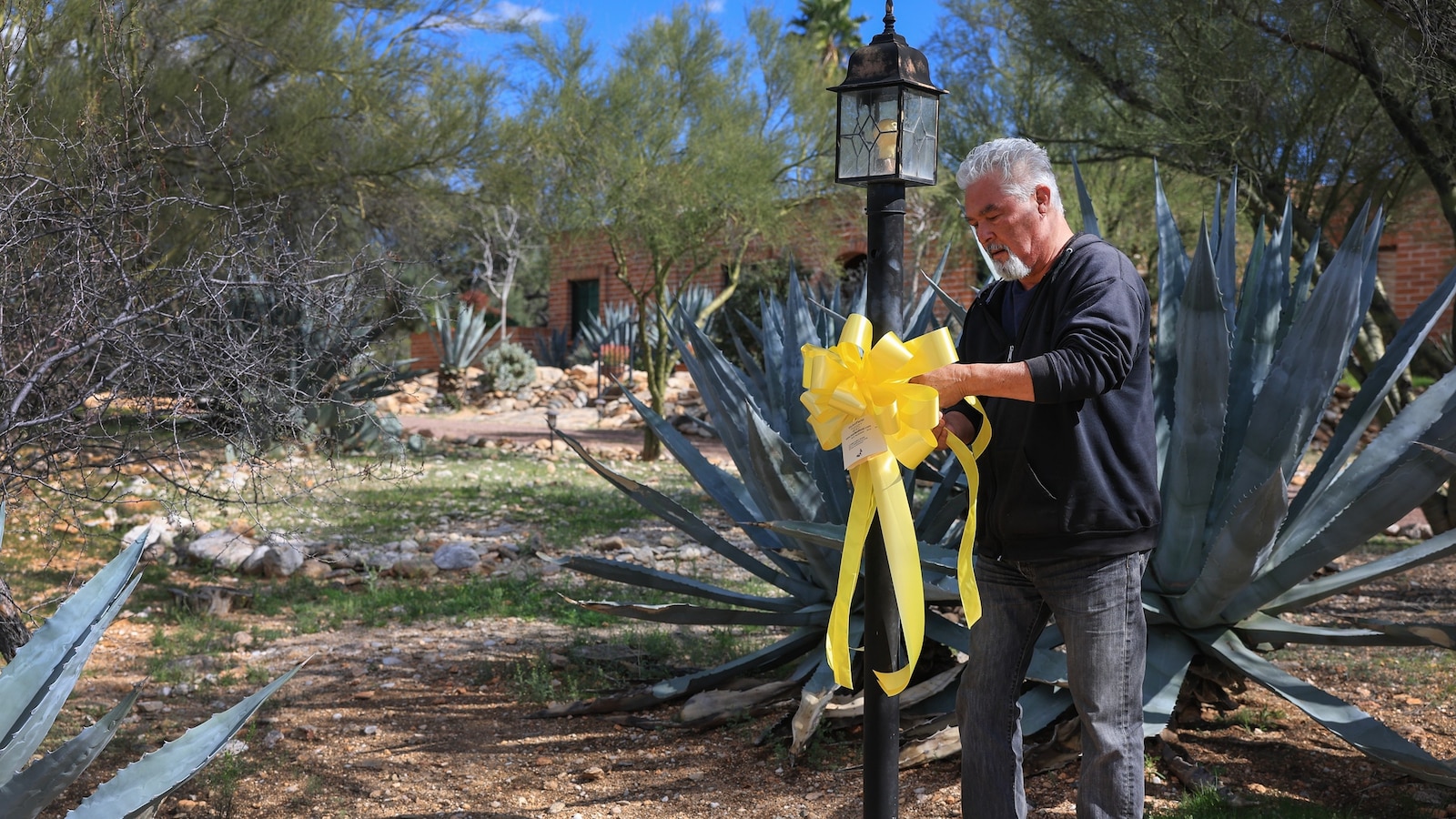
The community response to Nancy Guthrie’s disappearance has been overwhelming, with rewards for information leading to her recovery or the capture of her abductor now exceeding $200,000. This substantial sum reflects not only the high-profile nature of the case due to Savannah Guthrie’s prominence as co-anchor of NBC’s “Today” show but also the genuine concern people feel for an elderly woman taken from her home. Yellow ribbons have appeared throughout the Tucson neighborhood where Nancy lived, visible symbols of hope that she will be found and returned safely to her family. The combination of significant reward money, extensive media coverage, and thousands of tips pouring in demonstrates that public engagement remains high even as the investigation enters a potentially more difficult phase.
As the case potentially transitions from its initial intensive phase to a more sustainable long-term investigation, the key will be maintaining momentum while being strategic about resource allocation. The reality of law enforcement work is that agencies must balance multiple cases and responsibilities, and maintaining 400 investigators on a single case indefinitely simply isn’t feasible. However, this doesn’t mean Nancy Guthrie will be forgotten. A dedicated task force will continue working the case, following up on tips, waiting for laboratory results, and pursuing new leads as they develop. Sometimes these investigations are marathons rather than sprints, and persistence can eventually lead to the breakthrough that brings resolution. For Savannah Guthrie and her family, the waiting continues, supported by the knowledge that dedicated professionals are still working tirelessly to bring Nancy home and ensure that whoever is responsible for her disappearance faces justice.