

The Enduring Mystery of UFOs: A Journey Through Seven Decades of Sightings and Skepticism
The Post-War Dawn of the UFO Era
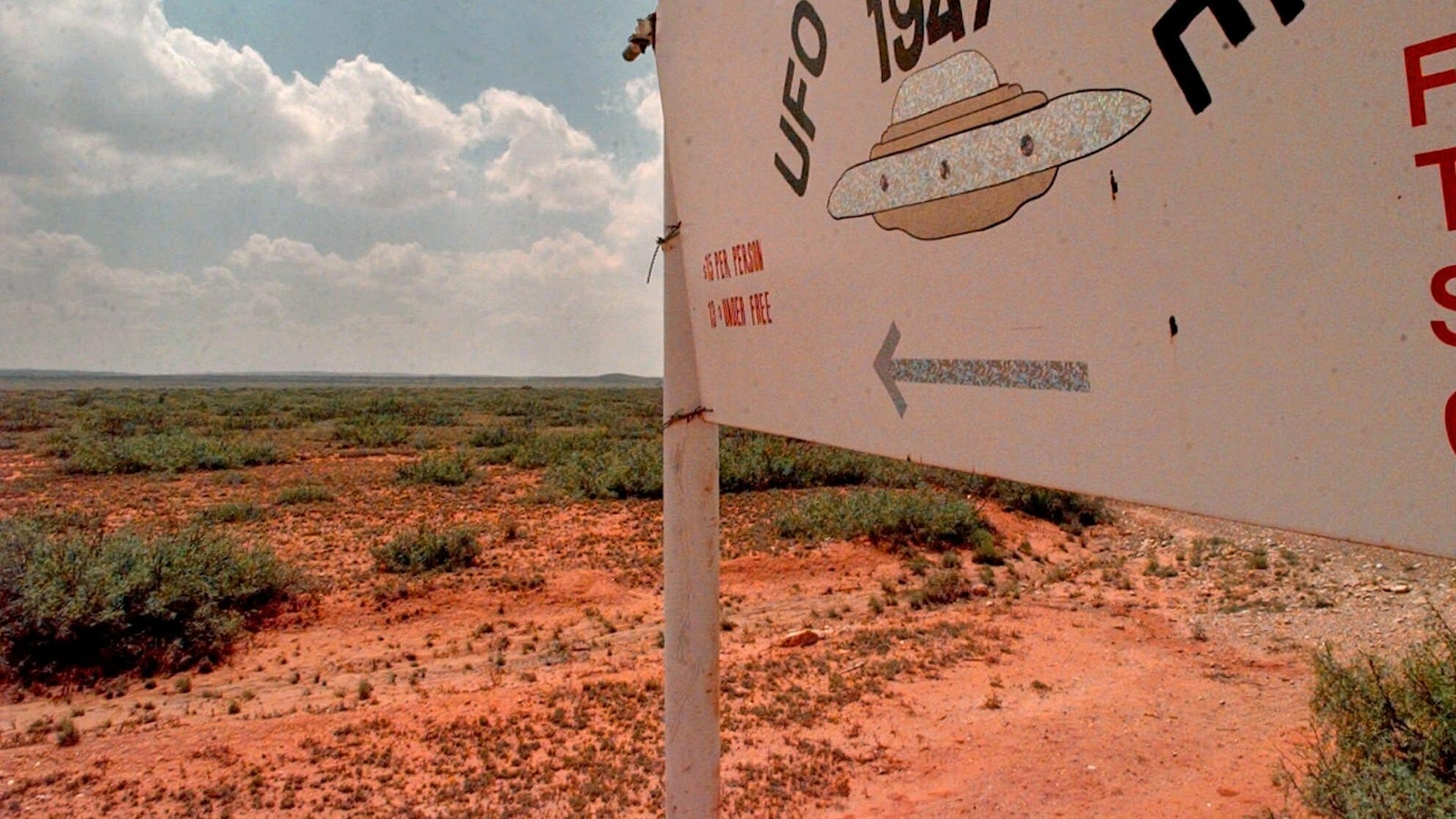
The modern fascination with unidentified flying objects truly began in the summer skies of 1947, marking the start of a phenomenon that would captivate generations. On June 24 of that year, private pilot Kenneth Arnold witnessed something extraordinary while flying near Mount Rainier in Washington state—nine mysterious objects moving through the air in ways that defied conventional explanation. His account became the first widely publicized UFO sighting in American history and triggered an avalanche of similar reports from citizens across the nation. Just days later, the incident that would become synonymous with UFO conspiracy theories unfolded near Roswell, New Mexico. A ranch foreman discovered strange debris scattered across the prairie on July 2, and what happened next set the template for decades of government secrecy allegations. Military authorities initially announced they had recovered a “flying disc,” only to quickly reverse course and claim the materials came from a mundane weather balloon. This abrupt change in story planted seeds of distrust that continue to flourish today. The wave of sightings prompted the U.S. Air Force to take the matter seriously enough to launch Project Sign in 1948, the first official government investigation into these mysterious aerial phenomena. This program would eventually evolve into Project Blue Book in 1953, a comprehensive effort that would examine more than 12,600 reported sightings over the next two decades, establishing a pattern of official scrutiny mixed with public skepticism that characterizes the UFO phenomenon to this day.
Cold War Skies and Desert Secrets
The 1950s and 1960s saw UFO sightings become woven into the fabric of American Cold War anxiety and popular culture. In the summer of 1952, multiple radar operators and pilots detected up to a dozen unexplained objects hovering over the nation’s capital, Washington D.C.—an incident that sent shockwaves through military and civilian communities alike. The fact that these objects appeared directly over the seat of American government during the height of Cold War tensions only amplified concerns about national security and unknown threats from above. During this same period, the government was building what would become perhaps the most famous site in UFO lore: Area 51. Construction began in the mid-1950s on this remote Air Force facility northwest of Las Vegas, and its extreme secrecy made it a magnet for speculation about captured alien technology and hidden extraterrestrial evidence. The CIA wouldn’t even acknowledge the site’s existence until 2013, six decades after its creation. Meanwhile, ordinary Americans continued reporting strange encounters. In November 1957, dozens of residents in Levelland, Texas, described seeing mysterious lights that didn’t just appear in the sky—they actually interfered with their vehicles and electrical systems, adding a disturbing new dimension to UFO reports. The 1960s brought cultural shifts as space exploration captured the public imagination, culminating in the 1966 premiere of “Star Trek” on NBC, which launched the most enduring space drama in television history. Yet even as Americans dreamed of peaceful interstellar exploration, the Air Force continued its investigations, ultimately concluding Project Blue Book in December 1969 with a definitive statement: they had found no evidence that any UFO represented extraterrestrial life or threatened national security.
Hollywood Takes Flight and the Phenomenon Persists
The 1970s and 1980s witnessed UFO culture shifting significantly toward mainstream entertainment, though credible sightings continued to emerge. Steven Spielberg’s 1977 masterpiece “Close Encounters of the Third Kind” brought the UFO phenomenon to cinema screens with unprecedented emotional depth and visual spectacle, transforming alien contact from a source of fear into something potentially wondrous and transformative. The film resonated deeply with audiences hungry for meaning in an increasingly complex world. Real-world incidents kept pace with Hollywood’s imagination. In December 1980, U.S. Air Force personnel stationed at bases in Great Britain reported extraordinary experiences in Rendlesham Forest, northeast of London. Officers investigating strange lights claimed to encounter a metallic object among the trees, producing one of the most credible military UFO incidents on record, complete with multiple trained observers and physical evidence claims. Spielberg returned to the extraterrestrial theme in 1982 with “E.T. the Extraterrestrial,” this time presenting aliens as gentle, sympathetic beings rather than threats—a portrayal that softened public fears and made the idea of alien life more accessible to families and children. The 1990s brought both spectacular fictional invasions and continued real-world mysteries. Roland Emmerich’s blockbuster “Independence Day” in 1996 imagined hostile alien forces attacking Earth’s major cities, tapping into millennial anxieties about the future. The following year, in March 1997, thousands of Arizona residents witnessed what became known as the Phoenix Lights—a massive flying object or series of lights moving silently across the night sky in one of the largest mass UFO sightings in American history.
The Military Confronts the Unexplained
The turn of the millennium brought a dramatic shift in how the military establishment approached unidentified aerial phenomena, with unprecedented official acknowledgment of genuine mysteries. In 2004, U.S. Navy aviators tracked several objects that defied conventional explanation, including one dubbed “Gofast” that moved in ways that seemed to violate known laws of physics. Another video from that year, labeled “Gimbal,” captured an object rotating as it soared through clouds against the wind, with one naval aviator’s voice captured on recording telling his colleague, “There’s a whole fleet of them.” These weren’t amateur enthusiasts with shaky cameras—these were trained military personnel using sophisticated tracking equipment, lending unprecedented credibility to UFO reports. For years these videos circulated as leaks, but in a stunning development in 2019, the Pentagon officially acknowledged the footage as genuine recordings of “unidentified aerial phenomena,” effectively confirming that the U.S. military had indeed encountered objects whose nature and origin remained mysterious. This acknowledgment represented a seismic shift in official posture, moving from dismissal and ridicule toward serious engagement with a phenomenon that refused to disappear. The Pentagon established a UAP Task Force in 2020, followed by the creation of the All-Domain Anomaly Resolution Office (AARO) in 2022, specifically mandated to track reports of unidentified objects not just in the sky but also underwater and in space. In 2021, investigators released a U.S. government report reviewing 144 sightings that found no evidence of extraterrestrial links, yet significantly highlighted the critical need for better data collection—implicitly acknowledging that something genuinely puzzling was happening even if aliens weren’t the answer.
Transparency, Testimony, and Continued Investigation
The 2020s have witnessed an extraordinary opening of dialogue about UFOs at the highest levels of government, breaking down decades of stigma and secrecy. In 2022, Congress held its first hearing on UFOs in half a century, with lawmakers from both political parties agreeing that unidentified aerial phenomena represented legitimate national security concerns worthy of serious investigation rather than mockery. NASA announced it was launching an independent study of UFOs as part of a push toward high-risk, high-impact science, recognizing that the space agency’s expertise and credibility could advance understanding of these phenomena. When NASA released its findings in 2023, the agency concluded that studying UFOs would require new scientific techniques, including advanced satellites, and importantly, a fundamental shift in how unidentified flying objects are perceived—moving from ridicule toward rigorous scientific inquiry. Perhaps the most explosive moment came in July 2023 when former Air Force intelligence officer David Grusch testified before a House Oversight subcommittee, making the extraordinary claim that the U.S. government was concealing a longstanding program that retrieves and reverse-engineers alien spacecraft. The Pentagon firmly denied concealing any such program, but Grusch’s testimony, delivered under oath by a credentialed intelligence officer, ensured the allegations couldn’t be easily dismissed. A comprehensive Pentagon study released later that year examined reported UFO sightings over nearly a century and found no evidence of aliens, extraterrestrial intelligence, or secret programs reverse-engineering alien technology—yet the very existence of such an extensive study demonstrated how seriously the government now takes these questions.
The Current Moment: Politics, Disclosure, and Ongoing Mystery
The UFO phenomenon has entered an unprecedented phase of political attention and public debate, with even former presidents weighing in on humanity’s oldest question: are we alone? In February 2025, former President Barack Obama addressed the question directly on a podcast, stating with characteristic clarity, “They’re real. But I haven’t seen them. And, they’re not being kept in Area 51.” He later elaborated on social media, explaining that while the statistical vastness of the universe makes extraterrestrial life probable, the immense distances between solar systems make actual visitation unlikely, and he saw no evidence of alien contact during his presidency. Days later, President Donald Trump announced via social media that he was directing the Pentagon and other agencies to identify and release files related to extraterrestrials and UFOs, citing “tremendous interest” in the subject. Trump accused Obama of disclosing classified information, though he acknowledged he didn’t know himself whether UFOs were “real or not”—a statement that somehow managed to fuel both disclosure advocates and skeptics simultaneously. Most recently, in March 2025, U.S. Representative Anna Paulina Luna formally requested that Defense Secretary Pete Hegseth release approximately four dozen videos related to UAP sightings to an oversight committee task force, emphasizing that “the presence of UAPs in and around the sensitive airspaces of U.S. military installations poses a threat to the security of the armed forces and their readiness.” What began with a private pilot’s sighting over Mount Rainier in 1947 has evolved into a complex intersection of national security concerns, scientific inquiry, political maneuvering, and humanity’s deepest questions about our place in the cosmos—with no clear resolution in sight but unprecedented official engagement with mysteries that continue to captivate our collective imagination.