


The Dark Reality Behind Jeffrey Epstein’s “Sweetheart Deal”: New Evidence Reveals Shocking Details
A Plea Deal That Shocked the Nation
The 2008 plea agreement involving financier Jeffrey Epstein remains one of the most controversial legal arrangements in recent American history. What should have been a federal sex trafficking case involving dozens of victims—many of them minors—was instead reduced to state-level charges of soliciting a minor for prostitution. Epstein surrendered to Palm Beach County authorities in July 2008, and the deal he received has been widely criticized as exceptionally lenient given the severity of the allegations against him. Survivors of his abuse and legal experts have consistently referred to this arrangement as a “sweetheart deal,” questioning how someone accused of such serious crimes could receive such favorable treatment. The case highlighted deep concerns about how wealth and connections can influence the justice system, and newly released documents are now shedding even more disturbing light on just how privileged Epstein’s treatment truly was during his incarceration.
Work Release Program: A License to Continue His Lifestyle
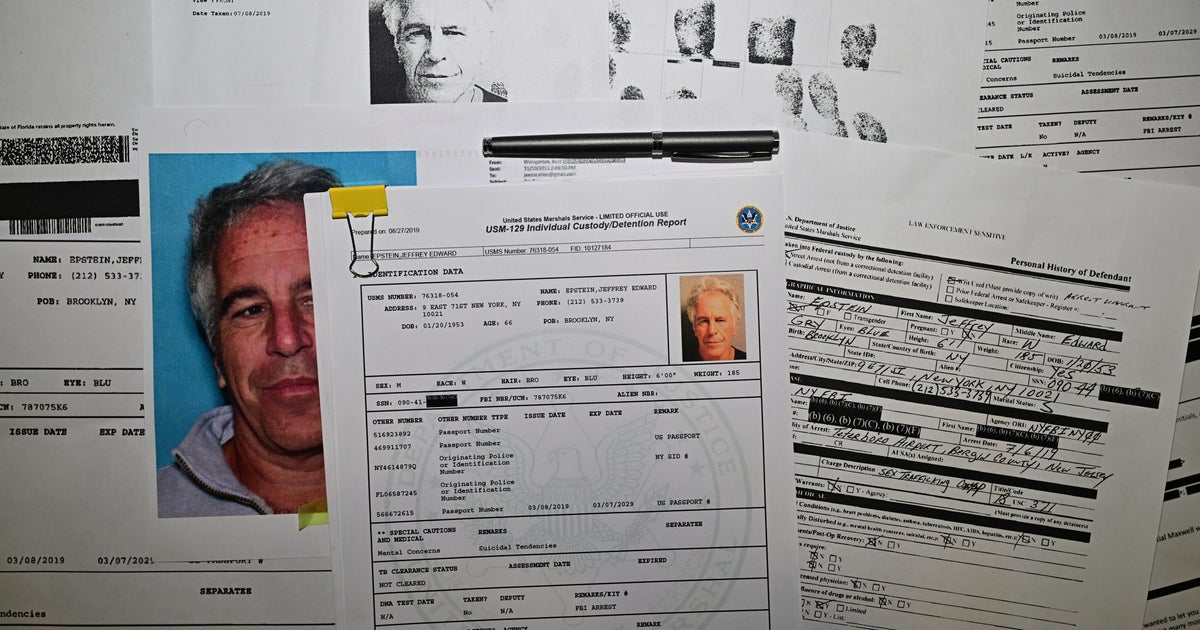
After serving less than four months behind bars, Epstein was granted an extraordinary privilege through a work release program that allowed him to leave custody for up to 16 hours per day, six days a week. This arrangement supposedly enabled him to perform work at the Florida Science Foundation, a charitable organization he had recently established. The work release continued for nine months until July 2009, when he was released to a year of supervised house arrest. Each day, Epstein’s personal bodyguard and driver, Igor Zinoviev, transported him between the jail and an office in downtown West Palm Beach. His personal attorney, Darren Indyke, served as his official supervisor at the job—an arrangement that raised eyebrows among those familiar with typical work release programs. Epstein agreed to hire off-duty sheriff’s deputies to monitor his movements, log visitors, and provide security at both his office and home. However, documents released under the Epstein Files Transparency Act reveal that the SUV used for these daily trips was outfitted with a bed, a detail that would prove significant in understanding just how little oversight Epstein actually faced during this period.
Allegations of Sexual Activity While “In Custody”
Perhaps the most disturbing revelation from the newly released documents involves testimony from a woman who told FBI agents that Epstein engaged in sexual activity with her inside his specially outfitted SUV while it was parked in the jail parking lot. The woman, a former model from Slovakia, had first met Epstein as a teenager while still in high school. According to her account, she was recruited from Slovakia by Jean-Luc Brunel, Epstein’s friend and business associate, during her senior year to move to New York City and pursue modeling. She first encountered Epstein at Brunel’s birthday party at the famous Cipriani restaurant in New York in 2003. By the time of Epstein’s incarceration years later, she had been sexually involved with him for several years. Notably, she was one of four “assistants” who received immunity under the federal non-prosecution agreement that Epstein secured—a deal ultimately approved by Alexander Acosta, who was then serving as U.S. Attorney for the Southern District of Florida. Some of Epstein’s accusers have alleged that these women were involved in recruiting his victims, though she did not address this during her FBI statements. Attorney Spencer Kuvin, who represented many of Epstein’s accusers and brought several of the first lawsuits against him, noted that this woman’s name never appeared on official prison visitor logs that were obtained during litigation. When Kuvin deposed her in 2010 while representing an underage victim, she repeatedly invoked her Fifth Amendment rights and declined to answer questions.
A Pattern of Privilege and Minimal Oversight
The testimony from this woman, given during a 2020 FBI interview in New York as part of the criminal investigation into Ghislaine Maxwell, painted a picture of remarkably lax supervision and an unusually cozy relationship between Epstein and members of the Palm Beach County Sheriff’s Department. She described minimal oversight during his supposed incarceration, stating that when she and Epstein were parked in the prison lot, she “recalled flashlights in the parking lot, but no one ever came over to the car.” CBS News has chosen to withhold her name because she has recently identified herself as an Epstein victim. During her interviews with federal investigators, documented in official interview notes known as 302s, she provided extensive details about her relationship with Epstein. She revealed that he had paid her hundreds of thousands of dollars after their relationship ended, allegedly because she was having difficulty finding employment due to negative publicity. She also told investigators that during his incarceration, she engaged in virtual sexual activity using a webcam with Epstein while he was apparently alone in custody. Adam Horowitz, another Florida attorney who represented many of Epstein’s victims, offered insight into the significance of these interviews: “These interviews really show how grooming works. You’re hearing the voice of someone who was conditioned to protect Epstein, even while describing the system he used to exploit young women.”
More Disturbing Details Emerge About Prison Conditions
The woman’s FBI interviews revealed additional troubling details about Epstein’s time in custody that suggest his incarceration was more theatrical than real. She described Epstein as being particularly friendly with one prison guard who even visited Epstein’s home during his house arrest period to discuss a potential job opportunity. In what she characterized as a prank, she recounted an incident where Epstein hid in a bathroom during a sheriff’s inspection of his residence—a story that, if true, demonstrates shocking negligence on the part of supervising authorities. She also claimed that Epstein bragged about having an unfriendly probation officer transferred, suggesting he wielded considerable influence even while supposedly being punished. During her visits to the jail, she stated she was never required to sign in or complete any paperwork, which would explain why her name never appeared on official visitor logs. A separate 2019 document released by the Department of Justice contained an uncorroborated tip from a man claiming to be a former part-time paramedic at the jail, who stated that Epstein had paid to have a closed section of the jail reopened specifically for his use, allowing him to avoid being housed with the general prison population. The tipster described this as “highly unusual preferential treatment.” When asked about these allegations, the Palm Beach Sheriff’s Department responded to CBS News by stating, “We have no evidence to substantiate that these incidents took place.” A 2021 report by the Florida Department of Law Enforcement found no evidence that bribery or undue influence affected Epstein’s treatment, though critics argue that the lack of evidence may itself reflect inadequate record-keeping or oversight.
Systemic Failure and the Long Road to Accountability
Spencer Kuvin expressed his outrage about the situation in stark terms: “I think it’s absolutely disgusting the lack of oversight by the local police department. If all of this is true, they allow a sexual predator to continue his activities even while he was supposed to be in custody and it just highlights the nature of the sweetheart deal that he got and the preferential treatment he received because of his wealth.” Lauren Hersh, director of the anti-trafficking group World Without Exploitation, framed the issue more broadly: “A number of survivors have made clear that Epstein’s exploitation did not stop during his incarceration. At best, Epstein’s highly unusual arrangement demonstrates law enforcement’s negligence. More likely, this is symptomatic of a system that prioritized accommodating a predator over delivering justice for survivors and protecting vulnerable girls and women.” Despite the controversial 2008 plea deal, some investigators at the Department of Justice apparently never gave up hope of pursuing the case against Epstein. “It was a shame. We had a great case,” one employee wrote in a previously unreleased text included in the Epstein files. “I never gave up on it. I kept everything ready … in case the non prosecution agreement got voided.” That persistence eventually paid off—at least partially. Ten years after his original plea deal, Epstein was arrested again in 2019 and charged in federal court with trafficking of minors in New York. However, he was found dead in a Manhattan jail cell on August 10, 2019, in what was ruled a suicide, denying survivors the opportunity to see him face full accountability in court. The newly released documents underscore what many have long suspected: that Epstein’s wealth and connections afforded him treatment that would be unthinkable for an ordinary defendant, and that the justice system failed his many victims not just once, but repeatedly throughout his incarceration and beyond.