

Don Lemon Arrested: Journalist Faces Federal Charges Over Church Protest Coverage
The Arrest and Initial Court Appearance
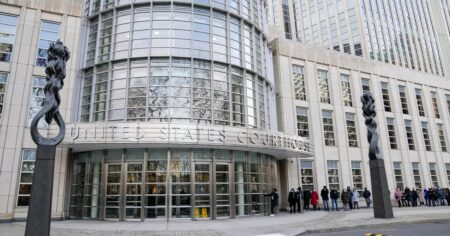
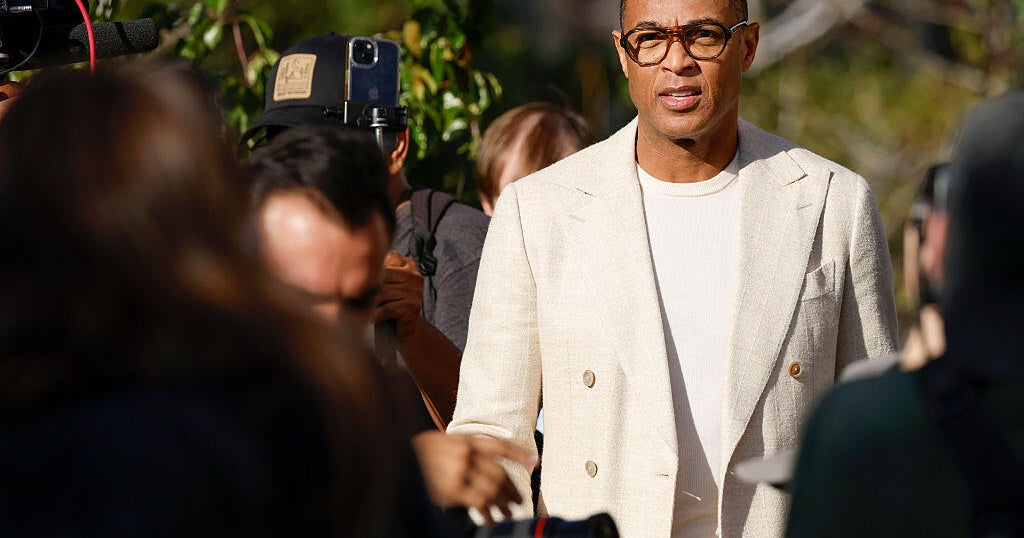
In a dramatic turn of events that has sent shockwaves through the journalism community, veteran journalist Don Lemon was arrested by federal agents in Los Angeles late Friday night. The arrest, which involved both FBI agents and Homeland Security Investigations personnel, came nearly two weeks after Lemon covered an anti-ICE protest at Cities Church in St. Paul, Minnesota. Sources close to the matter revealed that a grand jury had been assembled just one day before the arrest, suggesting that federal prosecutors had been building their case against the journalist in the days leading up to his detention. When Lemon appeared before a federal judge in Los Angeles on Friday afternoon, still wearing the cream-colored double-breasted suit and matching T-shirt he had on when arrested, the courtroom atmosphere was tense. The judge ultimately released him on his own recognizance without requiring bail, though with certain conditions attached. These conditions include avoiding contact with victims, witnesses, and co-defendants, obtaining court permission for international travel (except for a previously planned June trip to France), and appearing at his next scheduled hearing on February 9 in Minneapolis federal court. Notably, Los Angeles Mayor Karen Bass was present in the courtroom gallery, underscoring the high-profile nature of the proceedings and the concern among public figures about the implications of this arrest.
The Charges and Legal Framework
The federal indictment against Lemon and eight co-defendants includes serious charges that carry significant implications for both the journalist and the broader press freedom landscape. Specifically, each defendant faces one count of conspiracy against religious freedom at a place of worship, as well as charges of injuring, intimidating, and interfering with the exercise of religious freedom at a place of worship. These charges stem from a January 17-18 incident where protesters entered St. Paul’s Cities Church after discovering that one of its pastors serves as an Immigration and Customs Enforcement (ICE) official. The Justice Department’s case relies heavily on allegations that the group coordinated their actions in advance, with prosecutors pointing to social media posts made the day before the protest that outlined plans while keeping the specific location hidden. According to the indictment, the protesters gathered in a grocery store parking lot on the morning of January 18, where some provided instructions on what to do once they arrived at the church. The prosecution alleges that once inside the church, Lemon and his co-defendants “oppressed, threatened, and intimidated the Church congregants and pastors by physically occupying most of the main aisle and row of chairs near the front of the Church, engaging in menacing and threatening behavior.”
Lemon’s Defense and First Amendment Concerns
Standing outside the courthouse following his hearing, Lemon delivered an impassioned statement defending his actions as constitutionally protected journalism. “Last night, the DOJ sent a team of federal agents to arrest me in the middle of the night for something that I’ve been doing for the last 30 years, and that is covering the news,” Lemon told assembled reporters. “The First Amendment of the Constitution protects that work for me and for countless other journalists who do what I do. I stand with all of them, and I will not be silenced. I look forward to my day in court.” His attorney, Abbe Lowell, echoed these sentiments in a strongly worded statement, emphasizing that Lemon had been practicing journalism for three decades and that his work in Minneapolis was no different from what he has always done. Lowell argued that “The First Amendment exists to protect journalists whose role it is to shine light on the truth and hold those in power accountable. There is no more important time for people like Don to be doing this work.” The defense team also pointed out what they view as a troubling inconsistency in the Justice Department’s priorities, noting that federal prosecutors have focused resources on arresting a journalist covering a protest rather than investigating the federal agents who allegedly killed Renee Good and Alex Pretti in Minnesota earlier in the month. This comparison, Lowell suggested, represents “the real indictment of wrongdoing in this case.”
The Prosecution’s Evidence and Timeline
The government’s case against Lemon relies significantly on his own livestream footage and social media presence during the events in question. According to court documents, Lemon began livestreaming to his social media channel during the grocery store parking lot gathering, where he told his audience that the group was preparing for a “resistance” operation against federal immigration policies. Prosecutors allege that Lemon “took steps to maintain operation secrecy by reminding certain co-conspirators to not disclose the target of the operation and stepped away momentarily so his mic would not accidentally divulge certain points of the planning session.” The indictment further states that before arriving at the church, Lemon reiterated to his audience that he would not disclose where they were going, and while driving to the church, he told one defendant during the livestream, “Don’t give anything away.” Once inside the church, prosecutors allege that Lemon and two co-defendants “largely surrounded” the pastor “in an attempt to oppress and intimidate him,” and that the group ignored the pastor’s requests that they leave. At one point, the document claims, Lemon stood near the main door of the church and “confronted some congregants and physically obstructed them” as they tried to leave. U.S. Attorney General Pam Bondi announced that in addition to Lemon, federal agents had arrested three other co-defendants in connection with what she described as “the coordinated attack on Cities Church”: Jamael Lydell Lundy, Trahern Jeen Crews, and Georgia Ellyse Fort, all of whom appeared in Minnesota federal court and were released on personal recognizance bonds.
The Complicated Legal History and Judicial Resistance
The path to Lemon’s arrest was far from straightforward and reveals significant disagreement within the legal system about whether these charges are appropriate. Last week, a federal appellate court declined to order a lower court judge to sign arrest warrants for five people, including Lemon, in connection with the January 18 protest. This decision came after a magistrate judge in Minnesota, Douglas Micko, had previously rejected five arrest warrants in the case for lacking probable cause, including the one for Lemon. When the first three defendants were initially charged, Judge Micko approved only one civil rights charge against activists Nekima Levy Armstrong, former president of the Twin Cities NAACP chapter, and Chauntyll Louisa Allen, an elected St. Paul School Board member. However, the judge rejected a FACE Act (Freedom of Access to Clinic Entrances) charge against each of them on grounds that there was no probable cause. Sources familiar with the matter told CBS News that federal prosecutors in the Minneapolis-based U.S. Attorney’s Office had “significant concerns with the strength of the evidence in the church protests.” When the first defendants were charged, no career officials from that office appeared in court, and instead, the Justice Department sent two lawyers from the Civil Rights Division in Washington to handle the proceedings. This unusual arrangement suggests internal disagreement within the Justice Department about pursuing these cases. The fact that prosecutors eventually convened a grand jury to secure indictments rather than proceeding through the warrant process that had been repeatedly rejected by judges indicates a strategic pivot in the government’s approach.
Broader Implications for Press Freedom and Journalism
The arrest of Don Lemon has ignited a fierce debate about the boundaries of press freedom and what constitutes journalism versus participation in the events being covered. CNN, where Lemon worked for more than 15 years before being fired in 2023, issued a statement saying his arrest raises “profoundly concerning questions about press freedom and the First Amendment.” The network pointed out that “The Department of Justice already failed twice to get an arrest warrant for Don and several other journalists in Minnesota, where a chief judge of the Minnesota Federal District Court found there was ‘no evidence’ that there was any criminal behavior involved in their work.” Legal experts have also weighed in on the potential ramifications of this prosecution. Julius Nam, a former federal prosecutor who handled civil rights cases, warned that “this case could set a dangerous precedent for charging reporters who cover protests for the conduct of the protesters if there was any prior communications with the protesters, and could even expose American journalists embedded with the U.S. military to being charged with war crimes along with soldiers who may commit such crimes.” The Justice Department has been particularly focused on the video Lemon filmed before the protest, viewing the pre-meeting gathering as alleged evidence of a conspiracy to interfere with people’s religious rights, while Lemon’s supporters maintain he was simply filming the meeting as part of his reporting. Since leaving CNN, Lemon has continued his journalism career independently, initially announcing in early 2024 that he would launch The Don Lemon Show on X (formerly Twitter), though that partnership ended abruptly after he interviewed the platform’s owner, Elon Musk. He now hosts a show on YouTube, and was in Los Angeles at the time of his arrest to cover the Grammy Awards. As this case moves forward, it will likely become a critical test of how far the government can go in prosecuting journalists who are accused of crossing the line from observing events to participating in them, with implications that will resonate throughout American journalism for years to come.