



From Basement Hobby to Museum Marvel: The Incredible Story of Joe Macken’s Miniature New York
A Truck Driver’s Vision Takes Shape
In the quiet suburbs of Clifton Park, New York, something extraordinary began in the spring of 2004. Joe Macken, an ordinary truck driver, descended into his basement with nothing more than some balsa wood and a simple curiosity about whether he could create something interesting. His first project was modest enough—a miniature replica of the iconic RCA Building, the centerpiece of Rockefeller Center in Manhattan. What happened next would consume the next two decades of his life in the most unexpected way. The satisfaction he felt after completing that first building was so profound that he returned to his workbench the very next day to build another structure. And then another. And another. What started as a weekend project quickly evolved into something far more ambitious than Macken could have ever imagined. There was no grand plan, no endpoint in sight—just a man, his tools, and an ever-growing cityscape taking shape in his basement, one tiny building at a time.
The Project That Wouldn’t Stop Growing
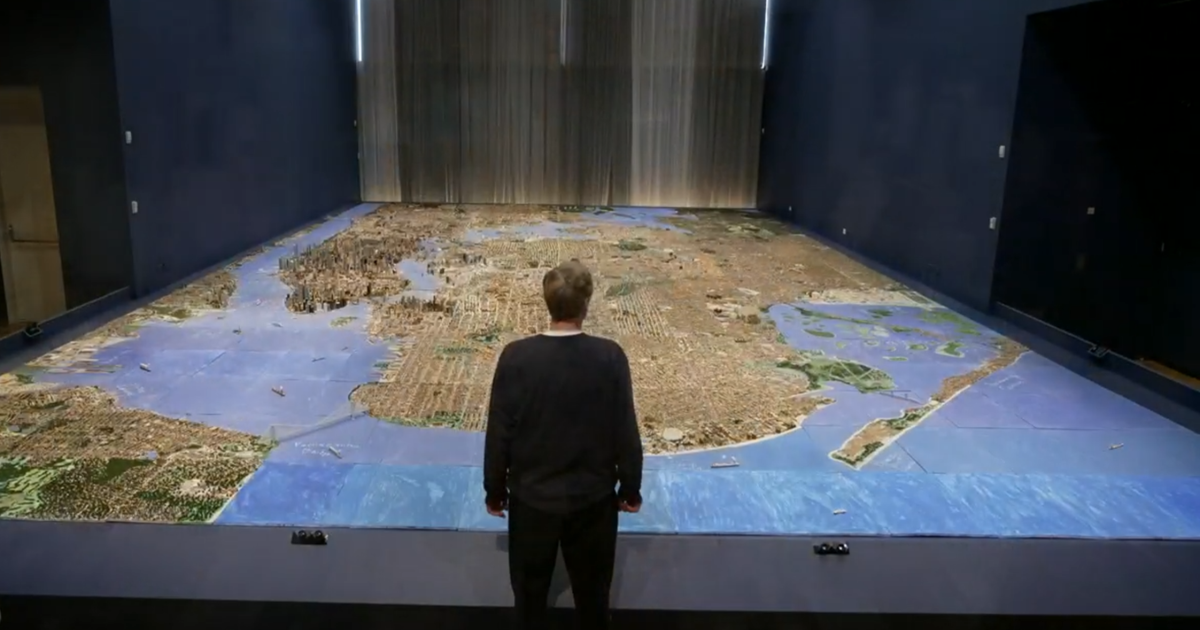
What makes Joe Macken’s story so remarkable isn’t just the quality of his work, but the sheer scope of his obsession. He didn’t stop after recreating Rockefeller Center. He continued building until he had constructed all of Midtown Manhattan. But even that wasn’t enough. His miniature city expanded to encompass all of Manhattan, then spread across the water to include all five boroughs of New York City. Each painstaking detail was carved from balsa wood, each structure a testament to his dedication and craftsmanship. The scale of the project eventually outgrew his basement entirely, forcing Macken to rent storage space to house his expanding metropolis. In his miniature creation, each square represents approximately one square mile of actual New York City geography. For more than twenty years, these intricate pieces have been accumulating, box after box, building after building. When asked if there was ever a moment when he thought he might have taken things too far, Macken’s answer was simple: never. The project had taken on a life of its own, and he was simply following where it led him.
A Labor of Love Without a Plan
Perhaps the most human aspect of Macken’s story is his admission that he never really knew what he was going to do with his creation. “I was just going to look at it,” he explained when discussing his original intentions for the miniature city. There was no business plan, no strategy for monetization, no dreams of fame or recognition. It was pure creation for creation’s sake—the kind of project that springs from genuine passion rather than calculated ambition. The thought that his “Little Apple” might one day be displayed in a museum never crossed his mind during those early years in his basement. He was simply a man who found something he loved doing and couldn’t bring himself to stop. This lack of predetermined purpose makes the project even more impressive. Macken wasn’t working toward a specific goal or deadline; he was building because the act of building itself brought him joy and fulfillment. In our modern world, where we’re constantly told to monetize our hobbies and turn our passions into “side hustles,” there’s something refreshingly pure about someone who creates simply because they can’t help themselves.
From Storage Facility to Museum Display
The journey from Macken’s basement to one of New York City’s premier cultural institutions is nothing short of remarkable. For the first time ever, Joe Macken’s “Little Apple” is going on public display in the city that inspired it—at the Museum of the City of New York in Manhattan. The exhibit, which opened on February 12, 2026, showcases all five boroughs in stunning detail. Every significant site and stadium is there, every bridge spanning the waters, every notable building that defines the city’s legendary skyline. The collection comprises nearly one million individual structures, each one carved by Macken’s own hands. Visitors to the museum can now see what happens when one person’s quiet obsession is given two decades to flourish. The exhibit represents not just a model of New York City, but a monument to dedication, persistence, and the kind of focused attention that has become increasingly rare in our distracted age. For New Yorkers and tourists alike, it offers a unique perspective on the city—a chance to see the entire sprawling metropolis condensed into a space where the eye can take it all in at once.
The Woman Behind the Man Behind the Buildings
Behind every great obsession, there’s often someone who has to live with it, and in Joe Macken’s case, that person is his wife, Trish. Macken himself describes her support as “a miracle,” acknowledging that not every spouse would be so understanding about their partner spending decades building a miniature city in the basement and eventually requiring off-site storage for the overflow. Her tolerance and encouragement have been essential to the project’s continuation. The gentle humor in their relationship becomes evident when Trish responds to learning that her husband plans to continue his building project for several more decades: “Alright, he might not have shared those details with me,” she joked when informed by reporters. It’s a moment that captures the reality of long-term relationships—the compromises, the surprises, and the acceptance of each other’s quirks and passions. Trish’s support represents an often-overlooked element of creative endeavors: the people who make space in their lives for someone else’s dream, even when that dream takes over the basement, requires rented storage, and shows no signs of ending anytime soon.
An Endless Journey of Creation
Joe Macken has no intention of stopping. His ambition has now expanded beyond the five boroughs to encompass all of New York State. “I’ll just keep going,” he stated matter-of-factly. “I’ll build all of New York state if I have to. It’ll never be finished, ever.” There’s something both inspiring and slightly mad about this declaration—a commitment to a project that by definition can never be completed. But perhaps that’s exactly what makes it so compelling. In Macken’s hands, what began as a simple curiosity has become a meditation on persistence, a demonstration of what happens when someone pursues something for the pure love of it rather than for any external reward. His masterpiece wasn’t planned; it emerged organically from a million tiny decisions, a million small acts of creation. The exhibit at the Museum of the City of New York represents a pause in his work, not an ending—a chance for the public to appreciate what he’s accomplished so far before he returns to his workbench to continue expanding his wooden universe. Macken’s story reminds us that greatness often comes not from grand gestures or moments of inspiration, but from showing up day after day, doing the work, and trusting the process even when you don’t know where it’s leading.