


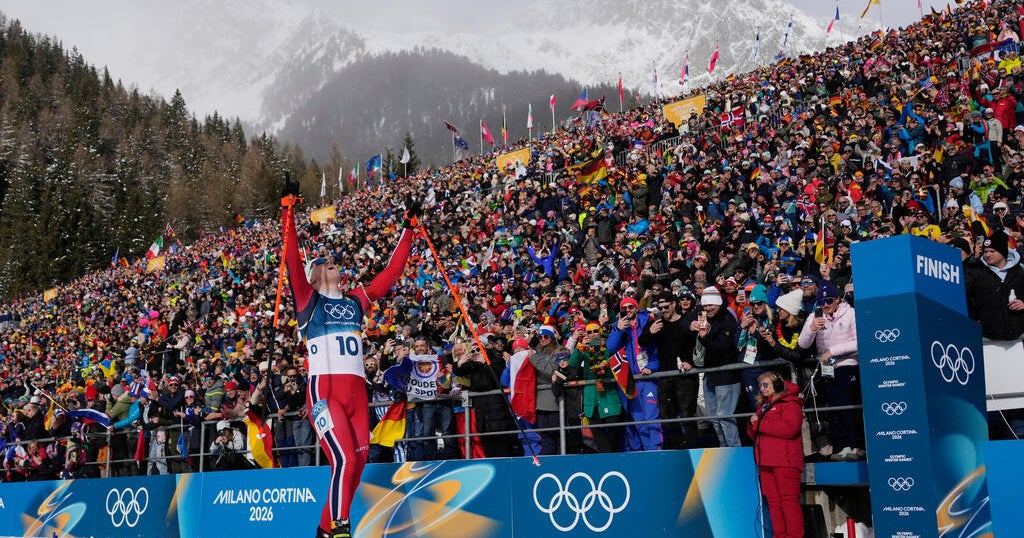

Norway Makes History with Record-Breaking Gold Medal Performance at Milano Cortina 2026
A Golden Moment for Norwegian Biathlon
The 2026 Milano Cortina Winter Olympics witnessed a historic achievement as Team Norway shattered its own gold medal record, claiming an unprecedented 17th gold medal at a single Winter Games. This momentous occasion came through the exceptional performance of biathlete Johannes Dale-Skjevdal, who delivered a masterclass in precision and endurance during the men’s 15-kilometer mass start biathlon race. Competing under challenging conditions with gusty winds and freshly packed snow, Dale-Skjevdal demonstrated flawless marksmanship by hitting all 20 of his targets throughout the race. His perfect shooting performance, combined with superior skiing ability, propelled him to victory in a time of 39 minutes and 17.1 seconds. This gold medal not only marked a personal triumph for the Norwegian athlete but also secured his country’s place in Olympic history, surpassing their previous record of 16 gold medals set just four years earlier at the 2022 Beijing Winter Olympics.
Perfect Execution Under Pressure
Dale-Skjevdal’s path to victory showcased the demanding nature of biathlon, a sport that uniquely combines the cardiovascular challenge of cross-country skiing with the precision and control required for rifle shooting. The mass start format is particularly grueling, as it brings together only the top 30 athletes in the world, selected based on their World Cup rankings and Olympic performance. These elite competitors must complete five laps of three kilometers each, alternating between skiing at maximum speed and slowing down to shoot at targets in both prone and standing positions. Dale-Skjevdal seized control of the race after the first standing shooting bout, where his clean shooting allowed him to establish a lead over his competitors. Maintaining composure throughout all four shooting sessions—two prone and two standing—he never faltered, demonstrating the mental fortitude and technical skill that separates Olympic champions from the rest of the field. The challenging weather conditions, including strong, gusty winds that can significantly affect bullet trajectory, made his perfect shooting even more impressive and underscored his complete mastery of the sport.
A Norwegian Podium Celebration
The success story extended beyond Dale-Skjevdal’s individual achievement, as his teammate Sturla Holm Laegreid secured the silver medal, making it a Norwegian one-two finish. Laegreid, who had already established himself as one of the stars of these Olympics, added this silver to his medal collection, bringing his personal tally to five medals at the Milano Cortina Games. Missing only a single target throughout the race, Laegreid finished a mere 10.5 seconds behind his compatriot, demonstrating the depth of talent in Norwegian biathlon. The bronze medal went to France’s Quentin Fillon Maillet, who showed remarkable determination and skiing prowess despite missing four targets during the competition. Fillon Maillet left the final shooting range in fourth place but refused to give up, chasing down Germany’s Philipp Horn on a challenging uphill section of the course. His superior skiing strength allowed him to overtake Horn and secure the bronze medal, finishing 25.6 seconds behind Dale-Skjevdal. This bronze added to Fillon Maillet’s already impressive medal haul from these Games, which included gold medals in both the sprint event and the men’s relay, as well as the mixed relay competition.
Norway’s Dominance Across Winter Sports
Norway’s record-breaking performance at Milano Cortina 2026 reflects the nation’s extraordinary winter sports culture and deep-rooted tradition of excellence across multiple disciplines. With a total medal count of 37, including their historic 17 golds, Norway has established itself as the undisputed leader of these Olympic Games. This dominance isn’t confined to biathlon alone but extends across various winter sports, from cross-country skiing to ski jumping and beyond. The Norwegian approach to winter sports development, which combines grassroots participation, world-class training facilities, and a cultural emphasis on outdoor activities, has created a systematic pipeline of elite athletes who consistently perform at the highest level. Team USA currently sits in second place on the medal table with 27 total medals, including 9 golds, while host nation Italy rounds out the top three, also with 27 medals. The gap between Norway’s gold medal count and their closest competitors highlights the Scandinavian nation’s remarkable consistency and depth across multiple winter sporting disciplines.
The Klaebo Phenomenon
Adding to Norway’s golden glory, cross-country skier Johannes Hoesflot Klaebo has emerged as one of the defining athletes of the Milano Cortina Games. The 29-year-old phenomenon arrived in Italy already decorated with five Olympic gold medals from previous competitions, but he didn’t rest on his laurels. Instead, Klaebo added an astounding five more gold medals to his collection during these Games, doubling his Olympic gold medal count in a single Olympic appearance. This remarkable achievement has elevated him to become the second-most decorated gold medalist in the history of the Olympic Games, trailing only the legendary American swimmer Michael Phelps, who accumulated 23 gold medals across multiple Summer Olympics. Klaebo’s success represents the pinnacle of Norwegian cross-country skiing excellence, a sport deeply embedded in the nation’s cultural identity. His ability to compete and win across multiple events, maintaining peak performance throughout the Games, demonstrates not only exceptional physical capabilities but also the mental resilience and tactical intelligence required to succeed at the highest level of international competition.
A Legacy of Winter Excellence
Norway’s record-breaking performance at the 2026 Milano Cortina Winter Olympics cements the small Scandinavian nation’s status as a winter sports superpower. With a population of just over five million people, Norway’s ability to produce world-class winter athletes in such numbers is truly remarkable and speaks to a national culture that embraces outdoor winter activities from an early age. The country’s success is built on a foundation of accessible training facilities, knowledgeable coaching, and a society that values and celebrates athletic achievement while maintaining a healthy balance with education and personal development. Dale-Skjevdal’s perfect performance in the biathlon mass start, combined with the supporting cast of Norwegian medalists across various disciplines, represents the culmination of decades of investment in winter sports infrastructure and athlete development programs. As these Olympics conclude, Norway’s 17 gold medals stand as a testament to the nation’s unwavering commitment to excellence in winter sports and set a new benchmark for future Winter Olympics. This achievement will inspire the next generation of Norwegian athletes while simultaneously challenging other nations to elevate their winter sports programs to compete with this Nordic powerhouse on the world’s biggest stage.