



Johannes Hoesflot Klaebo Makes Olympic History with Record-Breaking Ninth Gold Medal
A New Winter Olympics Legend Emerges
In a stunning display of athletic prowess and Norwegian dominance in winter sports, 29-year-old Johannes Hoesflot Klaebo has etched his name into Olympic history books by capturing his ninth gold medal in cross-country skiing. The remarkable achievement came during the men’s 4 x 7.5-kilometer relay event at the Milan Cortina 2026 Winter Olympics on Sunday, where Klaebo served as the anchor leg for the Norwegian team. This historic victory didn’t just add another medal to his already impressive collection—it elevated him above some of the greatest winter athletes the world has ever seen, establishing a new benchmark for Winter Games excellence that future competitors will struggle to match.
What makes this accomplishment even more extraordinary is the elite company Klaebo has surpassed. Until Sunday’s race, he had been tied with three legendary retired Norwegian athletes who had each accumulated eight Olympic gold medals in their respective disciplines. Cross-country skiing icons Marit Bjoergen and Bjorn Daehlie, along with biathlon superstar Ole Einar Bjoerndalen, had long represented the pinnacle of Winter Olympics achievement. These athletes had dominated their sports for years, setting what many believed would be nearly impossible standards to exceed. Now, Klaebo stands alone at the summit of Winter Olympics history, having broken free from this illustrious group to claim the record as his own. For a nation like Norway, which has built its sporting identity on winter sports excellence, this moment represents not just individual triumph but a continuation of a proud tradition of producing world-class athletes who consistently perform on the biggest stages.
A Masterclass in Confidence and Composure
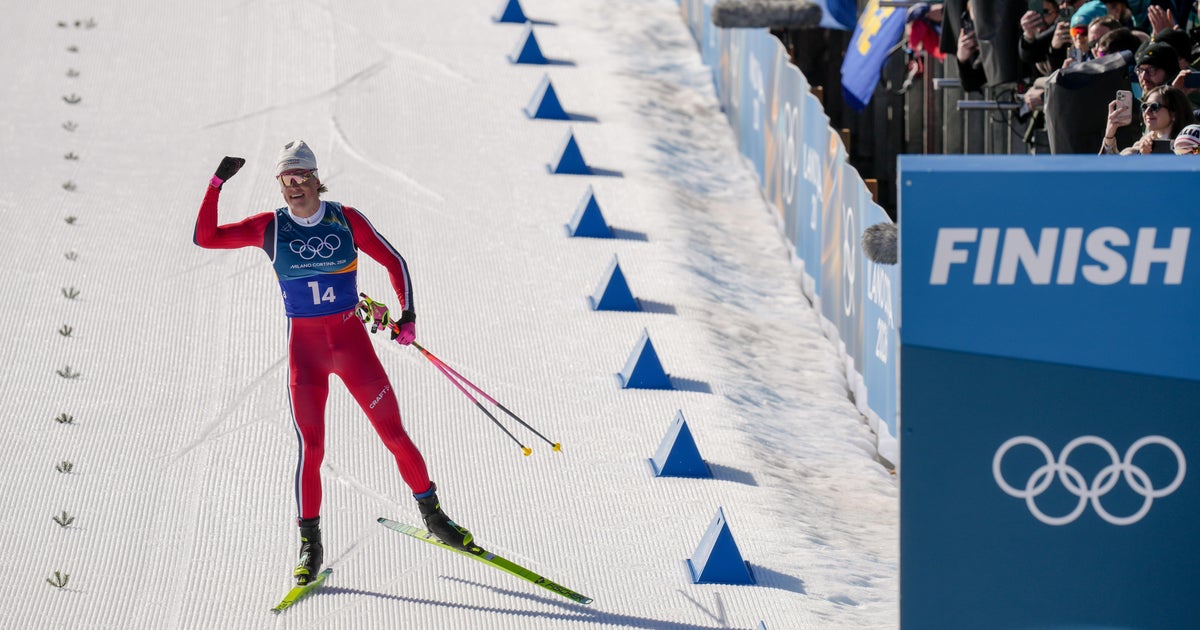
The manner in which Klaebo secured his record-breaking ninth gold medal was as impressive as the achievement itself. Rather than desperately lunging across the finish line with every ounce of energy, the Norwegian star displayed the confidence of a true champion who knew the race was already won. In a moment that will be replayed countless times in Olympic highlight reels, Klaebo actually slowed down before crossing the finish line, taking time to wave to the cheering supporters who had witnessed his historic performance. This casual-looking approach to completing such a significant race spoke volumes about his dominance in the event and his comfort under the immense pressure that comes with chasing Olympic history. The Norwegian team finished with a time of 1 hour, 4 minutes, and 24.5 seconds, a mark that left their competitors well behind and gave Klaebo the luxury of celebrating before officially securing the victory.
This wasn’t merely a case of showboating or disrespecting opponents—it was a genuine expression of joy and appreciation for the supporters who had followed his journey. The wave to the crowd demonstrated Klaebo’s understanding that Olympic glory isn’t achieved in isolation but is shared with fans, teammates, coaches, and an entire nation that invests emotionally in these moments. For the 2026 Games specifically, this relay gold represented Klaebo’s fourth gold medal of the competition, cementing his status as the standout performer of these Olympics. His ability to consistently deliver peak performance across multiple events and race formats showcases not just his physical capabilities but also his mental fortitude and professional preparation. In an era where sports psychology and mental resilience are increasingly recognized as crucial components of elite athletic performance, Klaebo’s composed approach serves as a masterclass in how champions operate when the stakes are highest.
Strong International Competition Highlights Cross-Country Skiing’s Global Appeal
While Klaebo and Norway claimed the top spot on the podium, the race also highlighted the growing depth of talent in international cross-country skiing. France continued their impressive performance throughout the 2026 Games by securing the silver medal, finishing a respectable 22.2 seconds behind the dominant Norwegian squad. The French team’s consistent excellence in these Olympics demonstrated that Nordic skiing success is no longer the exclusive domain of Scandinavian nations, even though those countries continue to set the standard. The French athletes showed determination and skill throughout the relay, maintaining their position against fierce competition from several nations hungry for podium finishes.
The bronze medal ceremony was particularly emotional, as Italy’s Federico Pellegrino claimed third place in front of an absolutely roaring home crowd. Finishing 47.9 seconds behind Norway, Pellegrino gave the Italian supporters something special to celebrate during what has been announced as his final competitive season. There’s something uniquely powerful about an athlete reaching the Olympic podium on home soil during their farewell tour, and the Italian crowd understood the significance of the moment. Their enthusiastic support throughout the race undoubtedly provided extra motivation for Pellegrino and his teammates as they pushed through the demanding 7.5-kilometer legs. The United States team, despite a promising start that raised hopes for a podium finish, ultimately placed sixth, trailing behind Finland and Canada who rounded out the top five positions. This result, while perhaps disappointing for American fans hoping to build on recent successes, still represented a solid performance in one of winter sports’ most competitive events.
American Cross-Country Skiing Shows Signs of Resurgence
For American cross-country skiing enthusiasts, these Olympics have provided reasons for cautious optimism about the sport’s future in the United States. While the men’s relay team finished in sixth place, falling short of medal contention, the broader context reveals a potentially significant shift in American fortunes in this traditionally European-dominated discipline. Ben Ogden of Team USA made history just days before the relay by becoming the first American man to win a medal in cross-country skiing since 1976—a staggering 50-year gap that underscores just how challenging this sport has been for United States athletes. Ogden’s silver medal in the men’s sprint event represented not just a personal triumph but potentially a watershed moment for American cross-country skiing.
Interestingly, the man who defeated Ogden to claim gold in that sprint event was none other than Johannes Hoesflot Klaebo, adding yet another gold to his growing collection during these Games. For Ogden to finish second to an athlete of Klaebo’s caliber—arguably the greatest cross-country skier of this generation—is no shame whatsoever. Instead, it suggests that with proper development, training infrastructure, and continued investment in the sport, American athletes can compete with the world’s best. The United States has historically struggled in cross-country skiing compared to its success in other winter sports like alpine skiing, snowboarding, and figure skating. The reasons are varied, including less cultural emphasis on Nordic skiing, fewer accessible training facilities in many regions, and reduced funding compared to European programs where the sport enjoys higher popularity and participation rates. However, performances like Ogden’s silver medal and the relay team’s respectable sixth-place finish suggest that American cross-country skiing may be entering a new era of competitiveness on the world stage.
Norway’s Continued Dominance in Nordic Skiing
Norway’s success at the Milan Cortina Olympics, exemplified by Klaebo’s record-breaking achievements, is no accident but rather the result of a deep-rooted sporting culture and systematic approach to developing winter athletes. Cross-country skiing holds a special place in Norwegian society, where it’s not merely a competitive sport but a fundamental part of the national identity and lifestyle. From a young age, Norwegian children are introduced to skiing as a natural form of recreation and transportation, creating a massive talent pool from which elite athletes emerge. The country’s investment in coaching, training facilities, and sports science has created a self-perpetuating cycle of excellence, where each generation of champions inspires and mentors the next.
The fact that Norway has produced athletes like Bjoergen, Daehlie, Bjoerndalen, and now Klaebo—all with eight or more Olympic gold medals—speaks to the sustainability of their sporting system. These aren’t isolated instances of individual brilliance but rather the consistent output of a nation that has mastered the development of winter sports talent. Klaebo’s nine gold medals represent the current peak of this tradition, but given Norway’s continued dominance across multiple cross-country skiing events and age groups, it’s entirely possible that future Norwegian athletes will challenge even this remarkable new record. For Klaebo himself, at just 29 years old and clearly still at the peak of his physical abilities, the possibility of adding to his medal count at future Olympics remains very real, which could push this record even further beyond the reach of future competitors.
Legacy and Looking Forward
Johannes Hoesflot Klaebo’s ninth Olympic gold medal is more than just a number—it’s a testament to sustained excellence, dedication, and the ability to perform when the pressure is greatest. As he slowed to wave at supporters before crossing the finish line, he wasn’t just celebrating a single race victory but acknowledging a journey that has taken him to the absolute pinnacle of his sport. For fans of cross-country skiing and Olympic sports in general, Klaebo’s achievement provides a compelling narrative of an athlete who has consistently delivered across multiple Olympic cycles, different race formats, and varying conditions. His versatility—excelling in both sprint events and longer relay formats—demonstrates complete mastery of his discipline.
Looking ahead, the question becomes whether Klaebo will continue competing at future Olympics and, if so, how high he might push the gold medal record. At 29, he theoretically has at least one, possibly two more Winter Games within reach if he maintains his fitness and competitive desire. Each additional medal would further separate him from the pack and make this record increasingly untouchable. Regardless of what the future holds, the 2026 Milan Cortina Olympics will be remembered as the moment when Johannes Hoesflot Klaebo stepped out of the shadow of Norwegian legends and into the spotlight as the most decorated Winter Olympian in cross-country skiing history—a distinction he claimed not with a desperate sprint, but with a confident wave to those who had supported his remarkable journey to the top.