

New York Mayor’s White House Visit: Building Bridges and Housing in Turbulent Times
A Surprising Political Partnership Takes Shape
In what many political observers continue to find unexpected, New York City Mayor Zohran Mamdani made his way to the nation’s capital this Thursday for another meeting with President Trump at the White House. This marks at least the second face-to-face conversation between the two leaders, a relationship that has raised eyebrows given their seemingly different political backgrounds. Their initial meeting, which took place before Mamdani was even officially sworn into office, set a tone that caught many off guard—cordial, constructive, and surprisingly cooperative. Since that first encounter, the two have maintained regular contact, suggesting that despite any ideological differences, they’ve found common ground in their shared goal of addressing New York City’s pressing needs. The president himself acknowledged this working relationship during his recent State of the Union address, publicly calling Mamdani a “nice guy”—a compliment that speaks volumes in today’s often divisive political climate. What makes this partnership particularly noteworthy is how both leaders seem willing to look past partisan labels to focus on practical solutions for one of America’s largest and most complex cities.
Immigration Concerns and Student Safety
The timing of Thursday’s meeting was especially significant, as it coincided with a troubling incident that highlights the ongoing tensions around immigration enforcement in America. On the very same day, Immigration and Customs Enforcement (ICE) agents detained a Columbia University student named Elmina “Ellie” Aghayeva, in circumstances that the university’s acting president, Claire Shipman, described as involving “misrepresentations” by the agents to gain access to her apartment. This incident immediately became a priority topic during Mamdani’s White House visit, demonstrating the mayor’s willingness to advocate directly for New York City residents, even on controversial issues. According to Mamdani’s social media posts following the meeting, he raised the matter with President Trump during their conversation, and received assurance that the student would be “released imminently.” True to the president’s word, Aghayeva was freed shortly thereafter. But Mamdani didn’t stop there—he also presented the White House with a list containing the names of four additional students he believes were unfairly targeted due to their participation in pro-Palestinian protests. This aspect of the meeting reveals how Mamdani is navigating the delicate balance of maintaining a productive working relationship with the president while still advocating for the rights and concerns of his constituents, particularly when it comes to immigration enforcement and freedom of expression.
An Ambitious Vision for Housing Development
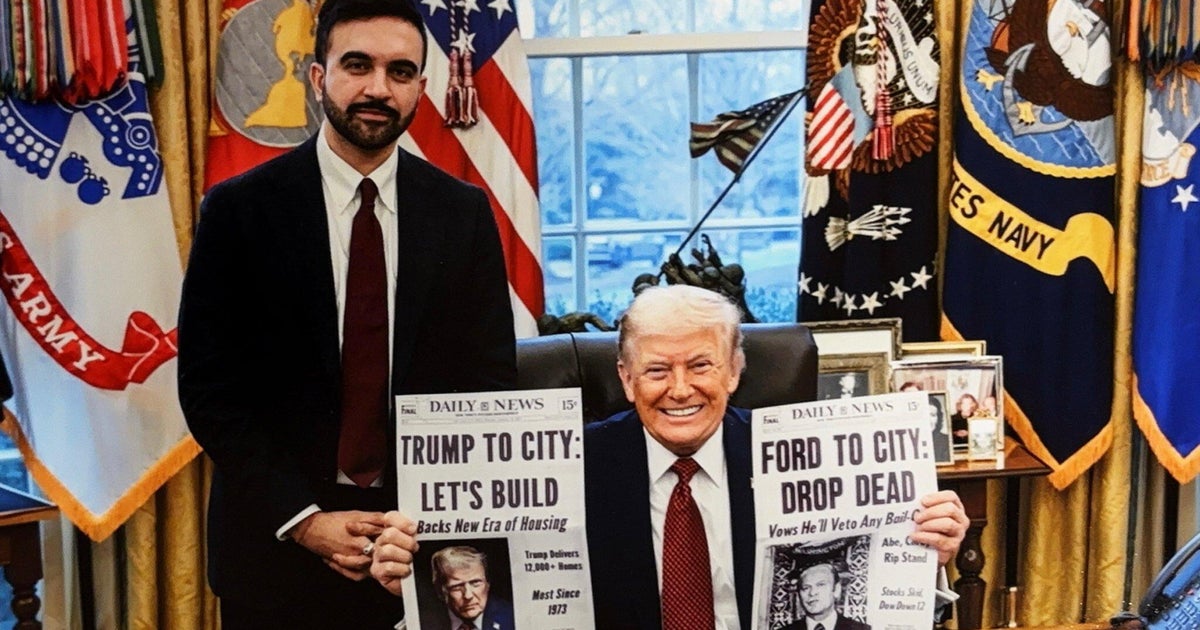
The centerpiece of Mamdani’s Washington visit, however, was an ambitious proposal that could transform New York City’s housing landscape. The mayor came prepared with a concrete plan, responding to President Trump’s earlier challenge to return with ideas for building “big things” in the city. Mamdani’s team presented a proposal for a massive housing development project that would create more than 12,000 new homes—a significant undertaking that addresses one of New York City’s most pressing crises: the shortage of affordable housing. According to a spokesperson for the mayor, President Trump responded with enthusiasm to the proposal, suggesting genuine interest in making this vision a reality. The presentation itself was thoughtfully crafted, with Mamdani’s team bringing along visual aids that would resonate with the president’s sensibilities. Among these props were two mock newspaper front pages: one reading “Trump To City: Let’s Build,” and another showing the infamous historical headline “Ford To City: Drop Dead,” which referred to President Gerald Ford’s 1975 refusal to bail out New York City during its fiscal crisis. This clever juxtaposition effectively framed the current moment as an opportunity for President Trump to be remembered not for turning his back on New York, but for helping to build its future. A photo posted on Mamdani’s social media showed the president holding both printouts, looking genuinely engaged with the proposal. “I’m looking forward to building more housing in New York City,” Mamdani wrote alongside the image, signaling optimism about moving forward with the project.
Snow Shovelers Become a National Talking Point
In an unexpected twist that shows how local governance decisions can become fodder for national political debates, New York City’s emergency snow shoveling program found itself in the spotlight during President Trump’s State of the Union address. The president specifically mentioned the city’s employment requirements for these positions, noting that applicants “need to show two original forms of ID and a Social Security card.” Trump used this as a rhetorical device to critique what he characterized as insufficient identification requirements for voting, arguing that if ID is necessary for a snow shoveling job, it should certainly be required “for the greatest privilege in America”—a reference to voting rights. This comment came as Republicans have been pushing for new federal legislation mandating photo identification at polling places across the country, a move that Democrats typically oppose as potentially suppressing voter turnout among marginalized communities. Mamdani responded to this unexpected national attention with characteristic humor and grace. “I can tell you I didn’t expect this much attention nationwide on our emergency snow shoveler program,” the mayor joked, deflecting what could have been a politically awkward moment. The incident illustrates how even seemingly mundane municipal policies can become politicized in today’s climate, and how skillfully Mamdani has learned to navigate these waters without allowing them to derail his working relationship with the president.
A Strategy of Discretion and Focus
When it comes to the details of his ongoing communication with President Trump, Mayor Mamdani has adopted a strategy of careful discretion. Earlier this week, when asked about the frequency of his conversations with the president, Mamdani declined to provide specifics, saying only that when they do speak, their discussions “always focus on how to better our city.” He emphasized his commitment to keeping the substance of these conversations private, stating plainly, “I’ll keep the conversations that I have with the president private.” This approach serves several purposes. First, it protects the working relationship from becoming a political football, where every interaction might be scrutinized, dissected, and potentially weaponized by critics on either side. Second, it maintains the mayor’s ability to advocate effectively for New York City without having every conversation subject to public commentary and pressure. Third, it demonstrates a mature understanding that productive relationships often require some degree of confidentiality to flourish. By maintaining this boundary, Mamdani can continue to engage with the president on issues that matter to New Yorkers—from housing to immigration enforcement to infrastructure—without the constant interference that might come from making every detail public. It’s a pragmatic approach that prioritizes results over rhetoric, and it appears to be working, at least in terms of keeping the channels of communication open between City Hall and the White House.
The Bigger Picture: Pragmatism in Polarized Times
The developing relationship between Mayor Mamdani and President Trump represents something increasingly rare in American politics: the willingness of leaders from different backgrounds to work together on shared priorities despite their differences. In an era characterized by intense political polarization, where cooperation across party lines often invites criticism from ideological purists on both sides, Mamdani’s approach demonstrates a commitment to practical governance over political posturing. The mayor faces real challenges that affect millions of New Yorkers every day—a housing crisis that makes the city unaffordable for many of its residents, immigration enforcement actions that create fear and uncertainty in communities, and the ongoing need for infrastructure improvements and job creation. While maintaining ideological purity might score political points in some circles, it doesn’t build housing, protect vulnerable students, or improve city services. Mamdani seems to have calculated that engaging constructively with the president, even when it might be politically uncomfortable, offers the best chance of delivering tangible results for his constituents. Whether this strategy will ultimately prove successful remains to be seen, but for now, it’s producing meetings, proposals, and at least in one recent case, the release of a detained student. As the partnership continues to develop, it will be watched closely by political observers across the country as a potential model—or cautionary tale—for how local leaders can navigate relationships with federal administrations of any political stripe.