


Ohio Man Charged With Wife’s Murder After Allegedly Staging Home Invasion
The 911 Call and Initial Response
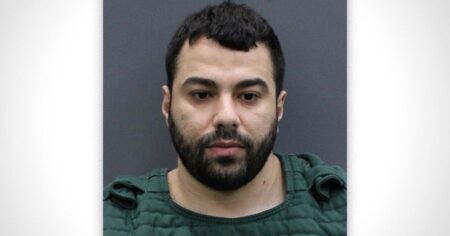
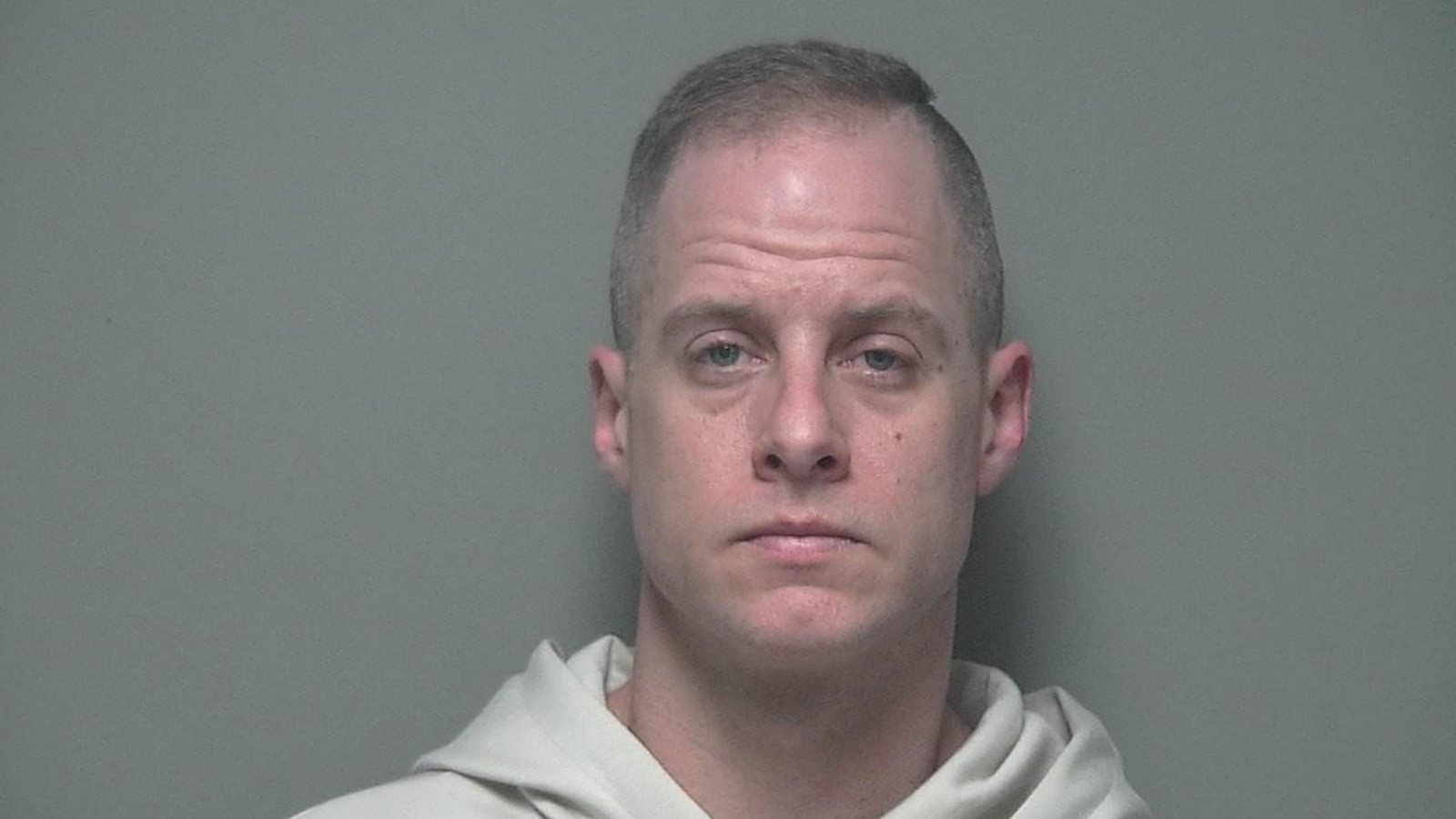
In the early hours of a Monday morning in Tipp City, Ohio, a small community just north of Dayton, emergency dispatchers received a frantic 911 call that would set in motion a tragic and disturbing case. Caleb Flynn, a 39-year-old husband and father of two, placed the call reporting what appeared to be a nightmare scenario: an intruder had broken into his home and shot his wife. His voice trembling with what seemed like panic and desperation, Flynn told the dispatcher, “Somebody broke into my home. Somebody broke in my home and shot my wife.” He went on to describe a horrific scene, saying, “My wife, she’s got two shots to her head, there’s blood everywhere, oh my God, oh my God, oh my God.” He mentioned that the garage door was “wide open” and repeatedly urged first responders to hurry to the scene. When officers arrived at the residence, they discovered 37-year-old Ashley Flynn dead in the bedroom. Caleb Flynn and the couple’s two young daughters were found inside the home, and the initial appearance of the scene seemed to corroborate the story of a home invasion gone tragically wrong.
The Investigation Takes a Turn
What initially appeared to be a burglary and shooting quickly evolved into something far more sinister as investigators from the Tipp City Police Department began examining the evidence more closely. The case, which authorities described as “complex,” required meticulous analysis of the crime scene and careful consideration of all available evidence. As detectives worked through the details, inconsistencies began to emerge that raised serious questions about the narrative presented in that initial 911 call. By Thursday evening, just days after Ashley Flynn’s death, the investigation had taken a dramatic turn. Rather than searching for an unknown intruder, police arrested the person who had reported the crime: Caleb Flynn himself. The charges brought against him were severe and shocking—murder, felonious assault, and tampering with evidence. According to the criminal complaint filed by prosecutors, detectives had come to believe that “officers were lead astray by the staging of the crime scene” and that Caleb Flynn had actually shot and killed his wife with a 9mm handgun before creating the appearance of a home invasion to cover his tracks.
The Legal Proceedings Begin
Caleb Flynn faced his first court appearance on Friday, just one day after his arrest, for his arraignment hearing. Standing before the judge, he entered a plea of not guilty to all charges against him. When given the opportunity to speak regarding his bond, Flynn’s words were brief but telling: “I just want to take care of my daughters, I’m not a risk.” It was a statement that acknowledged his role as a father while simultaneously denying that he posed any danger to the community or his family. However, the court did not view the situation through the same lens. The judge set Flynn’s bond at an extraordinary $2 million, a figure that reflected the severity of the charges and the court’s assessment of the situation. Additionally, and perhaps most painfully for Flynn if his protestations of innocence are genuine, he was ordered to have no contact whatsoever with his two minor daughters—the children who had already lost their mother and now faced the possibility of losing their father as well. A preliminary hearing was scheduled for February 26, setting the timeline for the next phase of legal proceedings. Court records documented these decisions, marking the beginning of what promises to be a lengthy and emotionally charged legal battle.
The Defense Responds
Flynn’s attorney, L. Patrick Mulligan, wasted no time in mounting a vigorous defense of his client and expressing serious concerns about the investigation that led to these charges. In a statement released to ABC News and other media outlets, Mulligan conveyed that his client “looks forward to defending this case,” signaling their intention to fight the allegations in court. More significantly, the attorney raised pointed questions about the investigative process itself, stating, “We are both disappointed and concerned about the short timeline and seeming rush to judgment in this case.” Mulligan’s statement went further, suggesting that the investigation may have been flawed from the outset. He argued that “when the government runs out of leads or can’t develop leads and looks at a surviving spouse in cases such as these, the chance of a wrongful conviction increases.” This comment implied that rather than conducting a thorough investigation that explored all possibilities, authorities may have defaulted to the statistically common scenario of spousal homicide without adequately considering other explanations. The defense’s position essentially argued that Caleb Flynn was being railroaded by an investigation that had reached premature conclusions. For their part, the Tipp City Police Department stood by their work, stating that “as a result of its investigation, probable cause existed to charge Caleb Flynn with the murder of his wife.” They declined to release further details about the investigation, citing “the ongoing nature of this case,” but emphasized that “the family and community deserve a thorough, professional, and compassionate investigation into this very sensitive matter.”
A Community in Mourning
Beyond the courtroom drama and investigative details, the case has left a community reeling from the loss of someone who was, by all accounts, a beloved figure in the local area. Ashley Flynn was not just a victim in a criminal case; she was a real person whose presence had made a meaningful difference in many lives. She served as a middle school volleyball coach and worked as a substitute teacher for Tipp City Schools, where she had previously been a full-time educator. The school district released a heartfelt statement describing her as “dedicated” and noting that she “was known for her beautiful smile, warmth, kindness, and the positive impact she had on so many—both in and out of the classroom and on the court.” These words painted a picture of someone who had devoted her professional life to nurturing and educating young people, making her violent death all the more tragic. The statement concluded with a simple but profound acknowledgment: “Our thoughts are with all who are grieving during this difficult time.” Students who had been coached by Ashley, colleagues who had worked alongside her, and parents who had entrusted their children to her care were all left to process not only the shock of her death but also the disturbing allegations that her husband—the father of her children—might be responsible.
The Ripple Effects of Tragedy
The arrest of Caleb Flynn sent shockwaves through another important community institution: the family’s church. Christian Life Center in Dayton, where the Flynns had apparently been members, found itself in the difficult position of ministering to a congregation struggling with conflicting emotions—grief, confusion, anger, and uncertainty. Pastor Jordan Paul Hansen addressed the situation directly in a social media post on Friday, acknowledging that the arrest “brings understandable shock and sorrow.” His words captured the multilayered tragedy that extended far beyond the immediate facts of the criminal case: “Two young daughters have lost their mother. A family is devastated.” Hansen’s statement served as a reminder that regardless of guilt or innocence, real human suffering was unfolding in real time. The pastor called upon his congregation to respond with compassion and wisdom, saying, “Now is the time to pray, to guard against gossip/speculation. Let us be a church marked by prayer, wisdom, restraint, and love.” This appeal highlighted one of the most challenging aspects of such cases—the tension between the public’s natural curiosity and desire for information, and the need to respect the dignity of those involved and allow the legal process to unfold without prejudgment. As the case moves forward toward the preliminary hearing in late February, many questions remain unanswered. What specific evidence led investigators to conclude that the crime scene had been staged? What possible motive might Caleb Flynn have had? Will the defense be able to present an alternative explanation for the evidence? And most importantly, what will become of the two young daughters who have already endured unimaginable trauma? The answers to these questions will emerge in time, but for now, a community continues to mourn, a legal process has only just begun, and two little girls face an uncertain future without their mother and potentially without their father as well.