


The Fall of Nicolas Maduro: From Presidential Palace to Brooklyn Jail Cell
A Dramatic Return to Court
The once-powerful Venezuelan leader Nicolas Maduro is scheduled to appear in a Manhattan federal courtroom on Thursday for a crucial status conference that could shape the future of his criminal prosecution. Alongside his wife, Cilia Flores, Maduro faces serious federal charges including narco-terrorism, to which both have pleaded not guilty since their initial court appearance in January. What makes this case particularly unusual is the legal strategy employed by Maduro’s defense team: they’re pushing for dismissal based on the argument that U.S. sanctions are preventing Venezuela from paying for his legal representation. This status hearing before U.S. District Judge Alvin Hellerstein represents only the second time the deposed Venezuelan president has stood before an American court since his dramatic capture by U.S. special operations forces in Caracas earlier this year. The hearing will address fundamental questions about how the case will proceed toward trial, including what pre-trial motions the defense intends to file and how much evidence prosecutors have shared with the defense team. The spectacle of a former head of state, who once lived in opulent splendor, now arguing he cannot afford his own legal defense has created a surreal legal drama that touches on questions of international law, constitutional rights, and the changing diplomatic landscape between the United States and Venezuela.
From Riches to Legal Poverty Claims
The contrast between Maduro’s past lifestyle and his current legal arguments is striking. For more than a decade, he enjoyed the trappings of power that came with leading Venezuela, residing in a neoclassical palace in Caracas and allegedly accumulating substantial personal wealth. Reports suggest his net worth reached into the millions, with a portfolio of assets that would be the envy of most wealthy individuals. His alleged holdings included multiple mansions scattered across prime locations, two private jets for personal travel, extensive collections of jewelry, substantial cash reserves, a horse farm, and a fleet of luxury vehicles that showcased his taste for the finer things in life. Yet today, confined to a jail cell in Brooklyn’s federal detention center, this same man has submitted a sworn declaration claiming financial hardship. “I understand that the government of Venezuela is prepared to fund my legal defense and it is my expectation that it will,” Maduro stated in his declaration. “I have relied on this expectation and cannot afford to pay for my own legal defense.” This assertion has become the centerpiece of his legal team’s strategy to have the charges dismissed, arguing that U.S. sanctions preventing Venezuela from paying his legal fees constitute a violation of his constitutional rights to due process and adequate legal representation under the Sixth Amendment.
The Constitutional Battle Over Legal Fees
The legal battle over who pays for Maduro’s defense has evolved into a complex constitutional question with significant implications. Last month, Maduro’s attorneys formally requested the court dismiss the indictment after the Department of Treasury’s Office of Foreign Assets Control (OFAC) restricted Venezuela’s ability to fund their legal fees. Defense lawyer Barry Pollack has argued passionately that this restriction undermines fundamental constitutional protections. “The conduct of the United States government not only undermines Mr. Maduro’s rights but also this Court’s mandate to provide a fair trial to all defendants who come before it in accordance with the protections afforded by the U.S. Constitution,” Pollack wrote in his motion. The defense strategy relies heavily on the position taken by Venezuela’s interim president Delcy Rodriguez, who continues to assert that Maduro remains “the legitimate president” of Venezuela, thereby justifying the government’s obligation to fund his defense.
However, federal prosecutors from the U.S. Attorney’s Office for the Southern District of New York have vigorously contested this argument. They maintain that Maduro and Flores retain access to their personal funds for legal representation, making the constitutional argument moot. Prosecutors explained that while the Treasury Department initially granted authorization for Venezuela to pay the legal fees, this was merely an “administrative error” that was subsequently corrected. They’ve firmly denied that the decision to revise the license terms was specifically targeted at undermining Maduro’s defense. “OFAC’s longstanding sanctions regime predated the initiation of the criminal charges the defendants now face and was instituted for purposes completely separate from the criminal charges currently pending before this Court,” prosecutors argued. “The defendants’ attempts to portray OFAC’s sanctions as a targeted attack on the defendants and their rights are misleading and undermined by the facts and chronology of this case and OFAC’s independent decision-making.”
Defense attorneys have expressed skepticism about the government’s explanation, pointing to recent policy shifts by the Trump administration. They note that multiple licenses have been issued allowing the export of Venezuelan oil and other goods despite existing sanctions, suggesting that the restriction on legal fee payments is selectively applied. “There is no apparent reason why the use of Venezuelan funds to pay for the legal defense in this case jeopardizes national security and the government offers none,” defense attorneys argued. “The national security emergency rationale that the government invokes, without explaining, has even less force now that the government has normalized relations with the government of Venezuela and recognized the current Venezuelan government.” While the issue has been fully briefed to the court, Judge Hellerstein may choose to schedule a separate hearing specifically dedicated to this motion rather than ruling immediately.
The Dramatic Capture and Initial Court Appearance
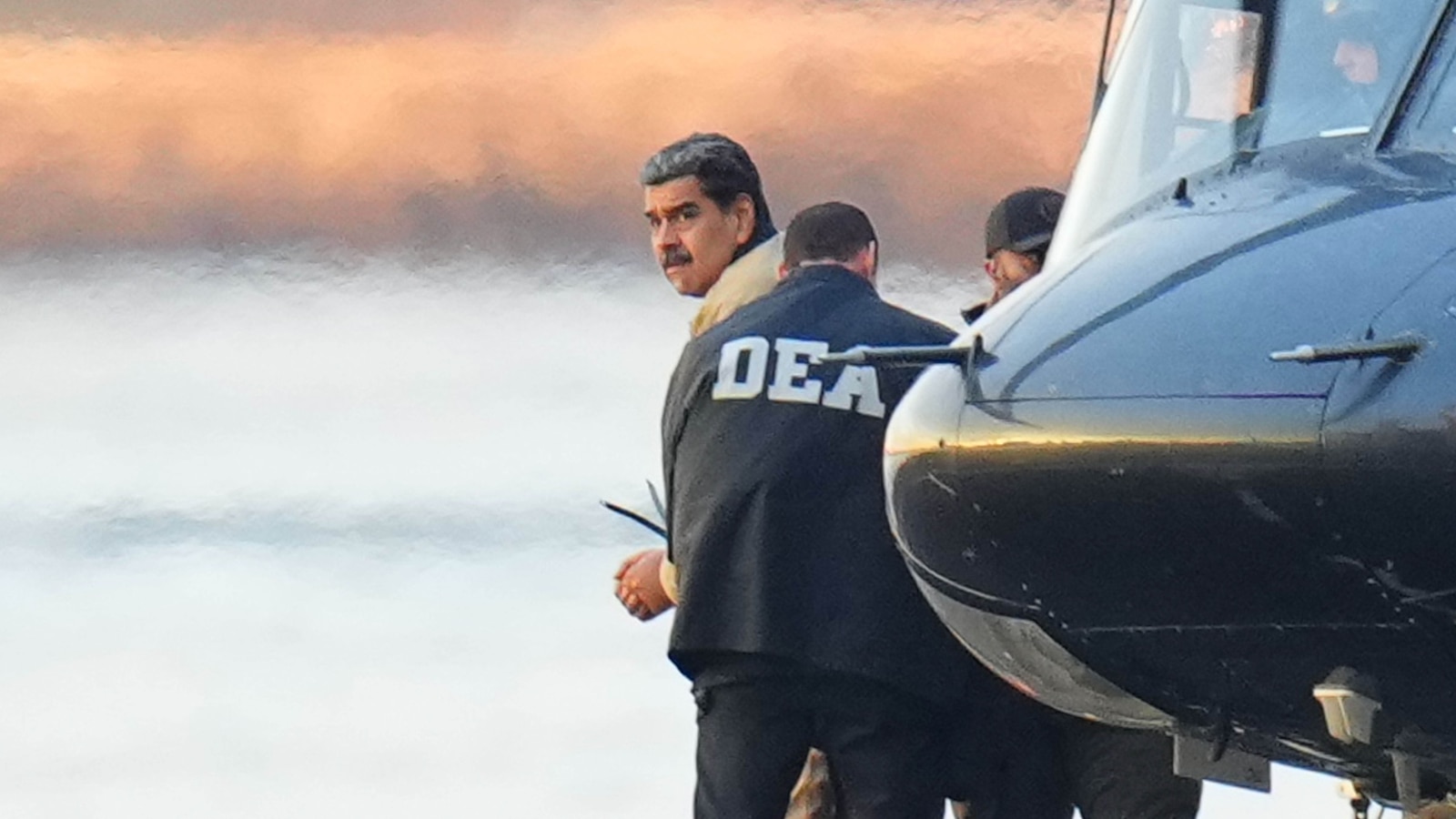
Maduro’s journey to an American courtroom began with a dramatic capture operation that sent shockwaves through the international community. In January, U.S. special operations forces apprehended him in Caracas in what President Trump characterized as a “large scale strike” in the Venezuelan capital. The operation triggered widespread international outcry and raised questions about sovereignty, international law, and the limits of American power projection. Images of the handcuffed former president being escorted by heavily armed federal agents from a Manhattan helipad to an armored vehicle en route to federal court became iconic symbols of his fall from power. His first court appearance was equally dramatic, occurring just days after his capture and transport to New York.
During that initial hearing, after Judge Hellerstein outlined the serious charges against him, Maduro made a defiant statement through an interpreter. He proclaimed his identity and circumstances: he was “the president of Venezuela” who had been “captured at home in Caracas, Venezuela.” His plea was emphatic and emotional: “I am innocent. I am not guilty. I am a decent man. I am still president of my country.” Flores similarly entered a not guilty plea after being informed of the charges and her legal rights. Notably, their attorneys did not request bail or seek their release, though Judge Hellerstein indicated openness to reviewing a bail application should one be submitted in the future. The former heads of state have since been held at Brooklyn’s federal detention center, a far cry from the presidential accommodations they once enjoyed. As Maduro was being led from the courtroom, a spectator shouted at him in Spanish, telling him he would pay for his actions against Venezuela. His response captured his continued defiance: “I am the elected president. I am a prisoner of war. I will be free.”
The Potential Defense Strategy: Head of State Immunity
Legal experts and observers have been analyzing the potential defense strategies available to Maduro’s legal team, with head of state immunity emerging as a likely cornerstone argument. During the January arraignment, attorney Barry Pollack signaled this approach, stating clearly: “He is the head of a sovereign state.” He also raised preliminary questions about “the legality of his military abduction,” suggesting multiple potential grounds for challenging the prosecution. While Maduro’s lawyers haven’t yet filed formal motions based on head of state immunity, instead initially focusing on the due process concerns regarding legal fee restrictions, this defense strategy remains a significant possibility as the case progresses.
According to James Sample, an ABC News Legal Contributor, Maduro’s attorneys could argue for protection under “head of state immunity,” a principle in international law holding that leaders of sovereign nations are shielded from criminal jurisdiction in other countries’ courts. “They will be arguing that because he was the head of essentially a sister sovereign of another nation, and he was doing those things in that nation, that the United States courts lack the jurisdiction, which is simply to say the power to hold him criminally accountable,” Sample explained. He added that “whether a U.S. court will embrace that defense or not is a different matter, but it is not a frivolous argument.” There is historical precedent for such attempts, though not always successful. Former Panamanian strongman Manuel Noriega tried to invoke head-of-state immunity when prosecuted in the U.S. on drug smuggling charges in 1991, but a federal appeals court rejected his claim, concluding he “never served as the constitutional leader of Panama.” The question of whether Maduro, who was elected president even if through disputed elections, has a stronger claim to this protection than Noriega remains an open legal question that could significantly impact the case’s trajectory.
The Criminal Allegations: Narco-Terrorism and Corruption
The charges Maduro and his associates face are extraordinarily serious, painting a picture of systematic corruption at the highest levels of Venezuelan government. The Department of Justice initially brought an indictment against Maduro and fourteen other Venezuelan officials in March 2020, alleging they committed narco-terrorism by conspiring with drug cartels to facilitate the flow of cocaine into the United States. Nearly six years later, prosecutors filed an updated indictment charging Maduro, Flores, Maduro’s son, and three others with narco-terrorism conspiracy, cocaine importation conspiracy, and weapons offenses. The language in the indictment is damning: “Nicolas Maduro Moros, the defendant, now sits atop a corrupt, illegitimate government that, for decades, has leveraged government power to protect and promote illegal activity, including drug trafficking.”
According to prosecutors, Maduro didn’t simply turn a blind eye to drug trafficking but actively enabled and profited from “cocaine-fueled corruption” for his personal benefit. The allegations include providing diplomatic cover to drug traffickers, protecting money laundering operations, and using corrupted government institutions to facilitate the transportation of thousands of tons of cocaine destined for American streets. The indictment states: “[Maduro] is at the forefront of that corruption and has partnered with his co-conspirators to use his illegally obtained authority and the institutions he corroded to transport thousands of tons of cocaine to the United States.” These allegations, if proven, would represent one of the most significant cases of state-sponsored drug trafficking in modern history, with a sitting head of state essentially transforming his government into a criminal enterprise. Maduro has consistently pleaded not guilty to all charges and vehemently denies any involvement in drug trafficking activities. As Thursday’s status conference approaches, the legal community watches closely to see how this unprecedented case will unfold, balancing questions of international law, constitutional rights, and the prosecution of alleged narco-terrorism at the highest levels of government.