


Major Nor’Easter Threatens East Coast: First Blizzard Warning for NYC in Nearly a Decade
Massive Storm System Puts Millions on High Alert
A powerful nor’easter is barreling toward the East Coast, and meteorologists are warning that this isn’t your typical winter weather event. Beginning Sunday and continuing through Monday, this storm system is expected to deliver a devastating one-two punch of heavy snowfall and dangerous winds along the heavily populated I-95 corridor. What’s particularly concerning is that New York City has been placed under a blizzard warning for the first time since 2017, signaling just how serious authorities are taking this weather event. More than 50 million Americans are now bracing themselves for winter storm conditions that could significantly disrupt daily life, shut down transportation networks, and create potentially dangerous situations for anyone caught unprepared. The National Weather Service isn’t mincing words about the severity of this storm, and state officials across the Northeast are urging residents to take this threat seriously and prepare accordingly.
The scale of this storm’s impact is already being felt before the first snowflake has even fallen. By Saturday evening, airlines had already cancelled over 3,000 flights, with carriers strategically repositioning aircraft out of the storm’s projected path to ensure they’re ready to resume operations once airports can safely reopen. Transportation experts are warning travelers that the disruptions won’t end when the snow stops falling—cancellations and delays are expected to continue through at least Wednesday as airlines work to get their schedules back on track and clear the massive backlog of stranded passengers. For anyone with travel plans in the Northeast this week, the message from authorities is clear: expect significant disruptions and plan accordingly, or better yet, postpone your travel if possible.
What to Expect: Snow Accumulation and Dangerous Winds
The numbers associated with this storm are truly staggering and paint a picture of a significant winter weather event. Areas under blizzard warnings should brace themselves for snowfall totals ranging from 12 to 18 inches, with some locations potentially seeing even higher amounts. But it’s not just the snow that has meteorologists concerned—wind gusts could reach an alarming 40 to 60 mph, creating the perfect recipe for blizzard conditions. These powerful winds will whip the heavy snow into blinding whiteouts, making visibility near zero and rendering travel not just difficult but genuinely dangerous. The combination of substantial snow accumulation and these fierce winds means that even the most experienced winter drivers should think twice about venturing out during the height of the storm.
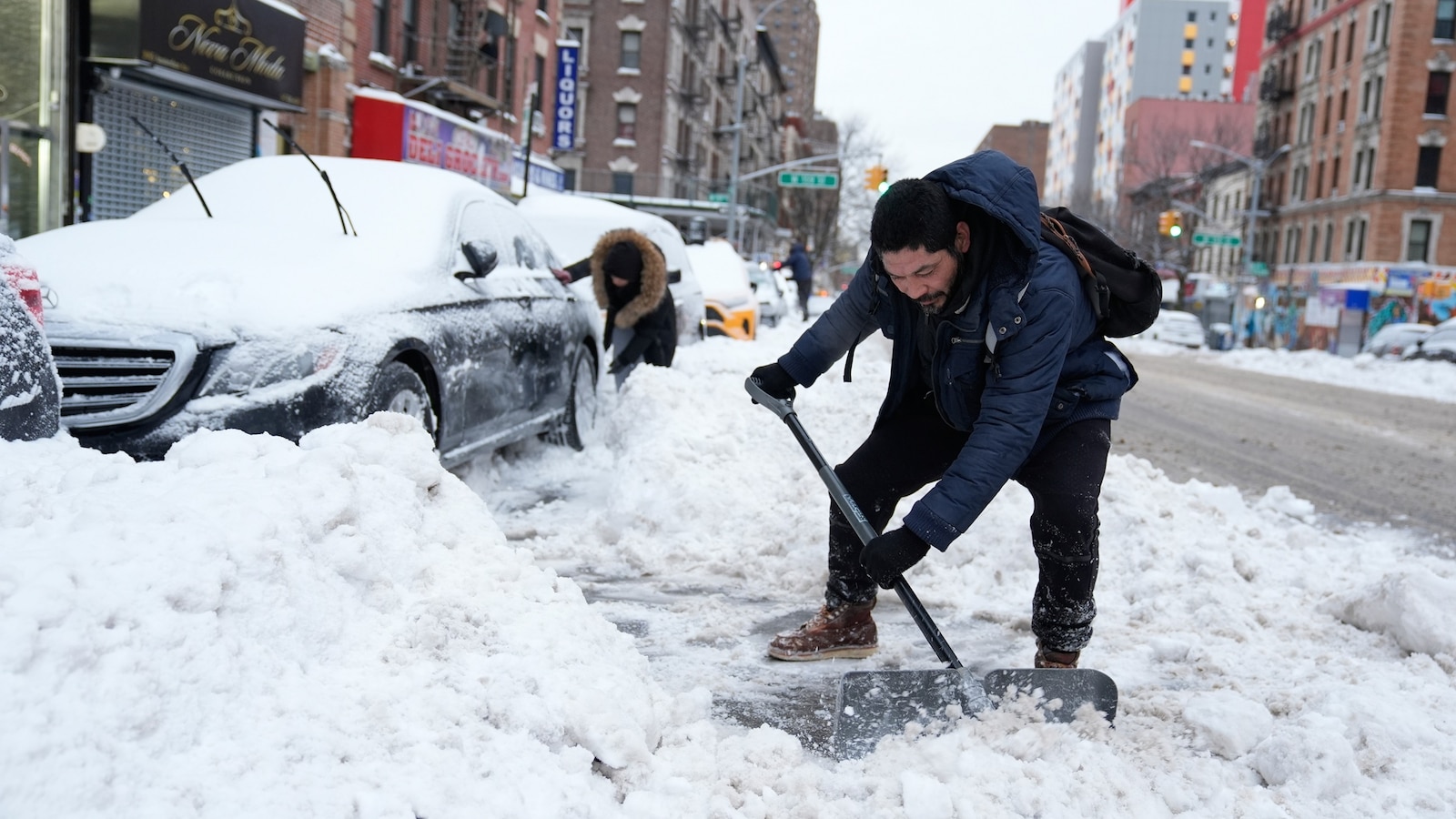
New York City officials are preparing for what could be one of the most significant snowstorms in recent memory. Mayor Zohran Mamdani held a press conference Saturday to warn residents about what’s coming their way, emphasizing that this is a storm that demands respect and preparation. The city is currently forecasting between 13 and 17 inches of snow, though there’s a possibility that some areas could see as much as 20 inches. The timeline that Mamdani laid out is particularly concerning: snow is expected to begin falling Sunday morning around 6 a.m., gradually intensifying throughout the day. By 6 p.m. Sunday evening, the snowfall is predicted to become intense, with dangerous winds increasing overnight into Monday morning and continuing through Monday evening. The Monday morning commute, in particular, is expected to be extremely hazardous, with heavy snowfall and peak winds creating slippery conditions, greatly reduced visibility, and dangerously icy sidewalks and streets.
Storm Timeline: Hour-by-Hour Breakdown
Understanding when and where this storm will hit hardest is crucial for anyone in its path. The coastal storm will begin taking shape over the coastal Carolinas early Sunday morning, initially bringing rain to the Mid-Atlantic region. At the same time, areas from northern Virginia extending up through Pennsylvania and into parts of New Jersey and New York will start seeing scattered light to moderate snow beginning Sunday morning and continuing into the afternoon. This is just the opening act of a multi-stage weather event that will intensify as the day progresses.
By late Sunday afternoon, the storm will begin to rapidly intensify—a process meteorologists call bombogenesis or a “bomb cyclone”—off the Mid-Atlantic coast as it tracks northeast, paralleling the East Coast. This intensification will cause a dramatic change, with everything from Virginia to New York to Massachusetts transitioning completely to snow as colder air rushes into the system. The overnight hours from Sunday into Monday are when this storm is expected to reach its peak intensity, becoming a full-fledged nor’easter with all the dangerous characteristics these storms are known for.
By early Monday morning, the storm will be delivering its full fury across much of the coastal Northeast, from Dover, Delaware, through Philadelphia, New York City, and up to Boston. The Jersey Shore, Long Island, the southern coast of New England, and Cape Cod are all expected to experience blizzard and whiteout conditions during this timeframe, created by the dangerous combination of heavy snowfall and very strong wind gusts. By late Monday morning into the afternoon, the snowfall will become more intermittent west of New Jersey and New York, though New England will continue to see consistent and potentially heavy snow. Strong wind gusts are expected to persist across the entire region throughout Monday, meaning that even as snow begins to taper off in some areas, dangerous conditions will continue.
Government Response and State of Emergency Declarations
State leaders across the Northeast are taking this storm seriously and have activated emergency response protocols. New York Governor Kathy Hochul declared a state of emergency for 22 counties, including New York City, where snow totals could reach as high as 2 feet in some locations. During a news conference on Saturday, Hochul delivered a straightforward message to New Yorkers, acknowledging the state’s reputation for resilience while emphasizing that this particular storm demands respect. “We’re all New Yorkers, we think we can handle anything but you need to hear this from me … this is one to take seriously,” she warned. The governor also announced that the National Guard will be on standby to provide assistance during the blizzard, ready to help with everything from rescue operations to keeping critical infrastructure functioning.
Not to be outdone, New Jersey Governor Mikie Sherrill declared a state of emergency for all 21 counties starting at noon on Sunday. Sherrill took a somewhat lighter approach in encouraging residents to stay home, referencing the Olympic hockey gold medal game scheduled for Sunday. “I’m urging you again, do what you got to do now. There’s a great hockey game on in the Olympics tomorrow. U.S. is going for the gold. Stay at home and watch that,” Sherrill said. “If you don’t have anything else, you could do a puzzle, eat some chili, but whatever you do, try to stay home tomorrow and off the road.” Despite the casual tone, the message was serious: this storm will make travel dangerous, and the best place to be is at home.
New Jersey Transit President Kris Kolluri echoed the governor’s plea for residents to stay home, while acknowledging that NJ Transit would do its best to maintain regular service on Sunday. However, he made it clear that the transit authority would be continuously monitoring conditions and making adjustments as needed to ensure passenger safety. This approach reflects the difficult balance transit authorities must strike during major weather events—trying to maintain service for essential workers and those who absolutely must travel while not putting operators or passengers at unnecessary risk.
Expanded Warnings and Coastal Flooding Concerns
The National Weather Service has been continuously updating its forecasts and warnings as confidence in the storm’s track and intensity has increased. Southern Delaware, the Jersey Shore, all of New York City, Long Island, and coastal Connecticut have all been upgraded to blizzard warnings, reflecting increased confidence that these areas will see more than one foot of snow combined with gusty winds strong enough to create genuine blizzard conditions. A blizzard warning is not issued lightly—it indicates that conditions will include falling or blowing snow with winds frequently gusting over 35 mph, creating severely limited visibility of a quarter mile or less for an extended period, typically three hours or more.
Beyond the snow and wind, coastal areas face an additional threat: flooding. Coastal flood watches have been issued from coastal Delaware through the Jersey Shore and Long Island, extending to the coast of southern New England. These areas could experience minor to moderate coastal flooding during high tide cycles, as the powerful nor’easter’s winds push ocean water toward the shore. The timing of high tides during the storm will be critical in determining just how much coastal flooding occurs. Residents in these areas are being advised to prepare for the possibility of flooding in low-lying coastal areas, beach erosion, and potential damage to coastal structures. The combination of heavy snow, high winds, and coastal flooding creates a triple threat that communities along the coast must prepare for simultaneously.
Preparing for Impact and Staying Safe
As this historic storm approaches, the consistent message from all levels of government and emergency management is simple: take this seriously and prepare now. For most people in the path of this storm, the best course of action is to stay home from Sunday morning through Monday evening. If you must go out before the storm arrives, stock up on essential supplies now—food, water, medications, batteries, and anything else you might need to ride out the storm comfortably. Make sure you have a way to stay warm if the power goes out, and charge all electronic devices in case you lose electricity.
For those who absolutely must travel during or immediately after the storm, extreme caution is warranted. The combination of heavy snow and high winds will create whiteout conditions where visibility can drop to near zero in a matter of seconds. Even the most capable vehicles and experienced drivers can find themselves in trouble under these conditions. If you do find yourself needing to drive, ensure your vehicle is properly equipped with a full tank of gas, an emergency kit, a fully charged phone, and that someone knows your route and expected arrival time. However, the strong recommendation from every authority is to avoid travel entirely during the height of the storm.
This nor’easter serves as a reminder that despite all our modern technology and infrastructure, Mother Nature still has the power to bring daily life to a standstill. For the millions of people in the path of this storm, the next 48 hours will require patience, preparation, and a healthy respect for the power of winter weather. While the snow will eventually stop and life will return to normal, the key is getting through the event safely. By heeding the warnings of meteorologists and government officials, staying informed about changing conditions, and exercising common sense about travel and outdoor activities, residents of the Northeast can weather this storm and emerge safely on the other side.