


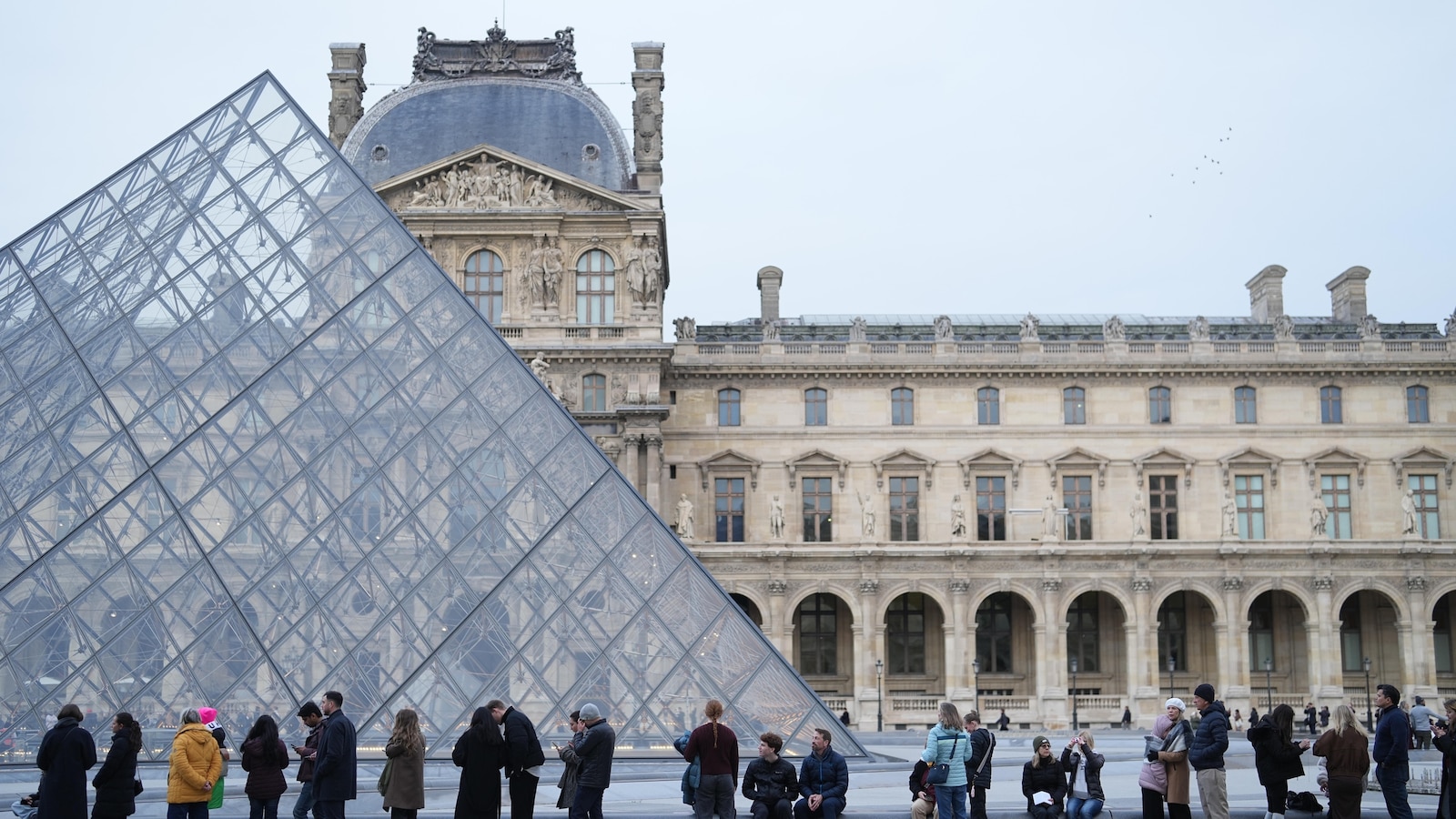

Massive Ticket Fraud Scheme Uncovered at Paris’s Louvre Museum
A Decade-Long Scam Exposed
In a shocking revelation that has sent ripples through the cultural world, Paris prosecutors announced on Thursday that nine individuals have been detained in connection with an elaborate ticket fraud operation at the Louvre Museum, one of the world’s most iconic and frequently visited cultural institutions. This sophisticated scheme, which is believed to have been running for approximately ten years, has allegedly cost the museum more than 10 million euros, equivalent to roughly $11.8 million in lost revenue. The arrests, which took place on Tuesday, came as the result of a formal complaint filed by the Louvre management in December 2024, triggering what has become a significant criminal investigation into organized fraud at one of France’s most treasured landmarks. Among those currently being held by authorities are two employees of the Louvre itself, several tour guides who regularly brought groups to the museum, and one individual who investigators believe may have been the mastermind orchestrating this entire fraudulent operation. The scale and duration of this scam have raised serious questions about security protocols and oversight at major cultural institutions, not just in France but around the world.
How the Fraud Operation Worked
The investigation into this elaborate fraud began when Louvre officials noticed suspicious patterns involving two Chinese tour guides who seemed to be bringing an unusually high number of Chinese tourists into the museum. What caught the attention of museum security was that these guides appeared to be fraudulently reusing the same tickets multiple times for different visitors, essentially recycling admission passes to avoid paying the full cost for each tourist in their groups. As investigators dug deeper into the operation, they discovered that the scheme was far more widespread than initially suspected, with additional tour guides also engaged in similar fraudulent practices. Through careful surveillance and the use of authorized wiretaps, law enforcement officials were able to confirm that the suspects were indeed systematically reusing tickets on a repeated basis. Furthermore, the investigation revealed an apparent strategy employed by these fraudulent tour operators to split up their tour groups into smaller units. This tactic served a dual purpose: it made their activities less conspicuous to museum staff and allowed them to avoid paying the mandatory “speaking fee” that the Louvre imposes on official tour guides who provide commentary to groups within the museum’s galleries.
Inside Help and Organized Corruption
Perhaps the most troubling aspect of this investigation is the evidence suggesting that the tour guides involved in the ticket fraud scheme had accomplices working inside the Louvre itself. According to the prosecutors’ office, the investigation has uncovered what appears to be a corruption network within the museum, with certain Louvre employees allegedly accepting cash payments from the fraudulent tour guides in exchange for turning a blind eye to ticket irregularities and allowing groups to bypass normal security checks. This revelation has raised serious concerns about institutional integrity and the potential vulnerability of cultural institutions to insider threats. The complexity of the operation and the coordination required between external fraudsters and internal accomplices suggests a highly organized criminal enterprise rather than opportunistic individual fraud. In June of last year, authorities formally opened a judicial investigation with charges that reflect the serious and multifaceted nature of these alleged crimes. The charges include organized fraud, money laundering, corruption, facilitating illegal entry into the country as part of an organized group, and the use of forged administrative documents. This comprehensive list of charges demonstrates that investigators believe this operation went well beyond simple ticket evasion and potentially involved immigration violations and document forgery as well.
The Massive Scale of the Operation
As investigators have pieced together the full scope of this fraudulent network, the numbers have proven to be staggering. Law enforcement officials now believe that this criminal network may have been bringing as many as 20 tour groups per day into the Louvre over the course of the past decade. When you consider that this operation allegedly ran for ten years, the total number of fraudulent entries runs into the tens of thousands, if not hundreds of thousands of instances. The financial gains from this operation appear to have been substantial enough that the suspects invested their ill-gotten proceeds in significant assets. Investigators have traced suspected fraud proceeds to real estate investments both in France and in Dubai, United Arab Emirates, suggesting that the perpetrators were attempting to legitimize and hide their illegal earnings through property investments in multiple countries. The international dimension of the money laundering aspect of this case adds another layer of complexity to the prosecution. In their raids and seizures connected to this case, authorities have managed to confiscate more than 957,000 euros (approximately $1.13 million) in physical cash, which included 67,000 euros (about $79,459) in various foreign currencies. Additionally, investigators froze and seized 486,000 euros (approximately $576,374) from various bank accounts connected to the suspects. While these seizures represent a significant recovery, they still amount to only a fraction of the estimated 10 million euros that the Louvre lost over the decade-long operation.
Broader Implications and Similar Cases
The Paris prosecutors’ office has also indicated that a similar ticket fraud scheme is suspected to have taken place at the Palace of Versailles, another of France’s most visited and prestigious cultural sites, though authorities have not yet provided additional details about that investigation. This revelation suggests that the problem may be more widespread than initially thought and that major tourist attractions across France—and potentially across Europe and the world—may need to reassess their ticketing systems and security protocols. The fact that such a scheme could operate successfully for a decade at two of France’s most important cultural institutions raises uncomfortable questions about oversight, accountability, and the adequacy of existing fraud prevention measures at major museums and historical sites. For the tourism industry, particularly tour operators who legitimately bring groups to these cultural sites and pay all required fees, this case highlights unfair competition from criminal operators who can undercut prices because they’re not paying the full costs. The Louvre ticket fraud case also comes at a time when the museum is still recovering from another major security incident that occurred in October, when thieves broke into the museum during visiting hours by smashing through a window and made off with crown jewels estimated to be worth 88 million euros (approximately $104 million). While authorities have arrested several suspects in connection with that brazen robbery, the stolen treasures themselves have not yet been recovered. These back-to-back security incidents have put the Louvre’s security measures under intense scrutiny.
Moving Forward: Lessons and Reforms
The exposure of this massive fraud operation serves as a wake-up call for cultural institutions worldwide about the need for robust ticketing systems, rigorous internal controls, and vigilant monitoring of both visitors and employees. Museums and historical sites that rely on tourism revenue—particularly those in major cities that attract large numbers of international tour groups—will likely need to invest in upgraded ticketing technologies that make fraud more difficult. This might include digital ticketing systems with better authentication, biometric verification, or blockchain-based tickets that cannot be duplicated or reused. Beyond technology, this case highlights the critical importance of institutional culture and employee integrity. The alleged involvement of Louvre employees in facilitating the fraud demonstrates that even the most sophisticated security technology can be undermined by human corruption. Museums and cultural institutions will need to implement stronger oversight of employees, better ethics training, regular rotation of duties to prevent relationships between staff and potential fraudsters from developing, and robust whistleblower protections to encourage honest employees to report suspicious activities. For the Louvre specifically, this scandal comes at a particularly challenging time as museums worldwide are still working to fully recover visitor numbers and revenues following the disruptions of the COVID-19 pandemic. The loss of 10 million euros over a decade, while perhaps not catastrophic for an institution of the Louvre’s size and resources, still represents funding that could have been used for conservation, acquisitions, educational programs, or improving the visitor experience. As the investigation continues and the detained suspects face prosecution, the case will likely serve as an important precedent for how authorities handle organized fraud targeting cultural institutions. The outcome may influence policy decisions about security requirements, employee vetting procedures, and the penalties for those who exploit these treasured public resources for private gain.