


A Five-Year-Old’s Detention: The Story of Liam Conejo Ramos
A Heartbreaking Separation and Joyful Reunion
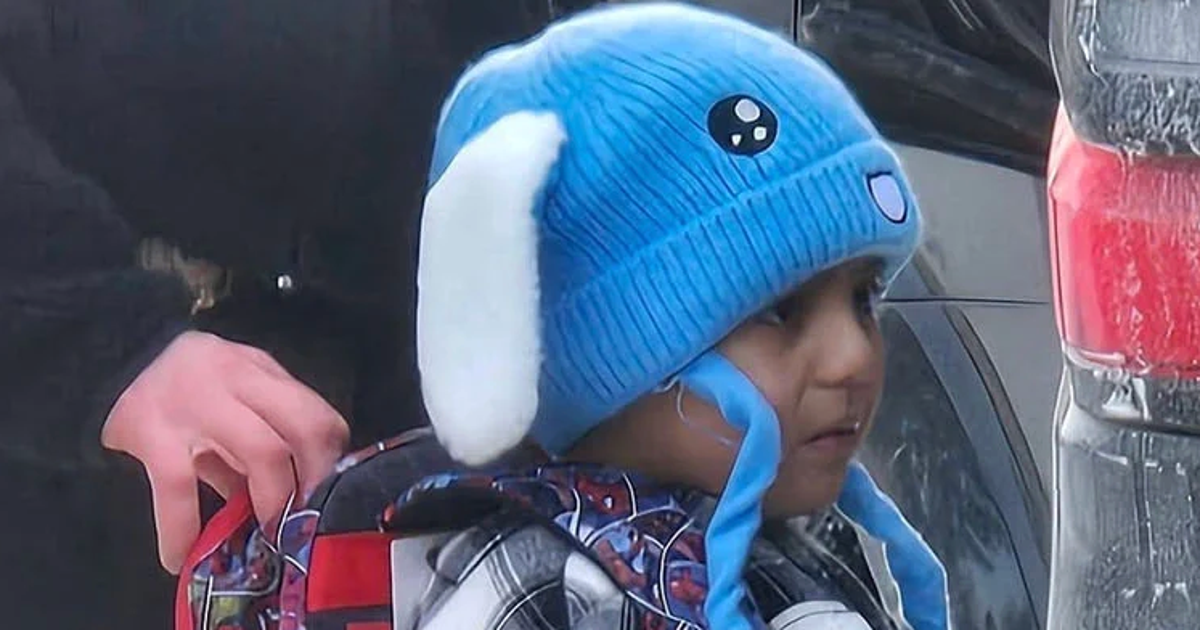
In a case that captured national attention and sparked intense debate about immigration enforcement, five-year-old Liam Conejo Ramos and his father Adrian Conejo Arias have finally returned home to Minnesota after being detained by Immigration and Customs Enforcement (ICE) officers. The father and son, originally from Ecuador, were apprehended on January 20th in a Minneapolis suburb and subsequently transported to a detention facility in Dilley, Texas—over a thousand miles from their home. Their release came following a federal judge’s order, and they were personally escorted back to Minnesota by Texas Representative Joaquin Castro, who picked them up from the detention facility on Saturday night and accompanied them on their journey home the following day. The reunion brought relief to a community that had rallied around the young boy, whose image wearing a blue bunny hat and Spider-Man backpack while surrounded by immigration officers had become a symbol of the human cost of aggressive immigration enforcement policies.
The Circumstances of Their Detention
The detention of Liam and his father became a flashpoint in the ongoing national conversation about immigration enforcement when details of their arrest emerged. According to neighbors and school officials in their Minnesota community, federal immigration officers allegedly used five-year-old Liam as what they described as “bait,” instructing the preschooler to knock on his own front door so that his mother would answer, presumably to facilitate the father’s arrest. However, the Department of Homeland Security has vehemently disputed this characterization, calling it an “abject lie” and offering a different version of events. According to DHS Assistant Secretary Tricia McLaughlin, the father fled on foot when officers arrived, leaving young Liam alone in a running vehicle in the family’s driveway. The agency also stated that ICE officers did not specifically target or arrest Liam, and that after his father’s apprehension, his mother refused to take custody of the boy. According to the government’s account, Adrian Conejo Arias requested that Liam remain with him, which led to the child being transported to the Texas detention facility alongside his father.
The Legal Battle and Judge’s Scathing Response
The case quickly moved through the legal system as advocates and attorneys fought for Liam’s release. U.S. District Judge Fred Biery ultimately ordered the release of both father and son, but not without delivering a sharp rebuke to the administration’s immigration enforcement practices. In his order, Judge Biery wrote scathingly about what he perceived as misguided priorities, stating that “The case has its genesis in the ill-conceived and incompetently-implemented government pursuit of daily deportation quotas, apparently even if it requires traumatizing children.” This pointed criticism highlighted concerns about whether immigration enforcement had become so focused on meeting numerical targets that it lost sight of the human consequences, particularly when those consequences involved young children. The judge’s words resonated with many who felt that regardless of one’s position on immigration policy, a five-year-old child should not become collateral damage in enforcement operations. The family’s attorney has maintained that Adrian Conejo Arias has a pending asylum claim that legally allows him to remain in the United States while his case is processed, adding another layer of complexity to the situation and raising questions about whether the detention was necessary or appropriate in the first place.
The Administration’s Defense and Immigration Policy Context
The Department of Homeland Security has defended its actions in this case as part of a broader commitment to what it describes as restoring order to the immigration system. Assistant Secretary Tricia McLaughlin issued a statement emphasizing that “The Trump administration is committed to restoring the rule of law and common sense to our immigration system, and will continue to fight for the arrest, detention, and removal of aliens who have no right to be in this country.” According to government records, Adrian Conejo Arias entered the United States illegally from Ecuador in December 2024, just weeks before the family’s detention. This timeline places the family’s arrival during a period of increased immigration enforcement and heightened political rhetoric around border security. The administration’s position reflects a philosophy that immigration laws should be enforced without exception, regardless of individual circumstances or the presence of pending legal claims like asylum applications. However, critics argue that this approach fails to account for the human dimension of immigration cases, particularly when children are involved, and that discretion and prosecutorial priorities should prevent situations where young children end up in detention facilities far from home.
A Community’s Outrage and National Response
The images of little Liam in his blue bunny hat and carrying his Spider-Man backpack while surrounded by immigration officers struck a chord that transcended political boundaries for many Americans. The Columbia Heights Public Schools, where Liam attended preschool, became vocal advocates for his return, with school officials joining neighbors in expressing outrage over the circumstances of his detention. The case drew attention from prominent political figures, including Minnesota’s U.S. Senator Amy Klobuchar and Representative Ilhan Omar, both Democrats who called for Liam’s immediate release and return home. Upon his arrival back in Minnesota, Senator Klobuchar posted on social media that Liam “should be in school and with family — not in detention,” adding pointedly, “Now ICE needs to leave.” Representative Omar shared a photograph of herself with Liam, his father, and Representative Castro, holding Liam’s Spider-Man backpack, with the simple message “Welcome home Liam” accompanied by heart emojis. These responses reflected widespread sentiment that whatever one’s views on immigration policy might be, the detention of a five-year-old had crossed a line that many Americans found unacceptable.
A Letter of Hope and the Road Ahead
Perhaps the most touching moment of this ordeal came during the flight back to Minnesota, when Representative Joaquin Castro wrote a personal letter to young Liam, offering words of encouragement and hope to a child who had experienced something no five-year-old should have to endure. In the letter, which was later shared on social media, Castro told Liam that he has “moved the world,” acknowledging the tremendous public response to his case. “Your family, school and many strangers said prayers for you and offered whatever they could do to see you back home,” Castro wrote, recognizing the groundswell of support that had mobilized on behalf of the young boy. Most poignantly, Castro addressed what may be one of Liam’s deepest fears following this traumatic experience: “Don’t let anyone tell you this isn’t your home. America became the most powerful, prosperous nation on earth because of immigrants not in spite of them.” These words speak to the larger questions raised by this case about belonging, identity, and what it means to be American. While Liam and his father have been released and returned home, their legal situation remains unresolved, with the asylum claim still pending. The family now faces the challenge of rebuilding their sense of security and normalcy after an experience that thrust them into the national spotlight and separated them from their community. As Liam returns to his preschool classroom and his father awaits the outcome of his legal proceedings, their story serves as a powerful reminder of the real people—including innocent children—whose lives are profoundly affected by how America chooses to enforce its immigration laws.