


Fulton County Fights Federal Seizure of 2020 Election Records
Emergency Motion Filed to Reclaim Voting Materials
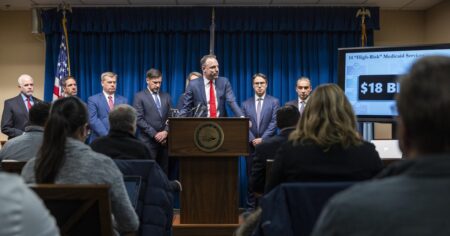
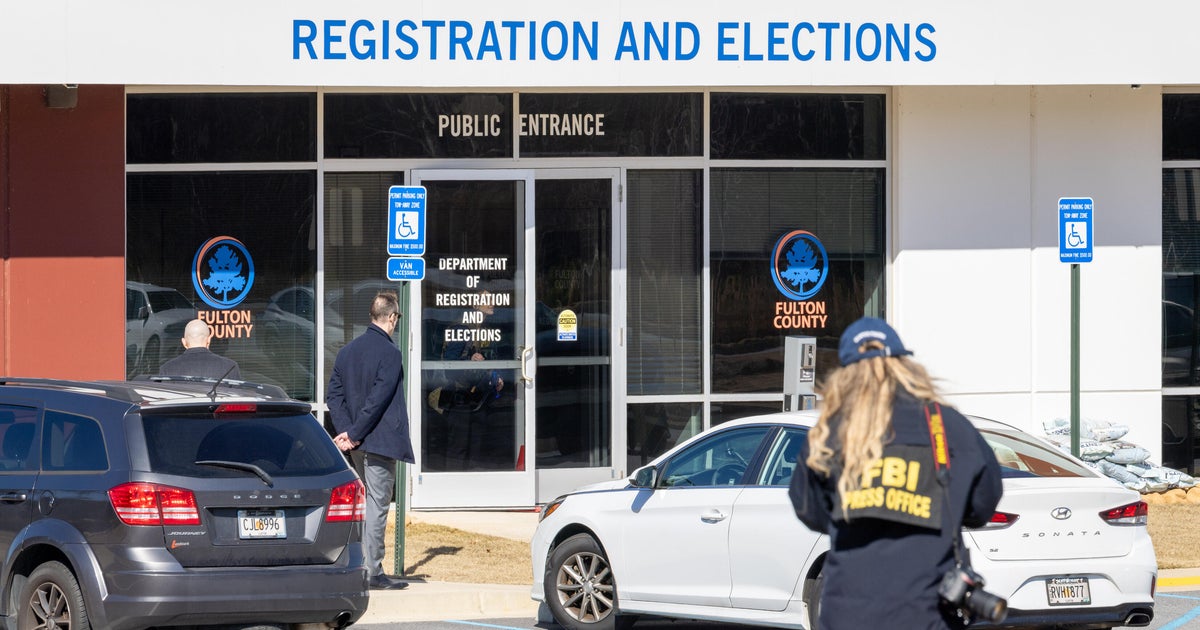
In a dramatic development that could reshape how federal and state authorities interact over election administration, Fulton County, Georgia officials took aggressive legal action Wednesday to recover thousands of 2020 election records that federal agents seized without warning last week. County Commission Chairman Robb Pitts stood before reporters at the Fulton County Government Center to announce that the county had filed an emergency motion in federal court, demanding the immediate return of election materials taken during an FBI search of the county’s elections headquarters in Union City. The county leader’s words carried unusual weight as he emphasized the constitutional stakes involved. “This is a serious case,” Pitts declared with evident concern. “Our Constitution is at stake in this fight. The Constitution is the law of the land. It is not a suggestion.” The legal filing, submitted shortly before 9 a.m. under Rule 41(g) of the Federal Rules of Criminal Procedure, seeks not only the return of original 2020 ballots and related records but also asks the court to prevent federal authorities from reviewing or using these materials while the case proceeds. In an effort to expedite resolution, county officials have requested the court place the matter on a fast-track schedule. Pitts made a solemn commitment to voters, saying, “I committed to the voters of Fulton County and the world, for that matter, that we will use every resource at our disposal to fight for their vote and that we will fight, are using our resources against those who seek to take over our elections.”
The Scope and Circumstances of the Federal Seizure
The scale of the federal operation was staggering. According to county officials, federal agents seized approximately 656 boxes of election materials during their search. A warrant cover sheet provided to Fulton County revealed that agents were specifically seeking ballots from the 2020 general election, tabulator tapes, electronic ballot images, and voter rolls—essentially the complete documentary record of how the election was conducted and counted in one of Georgia’s most populous counties. What made the situation particularly troubling for county officials was the manner in which the seizure was conducted. Chairman Pitts described a scenario that sounds more like a raid than a cooperative investigation. “They showed up and took the boxes they wanted,” Pitts explained with frustration evident in his voice. “We don’t even have copies of what they took. We don’t know where they are or who has them, and that’s a problem.” County leaders emphasized they received no advance notice of the search and were not provided copies of the records taken—a procedural approach that has left them unable to even inventory what materials are now in federal custody. This lack of transparency has fueled concerns about both the immediate practical challenges of election administration and the broader constitutional questions about federal overreach into state-run elections.
No Evidence of Wrongdoing by Election Officials
Despite the dramatic nature of the federal action, county leaders were emphatic in their assertion that the seizure does not reflect any wrongdoing by Fulton County election officials. Chairman Pitts addressed concerns about potential arrests head-on, defending the county’s elections staff with unwavering confidence. “We’re simply doing our job,” he stated clearly. “I have not done anything that would warrant an arrest, and I’m not aware of anyone in our elections department who has either.” In a remarkably candid and unscripted moment during the news conference, Pitts revealed that he had received a phone call from an unnamed source warning him that “You guys can’t relax” and that “Arrests are coming.” The source reportedly named specific individuals who might face arrest, including Chairman Pitts himself, Georgia Secretary of State Brad Raffensperger, and Gabriel Sterling, Raffensperger’s former deputy. However, no arrests were ultimately made, suggesting the warnings may have been either premature or unfounded. Commissioner Marvin Arrington, whose district includes the elections headquarters that was searched, said he personally pushed for the emergency filing to move quickly through the legal system. “Justice delayed is justice denied,” Arrington said in a statement that captured the urgency county officials feel. “Actions like this mass seizure risk sowing seeds of distrust in the election process.” His concern highlights the paradox at the heart of this situation: an investigation ostensibly aimed at ensuring election integrity may actually undermine public confidence in democratic institutions.
Fulton County’s Election Track Record Since 2020
Chairman Pitts took pains to emphasize that this case extends far beyond Fulton County and represents a potential turning point for how elections are administered nationwide. He described Fulton County as having become a national focal point due to the intense scrutiny surrounding the 2020 election, when former President Trump and his allies questioned the legitimacy of Georgia’s results. Pitts pointed out that Fulton County’s 2020 results have been reviewed, audited, and hand-recounted multiple times, with no change to the outcome—a fact that makes the current federal seizure all the more perplexing to county officials. Perhaps even more telling is the county’s performance since 2020. According to Pitts, Fulton County has successfully conducted 17 elections without issue in the years following the contentious presidential race. The county remains focused on administering free and fair elections in 2026, including the upcoming midterm congressional elections. “Our elections department is doing exactly what the law requires,” Pitts insisted. “We must be able to do that without interference or the threat of a federal takeover.” This statement cuts to the core of what county officials see as the real danger: not just the seizure of past election records, but the potential precedent it sets for federal intervention in ongoing and future elections. Pitts made clear that the county has enlisted outside legal experts to assist in fighting the case and pledged to keep the public informed as the court battle unfolds—a battle he believes could reverberate far beyond metro Atlanta.
Why Fulton County Has Become Ground Zero
When asked why Fulton County specifically has found itself at the center of this federal action, Chairman Pitts had a straightforward answer rooted in recent political history. “I think that Fulton County, Georgia is in fact the epicenter. And I tell you why, 2020, they’re fixated on 2020,” he explained. The county, which includes much of Atlanta and its diverse, heavily Democratic suburbs, became a flashpoint during the 2020 election aftermath. Former President Trump’s phone call to Secretary of State Raffensperger, in which he asked officials to “find” enough votes to overturn his loss in Georgia, brought national attention to the state’s election administration. Fulton County’s large population, urban character, and voting patterns made it a particular focus of election fraud allegations that have been repeatedly investigated and debunked. The continued federal focus on Fulton County’s 2020 records, more than five years after that election, suggests to observers that something more than a routine investigation may be underway. The county’s legal filing remains under seal, and Pitts said he could not discuss its specific contents during the news conference. However, he did confirm that the county is requesting that the affidavit used to justify the search warrant be unsealed—a move that would allow the public to understand exactly what allegations or evidence federal authorities presented to a judge to obtain permission for such a sweeping seizure of election materials.
Broader Constitutional Implications and Future Concerns
Political scientists are already analyzing what the Fulton County seizure might signal about the current administration’s broader intentions regarding election oversight. Emory University political scientist Andra Gillespie offered a sobering assessment of what might be motivating the federal action. “President Trump is making the case that federal elections should be nationalized,” she observed. “Now, there’s a big constitutional problem with that. But if he can argue fraud and get enough people to believe him, he may be thinking about, is there a type of strategy where I can exert greater control over the 2026 elections?” This analysis suggests the Fulton County case could be a test case or pretext for a much more ambitious federal strategy to assert control over elections that have traditionally been administered by state and local authorities under the Constitution. The implications of such a shift would be profound, fundamentally altering the balance of power between federal and state governments in one of democracy’s most essential functions. As the legal battle unfolds, election officials, constitutional scholars, and voters across the country will be watching closely. The outcome could determine not just whether Fulton County regains control of its 2020 election records, but whether local election officials will retain the authority to conduct elections free from federal interference. For Chairman Pitts and his colleagues, the stakes couldn’t be higher: they’re fighting not just for their county’s records, but for the constitutional principle that elections belong to the people and the local communities they empower to administer them. As this case moves through federal court on what county officials hope will be an expedited schedule, it represents a critical moment in the ongoing national debate about election integrity, federal power, and the future of American democracy itself.