


Democrats Push Back on Trump’s Economic Record as Party Faces Internal Questions
Jeffries Launches “Cost of Living” Initiative to Counter GOP Economic Messaging
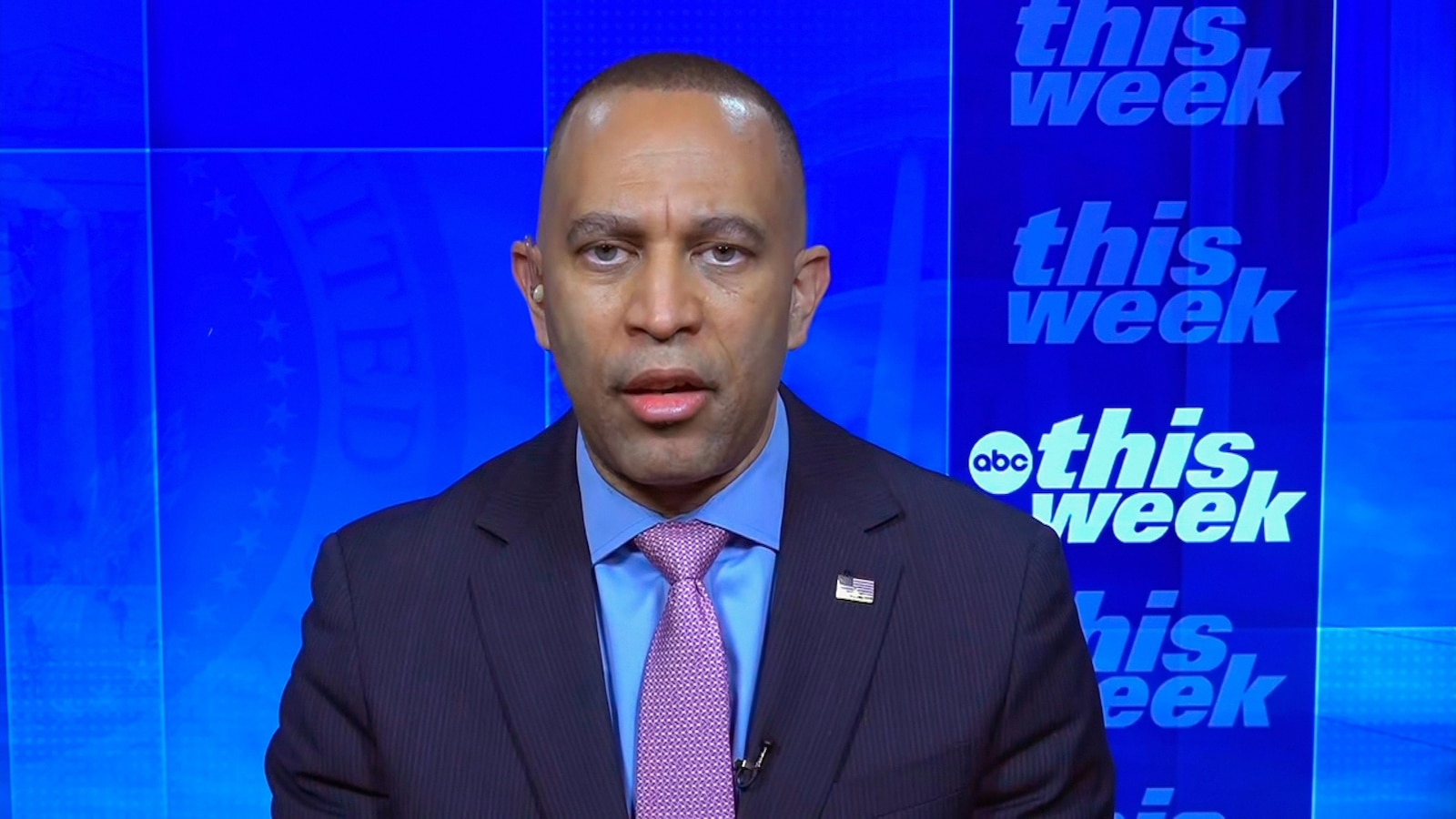
House Minority Leader Hakeem Jeffries is stepping up Democratic efforts to challenge President Donald Trump’s handling of the economy, arguing that what was once Trump’s strongest political asset has become his greatest vulnerability. In a wide-ranging interview on ABC News’ “This Week,” the New York Democrat outlined his party’s strategy to connect with Americans struggling with rising costs while also addressing questions about the Democratic Party’s future direction and leadership.
Jeffries announced that Democrats would be launching a “cost of living week of action” to highlight their economic proposals and draw attention to the financial pressures facing ordinary Americans. “We recognize that housing costs are too high, grocery costs are too high, utility costs are too high, child care costs are too high, insurance costs are too high,” Jeffries told co-anchor Jonathan Karl. “America is too expensive.” The minority leader pointed to what he sees as a significant shift in public perception, noting that Trump’s approval ratings on economic issues have declined since he took office on January 20th. What was initially the president’s biggest strength, Jeffries argued, has now become his greatest weakness as Americans continue to feel the pinch in their daily lives.
Democrats Dispute Polling on Economic Credibility
When confronted with recent Gallup polling showing that Americans have considerably less trust in Democratic leadership to address economic concerns compared to Republican leaders, Jeffries pushed back by citing alternative data. He referenced a Morning Consult poll that showed congressional Democrats were trusted more than their Republican counterparts on economic issues for the first time in four years. This discrepancy in polling highlights the ongoing battle between the two parties to control the narrative on which side can better address Americans’ kitchen-table concerns.
Jeffries emphasized that Democrats would continue making their case on economic issues while also defending critical social programs. “We’re going to continue to press our case on the economy, continue to press our case on protecting and strengthening Social Security, which is what we are committed to do,” he said. The Democratic leader drew a sharp contrast with Republicans, claiming that “Republicans are trying to detonate Social Security as we know it.” He also pledged that Democrats would “protect the healthcare of the American people,” framing the upcoming political battles as a choice between Democratic efforts to preserve and strengthen the social safety net versus what he characterized as Republican attempts to dismantle it.
Questions About Democratic Party Leadership and Direction
The interview also touched on deeper questions about the Democratic Party’s future and whether Americans are looking for new faces and fresh leadership. Senator Bernie Sanders recently suggested in an interview that the party’s future might not rest with recent leaders like Kamala Harris and Joe Biden, stating that “the future of the Democratic Party is not going to rest with the kind of leadership that we’ve had.” When asked whether Sanders was right about Democrats seeking new leaders, Jeffries deflected the question by focusing on upcoming electoral contests.
Rather than engaging with questions about past Democratic leaders, Jeffries emphasized the immediate political challenges ahead. “What we’ve got in front of us in terms of politically is that we have to win the races that are up next,” he said, pointing to November gubernatorial races in New Jersey and Virginia as critically important contests. He also highlighted the need to win back control of the House of Representatives in the next election cycle. Jeffries portrayed Democrats as taking the fight to Republicans across multiple fronts: “We’re pushing back in the Congress. We’re pushing back in the courts, and we’re pushing back in the communities, including wherever there are special elections on the campaign trail.” He noted that Democrats have been winning special elections “month after month after month,” including what he described as a decisive victory in Wisconsin earlier this month for a state Supreme Court seat.
Internal Party Tensions Over Primary Challenges to Incumbents
The interview also addressed emerging tensions within the Democratic Party over whether safe-seat incumbents should face primary challenges. David Hogg, a vice chair of the Democratic National Committee and gun violence prevention activist, has been vocal about pursuing primary challenges against some Democrats in safe seats. Hogg has criticized what he calls a “culture of seniority politics” and argued that the party needs to “get rid of the Democrats in safe seats who do not understand what is at stake now, who are asleep at the wheel not meeting the moment, and are a liability now into the future of our party.”
When asked about this effort to target Democratic incumbents through primary challenges, Jeffries firmly stood behind his caucus members. “I look forward to standing behind every single Democratic incumbent, from the most progressive, to the most centrist, and all points in between,” he stated. The minority leader defended Democratic members’ work in their communities and detailed the various activities they’re undertaking, including rallies, town hall meetings in both Democratic and Republican districts, days of action, telephone town halls, site visits, and press conferences. “We are in a more is more environment and more is going to continue to be required of all of us,” Jeffries acknowledged. While he recognized that “primaries are a fact of life” in the House, which was built to be the institution closest to the American people with elections every two years, he made clear where his priorities lie: “I’m going to really focus on trying to defeat Republican incumbents so we can take back control of the House of Representatives and begin the process of ending this national nightmare that’s being visited upon us by far-right extremism.”
Democrats Chart Course Through Economic Messaging and Political Resistance
Jeffries’ comments reveal a Democratic Party attempting to navigate multiple challenges simultaneously: addressing Americans’ economic anxieties, defending their record and credibility on pocketbook issues, managing internal debates about leadership and direction, and maintaining unity while facing pressure for renewal. The minority leader’s strategy appears to center on aggressive opposition to the Trump administration and congressional Republicans while highlighting specific policy contrasts, particularly on Social Security, healthcare, and the cost of living. By framing recent special election victories as evidence of momentum and public support, Democrats are attempting to build a narrative of resurgence despite losing control of the House.
The upcoming gubernatorial races in Virginia and New Jersey, along with the 2026 midterm elections, will test whether this approach resonates with voters. Democrats are betting that sustained focus on economic issues affecting everyday Americans, combined with warnings about Republican threats to popular programs like Social Security and Medicare, will prove more persuasive than the GOP’s messaging. Meanwhile, the party must also manage internal tensions between those who believe the current leadership and approach are working and those, like David Hogg and Bernie Sanders, who argue for more dramatic change. How Democrats balance these competing pressures while mounting effective opposition to the Trump administration will likely shape not just the next election cycle but the party’s identity and direction for years to come.