

Government Shutdown Threat Looms as Democrats Block Funding Over Minneapolis Shooting
A Familiar Crisis Returns to Washington
Washington finds itself once again on the brink of a partial government shutdown, with lawmakers racing against a Friday, January 30th deadline to secure funding for critical federal agencies. What had seemed like a straightforward process just weeks ago has now become mired in controversy following the tragic death of 37-year-old Alex Pretti, who was fatally shot by Border Patrol agents in Minneapolis. This incident has transformed routine budget negotiations into a high-stakes political standoff, with Senate Democrats drawing a hard line against any funding package that includes money for the Department of Homeland Security. The situation highlights the ongoing tension between fiscal responsibility and accountability for federal law enforcement, leaving millions of government workers and citizens wondering whether essential services will continue uninterrupted.
For weeks, both Democrats and Republicans had been making steady progress on funding the government through individual appropriations bills. In fact, six of the twelve necessary funding measures have already sailed through both the House and Senate and received the president’s signature. These successful bills cover military construction, the Department of Veterans Affairs, Agriculture, the FDA, legislative branch operations, Commerce, Justice, Interior, the EPA, and energy and water development. The remaining six bills—covering Defense, Labor, Health and Human Services, Education, Transportation, Housing and Urban Development, State, Treasury, and crucially, the Department of Homeland Security—had been bundled together in a single package designed to speed them through the Senate. This bundling strategy, typically used to streamline the legislative process, has now become the central problem, as Democrats refuse to vote for any package containing DHS funding in the wake of the Minneapolis shooting.
The Democratic Roadblock and Call for Separation
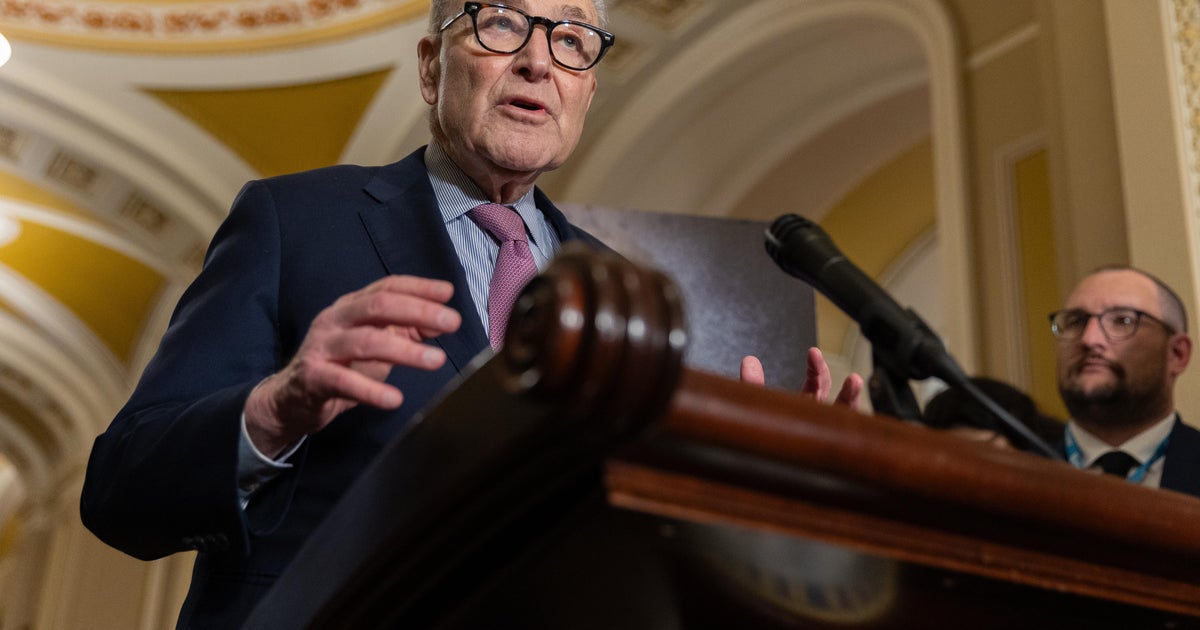
Senate Minority Leader Chuck Schumer made the Democratic position crystal clear over the weekend, announcing that his caucus would not provide the votes necessary to advance the six-bill package if it includes funding for the Department of Homeland Security. This isn’t just political posturing—it’s a mathematical reality that creates a genuine crisis. With Republicans holding 53 Senate seats, they need Democratic support to reach the 60-vote threshold required to move legislation forward. Without those Democratic votes, the entire funding package grinds to a halt, regardless of Republican unity on the issue.
The Democratic opposition isn’t coming from the party’s progressive wing alone. Independent Senator Angus King of Maine, who typically caucuses with Democrats and has historically positioned himself as a moderate deal-maker, stated emphatically on “Face the Nation” that he cannot support a bill including ICE funding “under these circumstances.” King’s stance is particularly noteworthy given his track record—he was one of three senators who crossed party lines to negotiate the deal that ended last year’s record-breaking government shutdown. “I hate shutdowns,” King acknowledged, recognizing the harm they cause to federal workers and public services. However, he drew a clear line, explaining that the recent events in Minneapolis make supporting DHS funding untenable without significant reforms and accountability measures in place.
King and other Democrats are proposing what they describe as a simple solution: separate the DHS funding bill from the other five measures. According to King’s calculations, passing those five bills would fund approximately 96% of the federal government, leaving only the contentious Department of Homeland Security funding to be negotiated separately. This approach, Democrats argue, would allow for more focused debate on ICE and Border Patrol operations, including the implementation of guardrails and accountability mechanisms that could address the concerns raised by the Minneapolis shooting. Schumer echoed this position in a statement, calling the separation of bills “the best course of action” and placing responsibility for preventing a shutdown squarely on Senate Majority Leader John Thune and the Republican leadership.
Republican Response and the Path Forward
As of Monday, Senate Republican leaders showed little indication they would accommodate the Democratic request to split the funding package. Moving forward with the bills as currently structured appears to be their preferred course, though whether they have the political will or procedural tools to force the issue remains uncertain. Any modification to the legislation would require unanimous consent in the Senate—a high bar in the best of circumstances, and nearly impossible in the current political climate. Additionally, any changes approved by the Senate would need to go back to the House of Representatives for approval, creating another complication since the House is currently on recess for the week.
Some Republican senators have begun speaking out about the Minneapolis shooting itself, even if they haven’t yet endorsed the Democratic strategy on the funding bills. Senator Bill Cassidy of Louisiana called the incident “incredibly disturbing” and argued that “the credibility of ICE and DHS are at stake,” calling for a joint federal and state investigation. Senators Thom Tillis of North Carolina, Lisa Murkowski of Alaska, Pete Ricketts of Nebraska, Dave McCormick of Pennsylvania, and Jon Husted of Ohio have similarly called for thorough, impartial, and in some cases independent investigations into what happened. Murkowski specifically emphasized the need to “rebuild trust” through congressional oversight hearings. However, these calls for investigation haven’t yet translated into support for the Democratic proposal to separate the funding bills, leaving the path forward uncertain as the Friday deadline approaches.
Adding to the complexity is a winter storm hitting Washington, which forced the Senate to delay its return from Monday to Tuesday afternoon. This weather-related postponement shortens an already tight timeline, giving senators even less time to negotiate a solution before the government begins to partially shut down. The pressure is mounting on both parties to find common ground, but with deeply held principles at stake on both sides, compromise seems elusive.
The Complicated Reality of Appropriations
The current crisis reveals the often-confusing reality of how government funding actually works. Not all government shutdowns are created equal, and the potential shutdown facing agencies after January 30th would be partial rather than comprehensive. Because six appropriations bills have already become law, significant portions of the government would continue operating normally even if lawmakers fail to pass the remaining funding measures. Veterans would still receive their benefits, military construction would continue, agricultural programs would function as usual, and the FDA would keep protecting food and drug safety. Commerce, Justice, Interior, and EPA operations would likewise remain unaffected.
However, the agencies covered by the remaining six bills would face serious disruptions. The Department of Defense would encounter limitations on new contracts and programs. Labor, Health and Human Services, and Education departments would potentially furlough workers and suspend services. Transportation and Housing programs could see delays in critical projects affecting infrastructure and housing assistance. State Department operations might be curtailed at a time when international diplomacy remains essential. Treasury operations could face interruptions affecting everything from tax processing to economic policy implementation. And of course, the Department of Homeland Security—the focus of the current dispute—would enter uncertain territory regarding its operations and oversight.
Interestingly, Democratic appropriators who negotiated the DHS funding measure have acknowledged this complicated reality. Senator Patty Murray of Washington and Representative Rosa DeLauro of Connecticut initially characterized the DHS measure as a positive step, even while admitting it fell short of the reforms Democrats had sought. They made a pragmatic argument: neither a continuing resolution to maintain current funding levels nor a government shutdown would actually rein in ICE operations because of funding already allocated in last year’s “One Big Beautiful Bill Act.” In their view, an alternative strategy in the funding fight would prove futile. However, the Minneapolis shooting changed the political calculus entirely. Despite having negotiated the bill herself, DeLauro voted against it in the House, while Murray pledged to do the same in the Senate, with Murray stating bluntly on social media: “Federal agents cannot murder people in broad daylight and face zero consequences.”
The Human Cost of Political Standoffs
Beyond the political maneuvering and procedural debates, real consequences loom for real people if the government partially shuts down. Federal workers in affected agencies would face furloughs or be required to work without pay, creating financial hardship for families already struggling with the cost of living. Contractors who provide essential services to government agencies would see projects halted, affecting not just their businesses but their employees and communities. Citizens relying on government services—from passport processing to small business loans—would experience delays and disruptions that ripple through the economy.
The current standoff also reflects a broader crisis of accountability and trust in federal law enforcement. The shooting in Minneapolis has become a flashpoint, but it represents deeper concerns about the conduct of immigration enforcement agencies and the balance between security and civil liberties. Democrats are arguing that funding these agencies without meaningful reforms and oversight mechanisms amounts to endorsing their current practices, while Republicans counter that the government must continue functioning while investigations and potential reforms proceed through proper channels. Both positions have merit, which makes the conflict particularly difficult to resolve.
What Happens Next
As Tuesday afternoon approaches and senators return to Washington, several scenarios could unfold. Senate Republicans could maintain their position and attempt to force a vote on the six-bill package as currently written, though it would almost certainly fail to reach the 60-vote threshold. Alternatively, enough Republicans might break ranks to support the Democratic proposal to separate the DHS funding bill, though this would require overcoming both political and procedural hurdles. A third possibility involves a short-term continuing resolution that temporarily extends current funding levels for all agencies, buying time for further negotiations—though Democrats have indicated this wouldn’t address their fundamental concerns about accountability.
The most likely outcome may involve intense behind-the-scenes negotiations over the next few days, with both parties recognizing that a government shutdown serves neither their political interests nor the public good. However, the Minneapolis shooting has raised the stakes beyond typical budget battles, making compromise more difficult because both sides view their positions as matters of principle rather than mere policy preferences. Whether lawmakers can find a way forward that maintains government operations while addressing legitimate concerns about federal law enforcement accountability will determine not just the immediate future of government funding, but potentially the broader relationship between Congress and the agencies it oversees. With Friday’s deadline rapidly approaching and a winter storm having already cost precious negotiating time, the pressure has never been more intense for Washington’s lawmakers to find a solution that serves both justice and the practical needs of governing.