

The Kennedy Center Renovation: What’s Really Happening Behind the Headlines
A Major Facelift, Not a Total Teardown
When President Trump announced plans to renovate the iconic Kennedy Center, the initial announcement sparked considerable confusion and concern about just how extensive the changes would be. Standing in the Oval Office on Monday, the President painted a picture of creating a “brand new” Kennedy Center while preserving the 55-year-old building’s existing steel framework and some of its original marble. This announcement naturally led to widespread speculation about whether Washington D.C. would witness the complete demolition of one of its most recognizable cultural landmarks. However, sources close to the situation have been quick to clarify that despite the dramatic language, there’s been absolutely no discussion about tearing down or completely gutting this historic building. When reporters pressed the President directly about his intentions, he was clear: “I’m not ripping it down. I’ll be using the steel, so we’re using the structure.” The project, estimated to cost around $200 million, represents a significant investment in preserving and updating the arts institution, but those familiar with the planning process confirm that Trump hasn’t requested any estimates for a complete gut renovation. The building will undergo a comprehensive two-year closure starting this summer, but its fundamental character and structure will remain intact.
The Scope of the Planned Renovations
So what exactly will these renovations entail? According to sources with direct knowledge of the plans, the changes are substantial but focused primarily on addressing long-overdue maintenance issues and making selective improvements rather than reimagining the entire building. The renovation will include installing a completely new roof, replacing deteriorating marble and grout throughout the facility, and undertaking necessary structural work on the promenade section—that distinctive part of the building that extends over the roadway toward the Potomac River. In this promenade area, the existing steel framework will be preserved and reused, demonstrating the commitment to maintaining the building’s structural integrity. Inside the grand foyer, visitors may notice some changes to the current layout, with one of the two free-standing stages likely being removed and possibly replaced with a bar area, presumably to create a more social atmosphere for patrons during intermissions and events. However, the essential architectural elements that define the Kennedy Center experience will remain untouched. The building’s three main theaters will continue to anchor the complex, and both the Hall of Nations and the Hall of States—iconic spaces that have welcomed dignitaries and art lovers for decades—will be preserved as integral parts of the renovated facility.
Presidential Authority and Congressional Funding
The decision to close the Kennedy Center for such an extended period raises important questions about authority and funding. A White House official has clarified that the administration doesn’t require congressional approval to temporarily close the building for these renovations, though Congress has already shown its support for maintaining this national treasure by appropriating approximately $250 million for building renovations last year. President Trump himself, drawing on his background as a real estate developer, explained his approach to the project with characteristic bluntness during his Oval Office comments. “You want to sit with something for a little while before you decide on what you want to do,” he noted, explaining that after this period of assessment, “we sat with it” and discovered “it’s dilapidated” and needs significant attention. The President’s announcement late Sunday evening emphasized that closing the facility completely for approximately two years would ultimately serve the public better than attempting to work around performances and events. Kennedy Center President Ric Grenell supported this rationale, pointing to “decades of deferred maintenance and repairs” that have accumulated over the building’s 55-year history. According to Trump’s reasoning, a complete closure “will produce a much faster and higher quality result” than the alternative of enduring partial closures and construction disruptions while trying to maintain the center’s regular programming schedule.
Trump’s Vision for Washington’s Landmarks
The Kennedy Center renovation doesn’t exist in isolation but rather represents part of a broader pattern of President Trump leaving his mark on the Washington D.C. area’s most prominent landmarks. Since returning to the White House last year, the real estate developer-turned-president has pursued an ambitious agenda of reimagining the capital’s physical landscape. In a dramatic move last fall, Trump ordered the demolition of the White House’s East Wing to clear space for an enormous new ballroom, planned to encompass some 90,000 square feet—a statement of grandeur that reflects his preference for large-scale, impressive architecture. Beyond the White House grounds, the President has commissioned a triumphal arch to span across the Potomac River from Washington D.C., and in typical Trump fashion, he’s expressed his desire for this arch to be “the biggest one” in the world, surpassing famous structures like the Arc de Triomphe in Paris. These projects collectively reveal a president who sees architecture and public spaces as opportunities to make bold statements and create lasting legacies that bear his personal stamp. Whether viewed as ambitious improvement projects or controversial alterations to cherished landmarks, these initiatives demonstrate Trump’s determination to reshape the physical environment of the nation’s capital according to his vision of grandeur and excellence.
Controversial Changes to Leadership and Identity
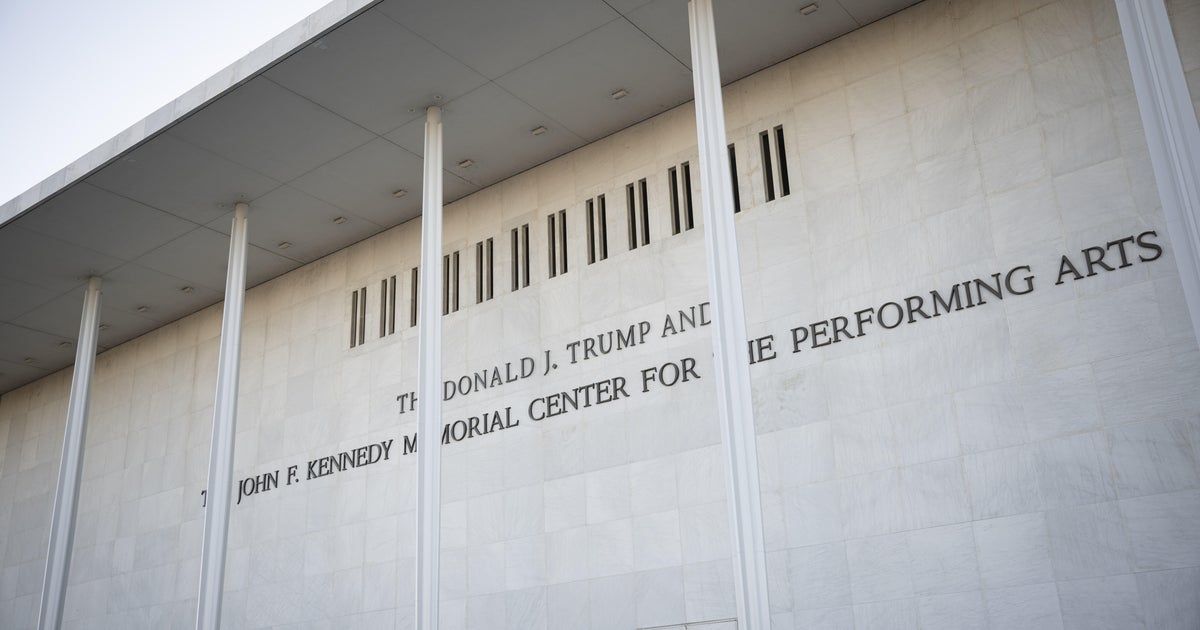
Beyond the physical renovations, the Kennedy Center has undergone significant changes to its governance and even its fundamental identity under Trump’s influence. Just weeks after his inauguration, the President took the unprecedented step of replacing several members of the center’s board of trustees and installing himself as the board’s chair, giving him direct control over the institution’s direction. This was followed by an even more controversial decision last month when the board voted to rename the facility the Trump-Kennedy Center, a change that was quickly followed by the addition of Trump’s name to the front of the building itself. This rebranding has drawn sharp criticism from Democratic lawmakers who argue that such a name change requires an act of Congress rather than a simple board vote, raising constitutional questions about the proper process for altering a national cultural institution that was originally established as a living memorial to President John F. Kennedy. The name change represents more than just adding letters to a building—it fundamentally alters the identity and symbolic meaning of an institution that has served as the nation’s cultural center for over half a century, transforming it from a memorial to a fallen president into something that also celebrates the current occupant of the White House.
Artistic Backlash and Cultural Implications
The changes at the Kennedy Center haven’t just raised political eyebrows—they’ve sparked a significant backlash from the artistic community that the center was built to serve. In a series of high-profile cancellations that have made headlines, numerous artists and productions have withdrawn from scheduled performances at the newly renamed Trump-Kennedy Center. The blockbuster Broadway musical “Hamilton,” which has become a cultural phenomenon since its debut, pulled out of planned performances at the venue. Renowned composer Philip Glass canceled the premiere of his new symphony, which would have been a prestigious event for the center. Several other musical artists have also called off their shows, with many explicitly citing either the controversial name change or broader concerns about the center’s shifting political direction under Trump’s leadership. Kennedy Center President Ric Grenell has pushed back forcefully against these cancellations, characterizing the departing artists as having been “booked by the previous far left leadership” and accusing them of inappropriately “politicizing the center.” This response, however, may oversimplify the artists’ concerns, which seem to reflect genuine worries about the independence and non-partisan nature of what has traditionally been viewed as a national cultural institution above political considerations. As the center prepares to close for two years of renovations, these tensions highlight deeper questions about the role of politics in arts institutions and whether a venue that serves as America’s cultural showcase can maintain its artistic credibility when so closely identified with a particular political figure and administration.