
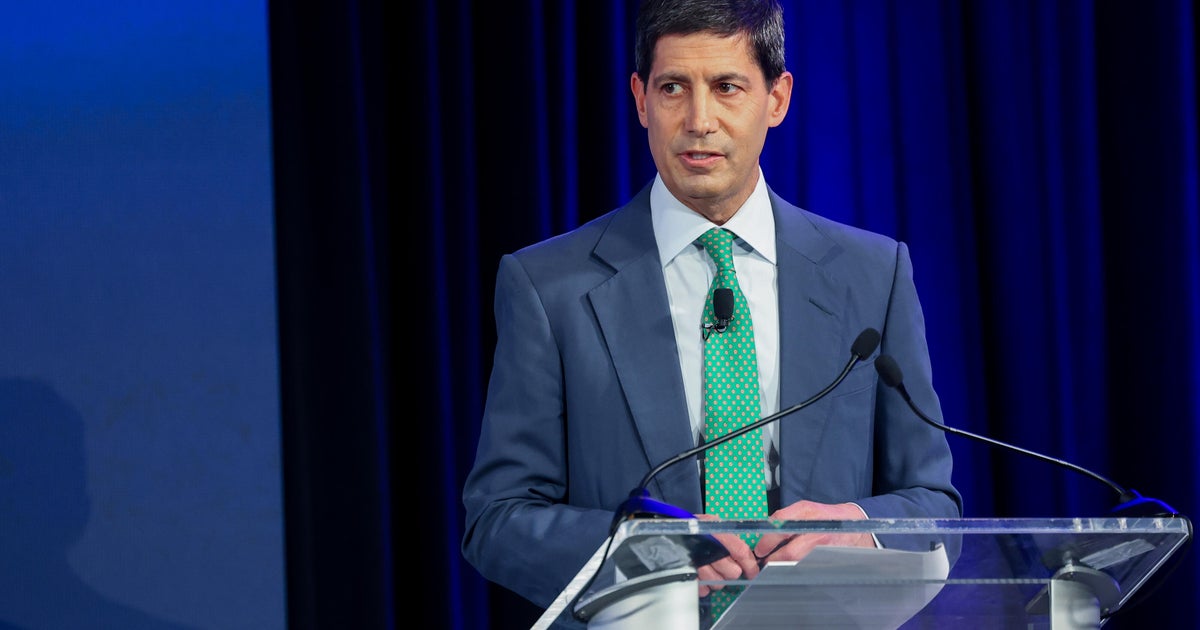

Trump’s Pick for Federal Reserve Chair: Kevin Warsh Emerges as Wall Street’s Safe Bet
A Strategic Nomination That Signals Continuity and Experience
President Trump’s decision to nominate Kevin Warsh as the next Federal Reserve chair represents what many on Wall Street are calling a reassuring choice during uncertain economic times. Warsh, a former Federal Reserve governor with extensive experience in monetary policy, is set to replace Jerome Powell, who has led the Fed since February 2018. Powell’s tenure began after Trump nominated him during his first presidential term, but their relationship has since soured considerably. Throughout his second term, Trump has openly criticized Powell, frequently taking to social media to attack the Fed chief’s decisions and demanding lower interest rates to stimulate economic growth. The selection of Warsh, however, appears designed to calm markets while bringing in someone with both institutional knowledge and a track record that Wall Street understands and generally respects.
At 55 years old, Warsh brings substantial credentials to the role. He previously served as a Federal Reserve governor from 2006 to 2011, a turbulent period that included navigating the devastating 2008 financial crisis and the subsequent recession that shook the global economy. This experience gives him firsthand knowledge of managing the Fed during times of extreme market stress, something that could prove invaluable as the economy faces ongoing challenges from inflation, geopolitical tensions, and technological disruption. Financial analysts at Capital Economics characterized Warsh as “a relatively solid choice,” noting that he isn’t coming directly from the Trump administration—a factor that distinguishes him from Kevin Hassett, who served as director of the White House National Economic Council and was considered another leading candidate for the position. This separation from the administration’s inner circle helps address concerns that the next Fed chair might simply act as an extension of presidential wishes rather than maintaining the independence that has traditionally defined the Federal Reserve’s approach to monetary policy.
Warsh’s Economic Philosophy and Approach to Fed Policy
Warsh has developed a reputation as a hawk on inflation issues, meaning he tends to prioritize fighting rising prices even if that requires maintaining higher interest rates for longer periods. This stance typically resonates with conservative economic thinking and suggests he would be vigilant about preventing the kind of runaway inflation that plagued the economy in recent years. However, his views have evolved and become more nuanced over time. In recent years, according to analysts at Deutsche Bank, Warsh has grown increasingly critical of the Federal Reserve itself, arguing that the institution has become too fixated on backward-looking economic data rather than anticipating future trends and acting proactively. This criticism reflects a broader frustration among some economists who believe the Fed has been slow to adapt to rapidly changing economic conditions, particularly in the wake of technological advancements and shifting global trade patterns.
Stephen Brown, deputy chief North America economist at Capital Economics, told investors that Trump’s nomination of Warsh represents “one of the better outcomes for investors compared to the other contenders that had been in the running.” This assessment suggests that while Warsh may bring change to the Fed, it would likely be measured and predictable rather than radical or destabilizing. In a November opinion piece published in the Wall Street Journal, Warsh outlined some of his concerns about current Fed policy, particularly criticizing what he called the Fed’s “bloated balance sheet.” He argued that this oversized balance sheet has contributed to economic problems affecting everyday Americans, creating a situation where borrowing remains “too easy” for Wall Street financial institutions while “credit on Main Street is too tight” for small businesses and consumers. This populist framing aligns with Trump’s broader economic messaging about favoring Main Street over Wall Street, even as Warsh himself has deep connections to the financial elite.
Navigating the Delicate Balance of Independence and Presidential Pressure
The Federal Reserve’s primary responsibility involves raising and lowering its benchmark interest rate to control inflation while supporting employment and economic growth—a dual mandate that requires careful balancing. Central bank officials have long maintained that successfully executing this mission requires insulating the Fed from political pressure, allowing monetary policy decisions to be made based on economic data rather than political considerations. This independence has been a cornerstone of Fed credibility for decades, helping maintain confidence in the dollar and the broader financial system. Interestingly, Warsh’s recent public statements suggest he now favors lower interest rates, a position that conveniently aligns with Trump’s persistent demands for the Fed to reduce borrowing costs. Deutsche Bank analysts noted that “Warsh’s recent comments suggest he could support lower policy rates, possibly counterbalanced by a smaller balance sheet,” indicating he might pursue rate cuts while simultaneously shrinking the Fed’s holdings of securities acquired during previous stimulus efforts.
However, Warsh’s personal views on interest rates won’t automatically translate into policy changes, since the Fed chair doesn’t unilaterally control monetary policy decisions. Instead, the federal funds rate—which influences borrowing costs throughout the economy for everything from mortgages to business loans—is determined by majority vote among the twelve members of the Federal Open Market Committee (FOMC). This structure means that other committee members could serve as a check on any politically motivated policy shifts, potentially demonstrating the Fed’s independence by resisting pressure to cut rates if economic conditions don’t warrant such action. Sonu Varghese, a global macro strategist at investment firm Carson Group, warned investors that “if he walks into the Fed with aggressive cuts as his baseline, he may not have a lot of credibility selling others on the need for further rate cuts.” Varghese added that this dynamic could result in “a deeply divided committee that doesn’t cut at all,” potentially creating a situation where “a potentially hawkish Fed could increase volatility” in financial markets.
The Fed’s most recent decision at its January 28 meeting illustrated this careful deliberation process. The committee voted to hold rates steady at between 3.5% and 3.75%, marking the first pause after three consecutive rate cuts. Jerome Powell explained that the decision reflected the U.S. economy’s strong continued growth and stabilization in labor markets, suggesting that the economy could handle current interest rate levels without additional stimulus. Trump immediately criticized this decision, taking to social media to declare, “The Fed should substantially lower interest rates, NOW!” This public pressure campaign demonstrates the challenging environment Warsh would inherit, caught between a president demanding rate cuts and an institutional culture that prizes independence from political influence.
Warsh’s Background and Connections to the Financial Elite
Warsh’s biography reads like a roadmap through America’s financial and political establishment. After graduating from Stanford University and Harvard Law School, he joined Morgan Stanley, where he worked in mergers and acquisitions—the high-stakes world of corporate dealmaking that sits at the heart of Wall Street’s most lucrative activities. In 2002, he transitioned from finance to public service, joining President George W. Bush’s administration in the National Economic Council. His impressive credentials led President Bush to nominate him to the Fed’s board of governors in 2006, making Warsh the youngest person ever appointed to that position at just 36 years old. After leaving the Fed in 2011, Warsh pursued a mix of academic and policy work, joining think tanks like the conservative-leaning Hoover Institution and teaching at Stanford Business School, where he could influence the next generation of business leaders while maintaining his public profile.
Since departing government service, Warsh has also cultivated relationships with some of the world’s wealthiest investors. He currently works with billionaire investor Stanley Druckenmiller, whose estimated $11 billion fortune was built through successful hedge fund management, including his legendary work at George Soros’ Quantum Fund. In 2011, Druckenmiller appointed Warsh to serve as a partner at his Duquesne Family Office, where Warsh modestly told Barron’s that he oversees the billionaire’s “small nest egg”—a characteristically understated description of what surely amounts to hundreds of millions or billions of dollars. Warsh’s connection to extreme wealth extends to his personal life as well; he’s married to Jane Lauder, a cosmetics heiress whose family built the Estée Lauder empire. Forbes estimates her personal net worth at $2.5 billion, making the Warsh household one where financial policy discussions might carry particularly interesting personal dimensions.
During a July interview with CNBC, Warsh expressed strong optimism about the Trump administration’s economic policies and highlighted his belief in artificial intelligence as a transformative economic force. “AI is going to make everything cost less, and the U.S. could be the big winner,” he predicted, suggesting that technological advancement could help solve some of the inflation challenges that have plagued policymakers. He also took another shot at current Fed thinking, saying, “If I were the president, what I would be worried about is a central bank that doesn’t see any of that—a central bank that is stuck with models from 1978.” This criticism suggests that as Fed chair, Warsh might push for incorporating new economic thinking that accounts for technological disruption, potentially leading to different policy conclusions than traditional economic models would suggest.
What This Nomination Means for Markets and the Economy
Financial markets generally prefer predictability and experience over uncertainty and inexperience, which helps explain why Warsh’s nomination has been received relatively well on Wall Street. Investors and analysts appear relieved that Trump didn’t select someone directly from his administration or choose a nominee whose primary qualification was personal loyalty rather than economic expertise. The fact that Warsh has already served at the Fed during a period of extreme crisis gives market participants confidence that he understands the institution’s culture and decision-making processes, reducing the likelihood of disruptive rookie mistakes or radical policy experimentation.
However, questions remain about how Warsh would navigate the fundamental tension between Trump’s desire for lower interest rates and the Fed’s institutional commitment to data-driven policy decisions. If inflation remains persistent or begins accelerating again, Warsh could face intense pressure from the president to cut rates anyway, creating a potential crisis of credibility for both the Fed chair personally and the institution as a whole. Deutsche Bank analysts suggested that other FOMC members would likely work to signal the Fed’s continued independence from political pressure, even after a change in leadership, which could moderate any dramatic policy shifts. This dynamic might actually result in a more cautious Fed than some expect, as committee members work to demonstrate that their decisions are based on economic fundamentals rather than presidential tweets.
The nomination also comes at a complex moment for the American economy. While growth has remained relatively robust and unemployment low, inflation hasn’t fully returned to the Fed’s 2% target, creating ongoing debates about the appropriate stance for monetary policy. Additionally, Trump’s trade policies, particularly regarding tariffs, could introduce new inflationary pressures that would complicate the Fed’s decision-making. Warsh would need to navigate these challenges while establishing his credibility both with his fellow FOMC members and with financial markets that will be watching closely for any signs that political considerations are influencing policy decisions. His success or failure in maintaining Fed independence while working with an administration known for demanding loyalty could define not just his tenure but the Fed’s reputation for decades to come.