
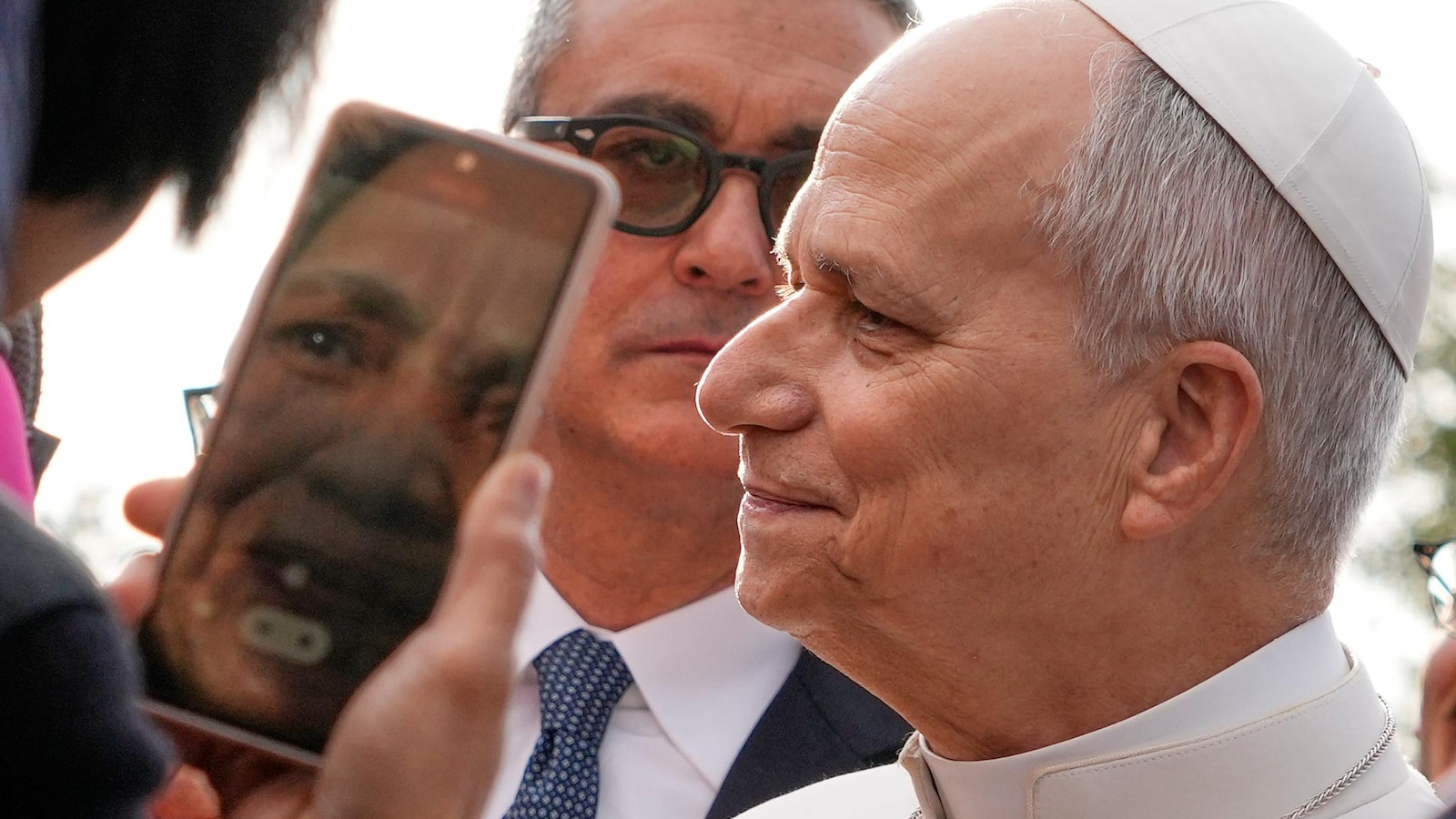

Pope Accepts Resignation of California Bishop Following Embezzlement Arrest
Vatican Announces Departure Amid Criminal Investigation
In a development that has sent shockwaves through the Catholic community in Southern California, the Vatican announced on Tuesday that Pope Leo XIV has formally accepted the resignation of Bishop Emmanuel Shaleta, who led the Chaldean Catholic community in San Diego. The announcement came on the heels of the bishop’s arrest on serious financial crimes, including embezzlement, money laundering, and aggravated white collar crime charges. The 69-year-old religious leader was taken into custody by the San Diego County Sheriff’s Office on March 5 at San Diego International Airport, apparently attempting to depart the United States when law enforcement intervened. According to authorities, the investigation was triggered when a member of Shaleta’s own church community came forward with detailed documentation and a formal statement that revealed what appeared to be systematic embezzlement of church funds, leading to his arrest and detention on $125,000 bail.
The Circumstances of the Arrest and Allegations
The arrest of Bishop Shaleta represents a dramatic fall from grace for a religious leader who had been entrusted with shepherding the Chaldean Catholic community in the San Diego area for the past several years. Law enforcement officials from the San Diego County Sheriff’s Office detailed that their investigation began after receiving credible information from someone within St. Peter Chaldean Church, the parish where Shaleta served. This brave whistleblower provided not only a detailed statement but also substantive documentation that painted a picture of potential financial wrongdoing within the church’s finances. The timing and location of the arrest—at the international airport as the bishop was apparently preparing to leave the country—added an element of urgency to the case and raised questions about whether he might have been attempting to flee prosecution. The eight separate counts against him include embezzlement, money laundering, and aggravated white collar crime, all serious felonies that carry significant potential prison time if he is ultimately convicted. As of the Vatican’s announcement, attempts to reach representatives at St. Peter Chaldean Church for comment were unsuccessful, and no information about Shaleta’s legal representation had been made available to the public.
The Vatican’s Careful Response to the Crisis
The Holy See’s handling of Bishop Shaleta’s resignation reveals a careful balancing act between ecclesiastical authority and respect for civil law enforcement processes. According to the Vatican’s official announcement, Pope Leo XIV accepted the resignation under specific provisions within the code of canon law that governs eastern rite Catholic churches, which allows the pontiff to accept a bishop’s request to step down from his position. However, the timeline of events suggests a coordinated approach between church and civil authorities. The Vatican embassy in Washington later clarified that the Pope had actually accepted Shaleta’s resignation back in February, more than a month before the public announcement was made on Tuesday. This delay appears to have been a deliberate decision by the Holy See to avoid any appearance of interfering with or influencing the ongoing criminal investigation being conducted by San Diego County law enforcement. By waiting until after the arrest to announce the resignation, the Vatican demonstrated its willingness to allow civil authorities to proceed with their work unimpeded while simultaneously taking decisive action to remove a bishop facing serious allegations from his position of religious authority and community leadership.
Background on Bishop Shaleta’s Ministry
Bishop Emmanuel Shaleta’s journey in religious life began decades ago when he was ordained as a priest in the Chaldean Catholic Church in Detroit in 1984, entering into a vocation dedicated to serving the spiritual needs of the Chaldean Catholic community in the United States. The Chaldean Catholic Church is an eastern rite Catholic church in full communion with Rome, serving primarily Catholics of Iraqi and Middle Eastern heritage who maintain ancient liturgical traditions while recognizing the authority of the Pope. For many years, Shaleta served the growing Chaldean community in Michigan, which has one of the largest populations of Chaldean Catholics in North America. His elevation to bishop and assignment to San Diego came in 2017, when he was tasked with leading the Chaldean Catholic community in Southern California, a region with its own substantial population of Iraqi and Middle Eastern Catholics seeking to maintain their cultural and religious heritage in their adopted homeland. Over his seven years of service in San Diego, he would have been responsible for the spiritual welfare of his congregation, the administration of church properties and finances, and serving as a representative of the Chaldean Catholic tradition in the broader Catholic community.
The Appointment of Temporary Leadership
In the immediate aftermath of accepting Bishop Shaleta’s resignation, Pope Leo XIV moved swiftly to ensure continuity of pastoral care for the San Diego Chaldean Catholic community by appointing Bishop Saad Hanna Sirop as temporary administrator of the diocese. This appointment ensures that the faithful who attend St. Peter Chaldean Church and other communities under the former bishop’s care will continue to have access to the sacraments and spiritual guidance during this difficult period of transition and uncertainty. Bishop Sirop, stepping into this challenging role, will need to address not only the regular administrative and spiritual needs of the community but also help guide the faithful through the scandal and betrayal many are likely feeling in the wake of the allegations against their former shepherd. The temporary nature of the appointment suggests that the Vatican will take time to carefully consider the best path forward for permanent leadership, possibly waiting until the criminal proceedings against Shaleta reach their conclusion so that the full scope of what occurred can be understood and appropriate steps taken to prevent any recurrence. The administrator will also need to work with church officials to review financial controls and procedures to restore confidence in the institution’s stewardship of the resources entrusted to it by the faithful.
Broader Implications and the Path Forward
The case of Bishop Emmanuel Shaleta adds to a long and troubling list of financial scandals that have plagued various levels of the Catholic Church in recent decades, undermining trust between clergy and the laypeople they serve. While much attention has been focused on clergy abuse cases, financial misconduct represents another form of betrayal that directly impacts parish communities who sacrifice their own limited resources to support their churches and religious institutions. For the Chaldean Catholic community in San Diego, many members of which are immigrants or descendants of immigrants who fled persecution in Iraq and other Middle Eastern countries, this betrayal may feel particularly acute, as their church has served not only as a place of worship but as a cultural anchor and support system in a new land. The coming months will be crucial as the criminal justice system proceeds with its case against Shaleta, determining whether the allegations can be proven beyond a reasonable doubt in a court of law. Meanwhile, the Catholic Church itself must continue its ongoing efforts to implement robust financial controls, transparency measures, and accountability systems to prevent such allegations from arising in the future. The willingness of a church member to come forward with evidence, and the cooperation between civil and religious authorities in addressing the matter, offers some hope that systems for detecting and addressing financial wrongdoing are improving, even as this particular case represents a painful reminder of how much work remains to be done in restoring full trust in religious institutions.