


Pope Leo XIV to Carry Cross at Good Friday Procession in Historic Return to Tradition
A Powerful Symbol of Faith and Spiritual Leadership
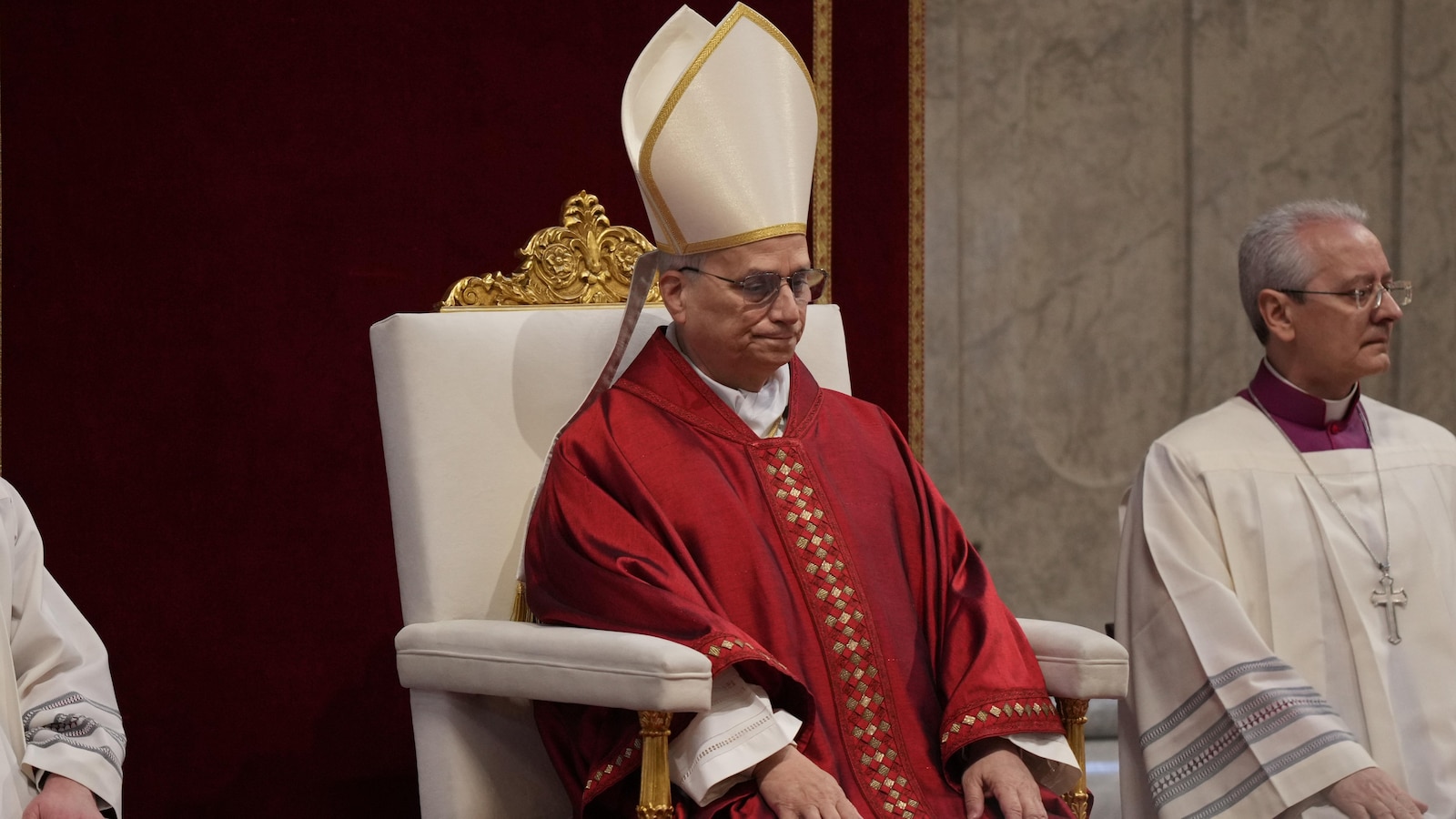
In a significant departure from recent papal tradition, Pope Leo XIV has announced that he will personally carry the wooden cross through all fourteen stations of the Way of the Cross at Rome’s iconic Colosseum during his first Good Friday as pontiff. This marks the first time in decades that a pope has carried the cross for the entire procession, a decision that carries deep symbolic meaning for Catholics worldwide. Speaking to reporters outside the papal retreat at Castel Gandolfo earlier this week, Pope Leo explained the profound significance of his decision, stating, “I think it will be an important sign because of what the pope represents, a spiritual leader in the world today, and for this voice, that everyone wants to hear, that says Christ still suffers. I carry all of this suffering in my prayer.” His words reflect not only a personal commitment to embodying Christ’s sacrifice but also an acknowledgment of his role as a spiritual beacon in an increasingly complex world where many seek guidance and solace.
The Way of the Cross, also known as the Stations of the Cross, is one of the most solemn and meaningful observances in the Catholic calendar. This devotional practice commemorates the final hours of Jesus Christ’s earthly life, tracing his journey from the moment he was condemned to death by Pontius Pilate, through his carrying of the cross through the streets of Jerusalem, to his crucifixion on Golgotha, his death, and finally his burial. Each of the fourteen stations represents a specific moment in this passion narrative, and pilgrims traditionally pause at each station to pray and reflect on the suffering Christ endured for humanity’s salvation. The Good Friday procession at the Colosseum has become a powerful annual tradition that draws Catholics from around the world, transforming the ancient Roman amphitheater—once a place of martyrdom for early Christians—into a sacred space of remembrance and devotion. The sight of the pope himself carrying the cross through each station will undoubtedly resonate deeply with the faithful, serving as a vivid reminder that the Church’s highest spiritual leader stands in solidarity with all who suffer.
A Break from Recent Precedent
Pope Leo XIV’s decision represents a notable change from the practices of his immediate predecessors, though it echoes the tradition established by Pope John Paul II during the earlier years of his lengthy papacy. John Paul II, who became pope in 1978 at the relatively young age of 58, was known for his physical vigor, his love of hiking and the outdoors, and his hands-on approach to the papacy. According to Associated Press reports from that era, he carried the cross for the entire Good Friday procession from his first year as pontiff in 1979 until 1995, when hip surgery necessitated that he carry it for only part of the distance. His successor, Pope Benedict XVI, who was elected in 2005 at the age of 78, carried the cross only for the first station inside the Colosseum during his initial two years as pope, then followed along as other bearers took turns carrying it through the procession, which concludes on a platform atop the historic Palatine Hill overlooking the Roman Forum.
Pope Francis, who succeeded Benedict XVI in 2013, never carried the cross himself, though he participated actively in the Good Friday procession during the years when his health permitted. Francis had always faced certain physical limitations, including the fact that as a young man in Argentina, he had suffered a severe pulmonary infection that resulted in the removal of part of one lung. As his papacy progressed, his health gradually declined, and he eventually passed away after a prolonged illness on Easter Monday of the previous year, which fell on April 21. Both Benedict and Francis had been in their late seventies when they began their papacies, an age when the physical demands of carrying a heavy wooden cross for an extended procession become considerably more challenging. The contrast between these recent popes and Pope Leo XIV could not be more striking, and it signals a potential shift in the way the papacy presents itself to the world.
A Pope in His Prime
At 70 years old, Pope Leo XIV is significantly younger than his two immediate predecessors were when they assumed the Chair of Saint Peter, and more importantly, he maintains an impressive level of physical fitness that enables him to undertake the demanding task of carrying the cross through all fourteen stations. Those who know him describe him as an avid tennis player and swimmer who takes his physical health seriously as part of his overall well-being and his ability to fulfill his responsibilities as pope. Before his election to the papacy, Leo worked out regularly at a gym located near the Vatican, following an exercise regimen that his former personal trainer has described as appropriate for someone in their early fifties rather than someone approaching seventy. This commitment to physical fitness is not mere vanity or personal preference; rather, it reflects an understanding that the papal office demands extraordinary stamina, resilience, and the ability to maintain a grueling schedule of public appearances, liturgical celebrations, administrative duties, and international travel. By personally carrying the cross through all fourteen stations, Pope Leo is not only honoring tradition but also demonstrating that the papacy can be both spiritually profound and physically engaged with the rituals and practices of the faith.
Meditations Grounded in Reality
The Good Friday procession at the Colosseum will feature meditations that have been specially composed for this year’s observance by Reverend Francesco Patton, who served as the custos—or custodian—of the Holy Land from 2016 to 2025. This role is one of great responsibility within the Franciscan order, as the custos is charged with overseeing and protecting the sacred Christian sites in Jerusalem and throughout the Holy Land, places that hold immense significance for believers as the actual locations where the events of Christ’s life, death, and resurrection took place. Father Patton’s intimate familiarity with these holy places and his years of service in Jerusalem bring an authentic and grounded perspective to his meditations. In his introduction to the meditations that will be read aloud at each station, Father Patton emphasized that the Way of the Cross is not meant to be an abstract or purely intellectual exercise removed from the realities of daily life. “The Way of the Cross is not intended for those who lead a pristinely pious or abstractly recollected life,” he wrote. “Instead, it is the exercise of one who knows that faith, hope and charity must be incarnated in the real world.” These words underscore a fundamental truth of Christian spirituality: that authentic faith must be lived out in the midst of real suffering, real challenges, and the complicated circumstances of human existence.
Easter Celebrations to Follow
The Good Friday procession at the Colosseum is just the beginning of the most sacred period in the Christian calendar, and Pope Leo XIV will preside over the full array of Holy Week liturgies in his capacity as Bishop of Rome and spiritual leader of the world’s Catholics. Large crowds are expected to gather around the Colosseum for the Way of the Cross, drawn by both the solemnity of the occasion and the historic nature of Pope Leo’s decision to carry the cross through all fourteen stations. The procession, which begins inside the ancient amphitheater, winds its way through the historic area and concludes outside the Colosseum atop the Palatine Hill, one of the seven hills upon which ancient Rome was built and a site that now offers sweeping views of the archaeological wonders of the Roman Forum and the city beyond. On Holy Saturday, the day following Good Friday, Pope Leo will preside over the Easter Vigil, one of the most beautiful and symbolically rich liturgies of the entire year. This nighttime service, traditionally held at St. Peter’s Basilica or in St. Peter’s Square, marks the transition from the sorrow of Christ’s death to the joy of his resurrection, and it is during this vigil that the Catholic Church welcomes new members through the sacraments of baptism, confirmation, and first communion.
The Easter celebrations will reach their climax on Easter Sunday, when Pope Leo will celebrate an open-air Mass in St. Peter’s Square before tens of thousands of pilgrims who will have traveled from around the world to be present for this most joyous of Christian celebrations. Following the Mass, the pope will deliver his Easter message, traditionally a reflection on the meaning of Christ’s resurrection for the contemporary world and an appeal for peace, justice, and human dignity. He will then offer the traditional “Urbi et Orbi” blessing—a Latin phrase meaning “to the city and to the world”—which extends his apostolic blessing first to Rome and then to all Catholics and people of good will throughout the world. This blessing, one of the most solemn papal blessings, is given only on special occasions such as Easter, Christmas, and immediately following a papal election. Through these Easter liturgies and his personal carrying of the cross on Good Friday, Pope Leo XIV is making a powerful statement about the nature of spiritual leadership in the modern world: that it requires not only words and symbolic gestures but also personal witness, physical commitment, and a willingness to share in the suffering and hopes of all humanity.