


Major Cyberattack Rocks Medical Technology Giant Stryker
Company Confirms Network Disruption Amid Claims of Massive Data Breach
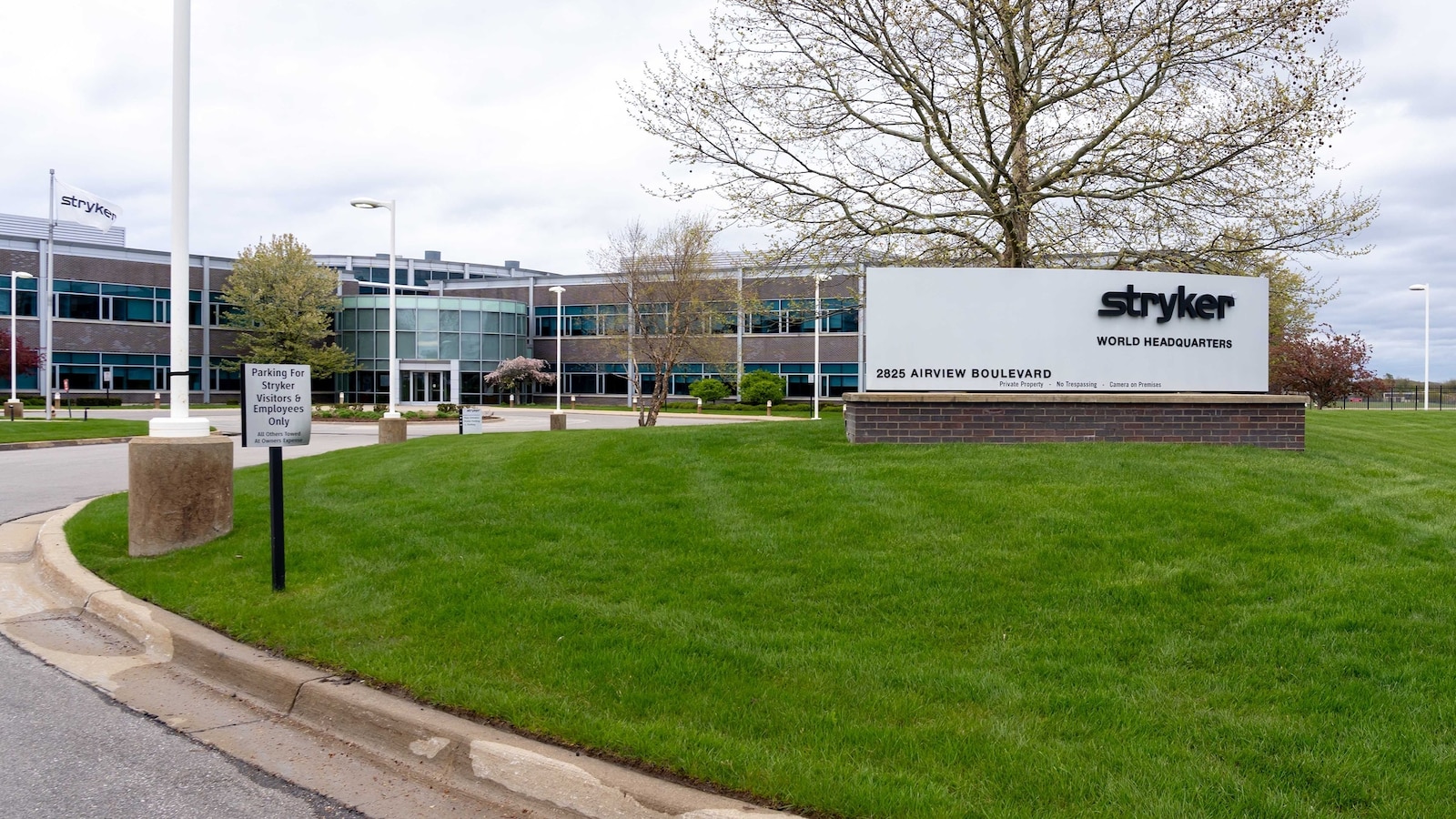
Stryker Corporation, one of the world’s leading medical technology companies known for manufacturing essential surgical instruments and medical implants, found itself at the center of a serious cybersecurity incident this week. On Wednesday, the Michigan-based healthcare giant publicly acknowledged that it had fallen victim to a cyberattack, though the company has been careful about revealing the full scope of the breach. What makes this incident particularly concerning isn’t just the potential impact on a major healthcare supplier, but the geopolitical dimensions that have emerged. A hacking group with ties to Iran, operating under the name Handala, has stepped forward to claim responsibility for the attack, framing it as a direct response to recent military actions in the Middle East. This intersection of healthcare infrastructure, cybersecurity vulnerabilities, and international conflict represents a troubling new chapter in how global tensions can manifest in the digital realm, potentially affecting critical medical services that millions of people depend on.
The situation has raised immediate concerns across the healthcare industry, as Stryker isn’t just any technology company—it’s a vital link in the chain that keeps hospitals and medical facilities functioning. The Kalamazoo, Michigan-headquartered corporation employs thousands of people and supplies medical products to healthcare facilities around the world. When a company of this magnitude experiences a network disruption, the ripple effects can be significant, potentially affecting everything from surgical scheduling to the availability of critical medical devices. While Stryker has been relatively tight-lipped about specific details, they did confirm they’re dealing with what they describe as a “global network disruption” affecting their Microsoft environment, suggesting the attack was both sophisticated and far-reaching across their international operations.
Hacking Group Makes Bold Claims About Scale of Attack
The group claiming responsibility, Handala, didn’t just take credit for the attack—they made some extraordinarily bold claims about its scope and severity. In a post on the social media platform X (formerly Twitter), the pro-Iran hacking collective asserted that they had compromised “over 200,000 systems, servers, and mobile devices,” completely wiping them clean of data. Beyond this digital destruction, the group also claimed to have extracted approximately 50 terabytes of what they described as “critical data” from Stryker’s networks. To put that in perspective, 50 terabytes represents an enormous amount of information—potentially including sensitive corporate data, intellectual property, customer information, and possibly even data related to medical devices and patient care systems. If these claims prove accurate, this would rank among the more significant corporate cyberattacks in recent years, not just in terms of data volume but because of the critical nature of the healthcare sector.
However, it’s important to note that these claims remain unverified, and hacking groups are known to sometimes exaggerate the extent of their breaches for propaganda purposes or to maximize the psychological impact of their attacks. Cybersecurity experts typically caution against taking such claims at face value until independent verification can occur. Stryker itself has pushed back against some aspects of the narrative, stating explicitly that they have found “no indication of ransomware or malware” in their investigation so far, and they believe the incident has been “contained.” This suggests that while there was certainly a network disruption, the company’s assessment may differ significantly from what the attackers are claiming. The discrepancy between the hacking group’s dramatic assertions and the company’s more measured response highlights the fog of uncertainty that often surrounds these incidents in their early days, before thorough forensic analysis can establish the facts.
The Geopolitical Dimension: Retaliation Claims and Regional Tensions
What transforms this from a typical corporate cyberattack into something more complex and concerning is the explicit geopolitical motivation claimed by the attackers. Handala didn’t portray this as a financially motivated ransomware attack or simple cybercrime—instead, they framed it as an act of digital retaliation connected to ongoing conflicts in the Middle East. Specifically, the group cited a devastating military strike on February 28th that hit several buildings in Minab, Iran, including structures connected to Iran’s Islamic Revolutionary Guard Corps and, tragically, a nearby elementary school for girls. According to local Iranian officials, that strike resulted in 168 deaths, making it one of the deadlier incidents in the region’s ongoing tensions. In their statement, Handala described their cyberattack on Stryker as being “in retaliation for the brutal attack on the Minab school and in response to ongoing cyber assaults against the infrastructure.”
This claimed motivation raises serious questions about the increasingly blurred lines between physical warfare and cyberwarfare, and how civilian infrastructure—in this case, a medical technology company—can become entangled in international conflicts. Sources familiar with the ongoing investigation into the Minab strike have told ABC News that U.S. military forces were conducting operations in the area around the time of the incident, though it hasn’t been definitively established who was responsible for the strike that hit the school. The investigation continues, but the incident has become a rallying point for pro-Iran groups seeking to justify retaliatory actions. The targeting of a healthcare technology company in response to a military strike represents a troubling expansion of how non-state actors are choosing targets in cyber conflicts—rather than focusing exclusively on military or government systems, they’re going after companies that provide essential services to civilian populations, potentially putting patients and healthcare providers at risk.
Company Response and Continuity Measures
In the face of this crisis, Stryker has been working to reassure its stakeholders—including hospitals, surgical centers, and ultimately patients—that they’re managing the situation and maintaining operations as much as possible. The company’s statement emphasized that “our teams are working rapidly to understand the impact of the attack on our systems,” acknowledging the seriousness of the situation while projecting confidence in their response capabilities. Importantly, Stryker noted that they have “continuity measures in place to continue to support our customers and partners,” suggesting that they had disaster recovery and business continuity plans ready to implement when this disruption occurred. This kind of planning is increasingly standard for major corporations, especially those in critical sectors like healthcare, but actually executing these plans during a real crisis is where the real test comes.
The nature of Stryker’s business makes this continuity particularly important. The company supplies everything from hip and knee implants to surgical navigation systems and emergency medical equipment. Hospitals depend on timely deliveries of these products, and any significant disruption to ordering systems, supply chains, or technical support could potentially affect patient care. The fact that Stryker specifically mentioned their Microsoft environment being disrupted suggests the attack may have affected email, collaboration tools, and potentially cloud-based systems that modern businesses rely on for daily operations. However, the company’s assertion that they’ve found no evidence of ransomware or malware, if accurate, is somewhat reassuring—it suggests that while systems may have been disrupted or taken offline, they may not be dealing with encrypted files being held hostage or persistent malicious software lurking in their networks. Still, the investigation is clearly ongoing, and the full picture of what happened and what data may have been compromised will likely take weeks or even months to fully understand.
Broader Implications for Healthcare Cybersecurity and International Relations
This incident serves as yet another stark reminder of the vulnerability of healthcare infrastructure to cyberattacks and the growing willingness of state-sponsored or politically motivated hacking groups to target civilian sectors as part of broader geopolitical conflicts. The healthcare industry has increasingly found itself in the crosshairs of cyber attackers in recent years, with ransomware groups frequently targeting hospitals and healthcare providers because of the critical nature of their services and the pressure this creates to pay ransoms quickly. However, this attack represents something potentially different—not a financially motivated crime, but an explicitly political act aimed at punishing what the attackers view as complicity in military actions halfway around the world.
The situation also highlights the complex challenges facing both cybersecurity professionals and policymakers. How should nations respond when critical civilian infrastructure is targeted by foreign actors in retaliation for military operations? What responsibilities do companies like Stryker have to protect not just their own data and operations, but the broader healthcare ecosystem that depends on them? And how can the international community establish norms and consequences around cyberattacks that cross these lines? As of now, U.S. officials have not publicly commented on this specific incident, but it will likely factor into ongoing discussions about cyber deterrence, the rules of engagement in digital warfare, and the protection of critical infrastructure. For Stryker, the immediate priority is clearly restoring full operations and determining exactly what happened, but the longer-term implications of being targeted in this way will resonate throughout the company and the industry for some time to come, likely prompting renewed investments in cybersecurity and incident response capabilities across the healthcare technology sector.