


Ilia Malinin’s Triumphant Return: The “Quad God” Claims Third Consecutive World Title
A Redemption Story Written on Ice
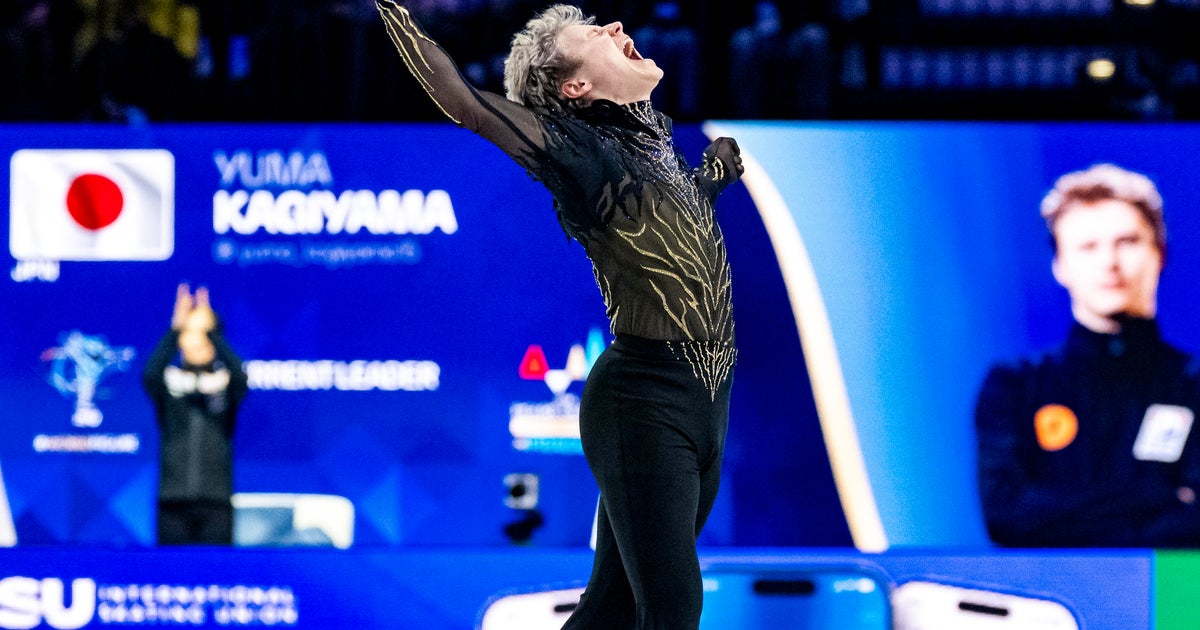
Six weeks can feel like an eternity in the world of elite figure skating, especially when you’re carrying the weight of Olympic disappointment on your shoulders. For 21-year-old Ilia Malinin, those weeks between his shocking eighth-place finish at the Milan Olympics and the World Figure Skating Championships in Prague represented a journey of resilience, self-reflection, and ultimately, redemption. The young American skater, affectionately known as the “quad god” for his extraordinary jumping abilities, delivered a performance that reminded the world why he’s considered one of the sport’s most electrifying talents. With one massive quadruple jump after another, punctuated by his signature backflip, Malinin reclaimed his position at the pinnacle of men’s figure skating, securing his third consecutive world championship title. The raw emotion was palpable as he shouted and punched the air with relief after completing his routine, and again when his scores were announced. This wasn’t just a victory—it was a statement that champions aren’t defined by their falls, but by how they rise afterward.
The Long Shadow of Olympic Disappointment
The skating world had watched in disbelief as Malinin, the overwhelming favorite for Olympic gold, stumbled dramatically in Milan. For an athlete who had dominated the sport with his technical prowess and ability to land jumps that most skaters wouldn’t even attempt, the eighth-place finish seemed almost impossible to comprehend. Yet Malinin chose to view this setback through a lens of growth rather than defeat. “Everything happens for a reason,” he told CBS News in February, demonstrating a maturity beyond his years. He acknowledged that “you learn a lot more from failure than you do winning,” a philosophy that would prove instrumental in his comeback. Rather than dwelling on what went wrong in Milan, Malinin chose to channel that disappointment into motivation, using it as fuel for the challenging weeks of training that would follow. His approach to the Prague competition was refreshingly honest and grounded—his primary goal was simply to get through the free skate “in one piece.” This modest aim belied the extraordinary technical difficulty of what he was attempting, but it also revealed an athlete who had learned to manage expectations and focus on execution rather than outcome.
A Performance for the Ages in Prague
When Malinin took to the ice in Prague, skating last after leading the short program, the pressure was immense. The memories of Milan were fresh, and the skating community was watching to see how the young American would respond. What they witnessed was a masterclass in technical skating combined with artistic expression. Malinin successfully landed five high-scoring quadruple jumps, showcasing the jumping prowess that earned him his “quad god” nickname. While he chose not to attempt his pioneering quad axel—a jump he had also skipped at the Olympics—the decision proved wise as it allowed him to maintain consistency throughout his program. His free skate score of 218.11 points combined with his short program to give him a total of 329.40 points, a commanding lead that put him far ahead of his closest competitors. The performance was a testament to his ability to deliver under pressure, to trust his training, and to embrace the support of the crowd. After his skate, Malinin acknowledged the Prague audience’s role in his success, saying, “It was really challenging, really hard but with you guys I was able to make it through.” This gracious recognition of the crowd’s energy demonstrated not only his appreciation for the sport’s fans but also his understanding that figure skating, at its best, is a collaborative experience between performer and audience.
Historic Achievement and Elite Company
With this victory, Malinin cemented his place in figure skating history as the first skater to win three consecutive men’s world titles since his fellow American Nathan Chen. Chen achieved this feat in 2018, 2019, and 2021, with the 2020 event canceled due to the COVID-19 pandemic. To join Chen in this exclusive club is a remarkable achievement, particularly given the depth of talent in men’s figure skating today. The competition in Prague was fierce, with Japan’s Yuma Kagiyama delivering a personal-best free skate score to claim the silver medal with 306.67 points. Despite this strong performance, Kagiyama had to settle for yet another silver medal, his fourth at world championships to go along with four Olympic silvers. His collection now includes five total world championship medals, but the elusive gold from either worlds or Olympics continues to escape him. The genuine friendship between Kagiyama and Malinin was evident when Kagiyama embraced his competitor after the skate, and the two jumped together in celebration—a beautiful reminder that even in individual sports, camaraderie and mutual respect can flourish. Shun Sato, also from Japan, rounded out the podium with a third-place finish at 288.54 points, highlighting the strength of Japanese men’s figure skating.
The Competitive Landscape and Absent Rivals
The men’s event in Prague showcased the extraordinary depth of talent in contemporary figure skating. France’s Adam Siao Him Fa, who had been sitting in second place after the short program, fell to fifth overall after a costly fall in the free skate, demonstrating how unforgiving the sport can be at the highest level. Estonia’s Aleksandr Selevko experienced a similar fate, dropping from third after the short program to sixth overall. These results underscored the importance of maintaining consistency across both segments of competition and the razor-thin margins that separate medal contention from disappointment. Notably absent from the competition was Mikhail Shaidorov of Kazakhstan, who had defeated Malinin to claim Olympic gold in Milan. Shaidorov opted not to compete again this season, a decision that’s relatively common among Olympic champions who face an overwhelming rush of media attention and commercial opportunities following their victory. After a grueling four-year buildup to the Olympics, many gold medalists choose to take time to capitalize on their success and recharge mentally and physically. While this meant there would be no immediate rematch between the two, it also allowed Malinin to claim his world title without the direct shadow of his Olympic conqueror—though the victory was no less impressive for Shaidorov’s absence.
Looking Forward: The Future of the “Quad God”
At just 21 years old, Ilia Malinin has already achieved what many skaters dream of their entire careers, yet he shows no signs of resting on his laurels. In his February interview with CBS News, Malinin revealed his priorities for his skating career, saying, “I think I would be much better to be known as ‘Quad God,’ as you say, rather than winning gold medal.” This statement speaks volumes about his approach to the sport—he’s not simply chasing titles, but pushing the boundaries of what’s technically possible in figure skating. His pioneering work on the quad axel, a jump so difficult that it was long considered nearly impossible, demonstrates his commitment to innovation and progression in the sport. As the World Figure Skating Championships concluded with the ice dance event later that Saturday, with France’s Laurence Fournier Beaudry and Guillaume Cizeron leading after the rhythm dance, Malinin’s triumphant return to the top of the podium served as the marquee moment of the competition. His journey from Olympic disappointment to world championship glory in just six weeks is a powerful reminder that setbacks are not endpoints but opportunities for growth. For figure skating fans, the prospect of watching Malinin continue to push boundaries and redefine what’s possible in the sport is thrilling. His combination of technical mastery, artistic expression, and genuine humility makes him not just a champion, but a role model for aspiring skaters worldwide. The “quad god” has reclaimed his throne, and the skating world is better for it.