


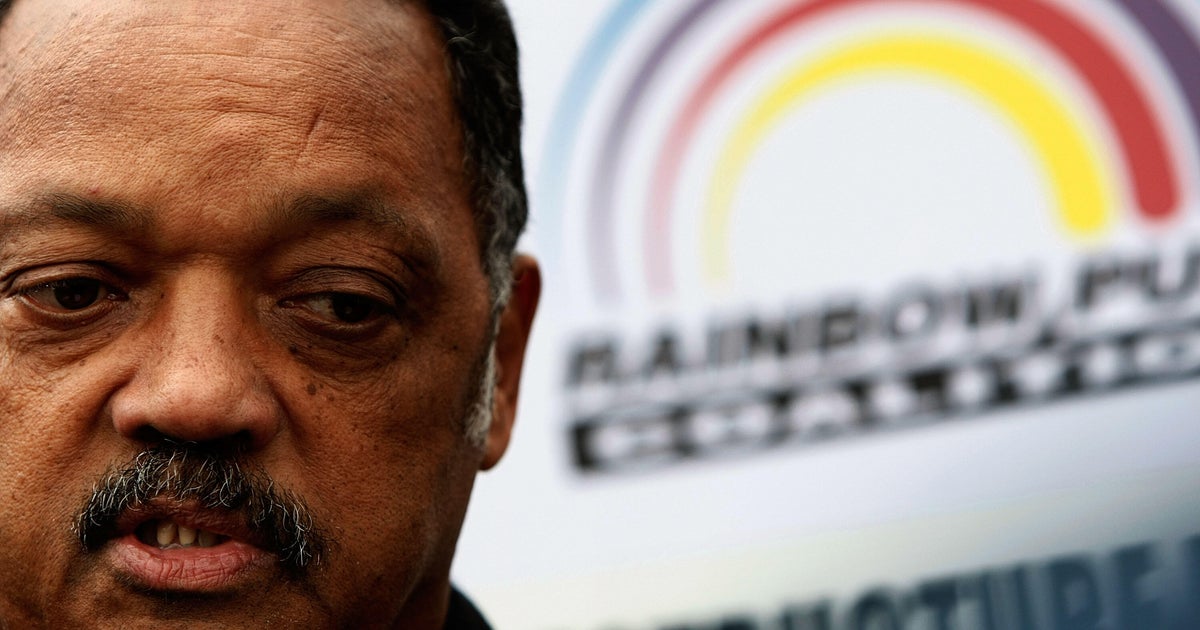

The Enduring Legacy of Reverend Jesse Jackson’s Rainbow PUSH Coalition
From Civil Rights Roots to a National Movement for Social Justice
When we think about the lasting impact of Reverend Jesse Jackson, Sr., one achievement stands taller than all the rest: the Rainbow PUSH Coalition. This isn’t just another organization with a mission statement and a board of directors—it’s a living, breathing testament to decades of struggle for social justice and economic equality in America. Born in 1996 from the merger of two powerful movements, Rainbow PUSH represents the evolution of Jackson’s life’s work, tracing its lineage back to the very heart of the Civil Rights Movement itself. The organization combines People United to Serve Humanity (PUSH), which Jackson founded in 1971, with the Rainbow Coalition, established in 1984. But to truly understand Rainbow PUSH, we need to go back even further, to a cold February day in Chicago when a young theological student named Jesse Jackson stood alongside Dr. Martin Luther King, Jr. and helped launch an economic revolution in America’s Black communities.
Operation Breadbasket: Where Economic Justice Met Spiritual Power
The story begins on February 11, 1966, at the Jubilee CME Church in Chicago, where hundreds of pastors from various denominations gathered to hear Dr. King present a bold plan to combat the crushing unemployment plaguing Chicago’s African American neighborhoods. This was Operation Breadbasket, with its memorable slogan “Keep a slice of the ‘bread’ in your community”—a clever play on words that emphasized both economic sustenance and community empowerment. Dr. King and the Southern Christian Leadership Conference understood something fundamental: civil rights meant little if people couldn’t feed their families or find meaningful work. Young Jesse Jackson, still a theological student at the time, was tapped to coordinate this ambitious program, a decision that would shape the trajectory of his entire life and ministry.
Under Jackson’s energetic leadership, Operation Breadbasket developed an innovative approach that combined moral authority with economic pressure. Teams of ministers became economic watchdogs, carefully monitoring local businesses to track their hiring practices. They asked a simple but powerful question: Were these companies that profited from Black customers also employing Black workers? The methodology was straightforward but effective—ministers would approach companies that hired few or no African Americans and request that they commit to hiring qualified Black candidates within a reasonable timeframe. When businesses refused to cooperate or negotiate in good faith, the ministers didn’t resort to violence or vandalism. Instead, they wielded a different kind of power: they asked their congregations to vote with their wallets by boycotting businesses that took money from the Black community while refusing to provide jobs in return.
The results were remarkable. Picket lines formed outside supermarkets, and the community responded with solidarity and determination. According to documentation preserved by the Chicago Public Library, Operation Breadbasket brought approximately 4,500 jobs into the Black community over six years and significantly increased patronage at Black-owned businesses and stores. This wasn’t just about employment numbers—it was about dignity, self-determination, and economic independence. The program became so successful that it’s been recognized as the crown jewel of Dr. King’s “Northern Campaign,” proving that the principles of nonviolent direct action could be just as effective in addressing economic injustice as they had been in confronting segregation in the South. Jackson had discovered his calling: fighting for economic justice with the same passion and strategic thinking that characterized the broader Civil Rights Movement.
PUSH: Expanding the Vision of Economic Empowerment
Building on the momentum and lessons learned from Operation Breadbasket, Jesse Jackson founded People United to Serve Humanity—PUSH—in 1971. This wasn’t simply a continuation of the earlier program; it was an evolution, a broadening of scope and ambition. PUSH took the fundamental principles of Operation Breadbasket and applied them to a wider range of economic challenges facing Black communities across America. The organization employed multiple strategies to achieve its goals: direct action campaigns that brought attention to injustices, weekly radio broadcasts that kept communities informed and mobilized, and persistent advocacy that protected Black homeowners from predatory practices, supported workers facing discrimination, and helped Black-owned businesses survive and thrive in a often hostile economic environment.
But Jackson understood that economic justice couldn’t be achieved by focusing solely on adults and their immediate employment needs. PUSH invested heavily in the future by funding and organizing youth reading programs, recognizing that literacy was the foundation for all future success. The organization developed comprehensive inner-city youth education initiatives and job placement programs designed to break the cycle of poverty and create pathways to opportunity for young people who might otherwise be left behind. Perhaps most significantly, PUSH took on major corporations, pushing them to adopt genuine affirmative action policies that went beyond tokenism. The organization demanded that companies hire more Black and minority executives and supervisors—people in decision-making positions who could influence corporate culture and create opportunities for others. PUSH also insisted that corporations work with Black suppliers, wholesalers, and distributors, understanding that true economic empowerment meant building wealth throughout the entire supply chain, not just at the point of employment.
When business owners resisted these demands, PUSH didn’t back down. The organization employed the same tactics that had proven effective during Operation Breadbasket: boycotts that hit companies where it hurt most—their bottom line—and prayer vigils that reminded everyone of the moral dimensions of economic justice. These weren’t just business negotiations; they were spiritual battles for the soul of American capitalism, challenges to an economic system that had systematically excluded and exploited Black communities for generations.
The Rainbow Coalition: Broadening the Fight for All Americans
After his groundbreaking presidential campaign in 1984, Jackson recognized that the struggle for justice needed to expand beyond the African American community. He launched the National Rainbow Coalition with an explicitly inclusive vision: fighting for equal rights for all Americans who were being left behind. This was revolutionary thinking for its time—bringing together African Americans, Latinos, Asian Americans, Native Americans, working-class whites, women, LGBTQ individuals, and other marginalized groups under one colorful banner. The Rainbow metaphor was deliberate and powerful, suggesting that America’s diversity wasn’t a problem to be solved but a strength to be celebrated and harnessed for social change.
The National Rainbow Coalition emerged during the Reagan era, a time when conservative economic policies were reshaping America in ways that Jackson and many others saw as fundamentally unjust. The organization directly challenged President Ronald Reagan’s agenda, particularly his efforts to reduce domestic government spending on social programs. While Reagan and his supporters argued for supply-side economics and reduced government intervention, the Rainbow Coalition demanded robust social programs, strong affirmative action hiring practices, and vigorous voting rights protections for communities that were being squeezed by “Reaganomics.” The coalition also recognized that poverty and inequality weren’t exclusively urban phenomena. While media coverage often focused on inner-city poverty, the Rainbow Coalition fought for economic investment in suburban, ex-urban, and rural areas where minority communities also struggled. This geographic inclusivity, combined with the organization’s commitment to representing multiple demographic groups, made the Rainbow Coalition a uniquely comprehensive voice for economic and social justice in 1980s America.
Rainbow PUSH: Uniting Movements for Greater Impact
In 1996, Jesse Jackson made a strategic decision that would define the next phase of his advocacy work. After serving as a shadow senator in Washington, D.C.—a symbolic position representing the District of Columbia’s lack of full congressional representation—Jackson returned to Chicago and merged PUSH and the National Rainbow Coalition into a single, more powerful organization: Rainbow PUSH. This wasn’t just an administrative consolidation; it was a recognition that economic justice and broader social justice were inseparable, two sides of the same coin. The merged organization combined PUSH’s focus on economic empowerment and corporate accountability with the Rainbow Coalition’s inclusive vision and political advocacy, creating an entity with unprecedented reach and influence.
Rainbow PUSH established its headquarters in Chicago, Jackson’s adopted home and the birthplace of Operation Breadbasket, while maintaining a national presence through offices in major cities across America: Washington, D.C., Atlanta, Houston, Los Angeles, New York, Detroit, and Oakland, California. This geographic distribution wasn’t accidental—each office served as a regional hub for organizing, advocacy, and service delivery, ensuring that Rainbow PUSH could respond to local needs while coordinating national campaigns. Jackson led the organization as president for nearly three decades before stepping down in 2023, transitioning to the role of president emeritus until his death. Under his leadership, Rainbow PUSH became one of the most recognizable and influential civil rights organizations in America, a platform from which Jackson could speak truth to power, mobilize communities, and push for concrete policy changes at every level of government and throughout corporate America.
The Living Legacy: Rainbow PUSH’s Continuing Mission
Today, Rainbow PUSH continues the work that began in that Chicago church in 1966, adapted for the challenges of the 21st century but grounded in the same fundamental principles of justice, equality, and human dignity. The organization still convenes its annual People’s Conference, bringing together activists, community leaders, politicians, and everyday citizens to discuss the pressing issues facing America and to strategize about solutions. But Rainbow PUSH is much more than conferences and speeches—it’s a service organization that directly impacts lives every single day through concrete programs and assistance.
The organization provides scholarships that make higher education accessible to students who might otherwise be unable to afford college, investing in the next generation of leaders and professionals. Rainbow PUSH offers housing assistance to families struggling to keep roofs over their heads, recognizing that stable housing is fundamental to everything else—job stability, children’s education, physical and mental health. The organization’s job assistance programs help people develop skills, make connections, and find employment in an economy that can be particularly challenging for people from marginalized communities. Youth services provide mentorship, tutoring, and guidance to young people navigating difficult circumstances, while education programs work to improve schools and expand opportunities for all children regardless of their zip code or family income.
All of these diverse programs serve a unified mission, as stated by Rainbow PUSH itself: “to protect, defend, and gain civil rights by leveling the economic and educational playing fields, and to promote peace and justice around the world.” This mission statement connects directly back to that February day in 1966, to Dr. King’s vision, to Jackson’s decades of leadership, and to the countless individuals who participated in boycotts, attended prayer vigils, organized in their communities, and refused to accept injustice as inevitable. Rainbow PUSH stands as proof that movements matter, that organized people can challenge organized money and entrenched power, and that the long arc of history really does bend toward justice—but only when people are willing to grab hold of that arc and pull with all their strength. Reverend Jesse Jackson’s greatest legacy isn’t just an organization; it’s the living example of what’s possible when moral conviction meets strategic action, when spiritual values inform economic policy, and when the struggle for justice becomes a lifelong commitment rather than a momentary passion.