


Historic Heat Wave Sweeps Across Western and Central United States
Unprecedented Warmth Threatens to Shatter Temperature Records in 17 States
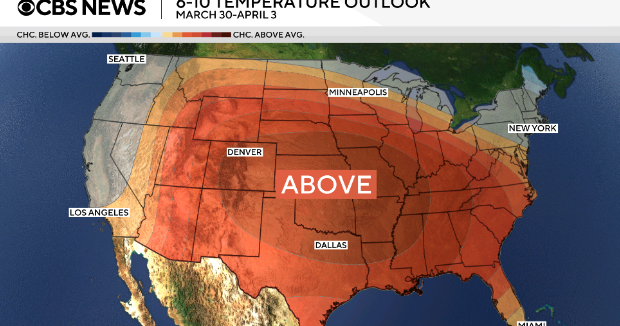
Americans across a broad swath of the country are bracing themselves for what could be one of the most significant early spring heat waves in recent memory. On Wednesday, temperatures are expected to soar to potentially record-breaking levels in seventeen different states, as an intense heat wave that has been baking the western United States since last week begins its march toward the nation’s midsection. According to CBS News meteorologist Nikki Nolan, this unusually warm weather system has the potential to break more than sixty temperature records across the western half of the United States in just a single day. The states in the crosshairs of this heat wave include Arizona, Arkansas, California, Colorado, Idaho, Kansas, Minnesota, Missouri, Montana, Nebraska, Nevada, New Mexico, Oklahoma, South Dakota, Texas, Utah, and Wyoming. Weather forecasts are showing temperatures climbing to or exceeding 90 degrees Fahrenheit in at least eight major cities throughout the affected region, bringing summer-like conditions to areas that should still be experiencing spring weather.
Major Cities Face Extreme Heat with Phoenix Leading the Pack
Among all the cities in the path of this scorching heat wave, Phoenix, Arizona is expected to experience the most extreme conditions. The Arizona capital has already endured multiple days of triple-digit temperatures since this heat wave began its assault on the region last week, and there appears to be no immediate relief in sight. According to data from NOAA’s National Digital Forecast Database, Phoenix could see temperatures reach 100 degrees on Wednesday, which would exceed the city’s daily record for this date by a full four degrees. What makes this particularly noteworthy is that the current record-high temperature for March 25th in Phoenix was set relatively recently, in 2022, suggesting that these extreme heat events are becoming more frequent and intense. Beyond Phoenix, several other major metropolitan areas are also on track to potentially shatter their daily temperature records. Albuquerque, Austin, Las Vegas, Oklahoma City, Tucson, and Tulsa are each forecast to see the mercury climb to at least 90 degrees. Tucson could witness its hottest March 25th since weather records began in 1896 if temperatures surpass 94 degrees on Wednesday, as current forecasts suggest they might. Meanwhile, Tulsa could experience its warmest temperature for this date since 1970, marking more than five decades since such heat was last recorded. Denver and Salt Lake City are also in the running to break daily records that were set quite recently—in 2012 and 2022, respectively—which underscores the unusual nature of this heat event.
Heat Wave’s Eastern March Could Affect Entire Nation
This remarkable heat wave is far from finished with its cross-country journey. Meteorologist Nikki Nolan has warned that more than 200 additional daily temperature records could potentially be broken through Sunday as this massive dome of warm air continues its slow but steady progression eastward across the United States. The heat wave is forecast to gradually move toward the East Coast throughout the remainder of the week, with expectations that it will reach the eastern seaboard by Friday. This means that what began as a regional weather event in the western states will eventually impact a much larger portion of the country, bringing unseasonably warm conditions to areas from coast to coast. For the time being, central states are expected to experience the most dramatic temperature anomalies, with readings potentially reaching 30 to 40 degrees above average for this time of year. Such extreme departures from normal temperatures can have wide-ranging impacts on everything from energy consumption to agriculture, as people and systems struggle to adapt to summer-like conditions arriving weeks earlier than expected. The unusually warm air settling into the Northern Plains region presents additional concerns beyond simple discomfort, as these conditions are expected to significantly increase fire risks in that area through at least Thursday.
Critical Fire Weather Conditions Threaten Central United States
The combination of extreme heat, powerful winds, and exceptionally dry air has created a dangerous situation for wildfire development across a large portion of the central United States. On Wednesday, numerous fire weather alerts were already in effect for a substantial strip of the country stretching from Montana all the way down to Texas. Weather forecasters have issued warnings about a “critical threat” of fire weather conditions that is expected to persist through Thursday for sections of the Rocky Mountains extending down into the Southern Plains. The conditions that make this situation particularly hazardous go beyond just the heat. Wind gusts in the affected areas could reach velocities of 40 to 50 miles per hour throughout this week, according to Nolan, creating the potential for any fires that do start to spread rapidly and unpredictably. Perhaps even more concerning is the forecast for relative humidity to drop to as low as 4% in certain locations—an extraordinarily dry condition that makes vegetation highly susceptible to ignition and allows fires to burn with greater intensity. This combination of high temperatures, strong winds, and extremely low humidity creates what fire weather experts describe as the perfect storm for wildfire development and spread. These are the types of dry, blustery conditions that have been associated with some of the most destructive wildfires in recent history, and officials are urging residents in affected areas to exercise extreme caution with any activities that could potentially spark a fire.
Understanding the Broader Implications of Early-Season Heat
This early-season heat wave raises important questions about changing weather patterns and what they might mean for the months ahead. When temperature records are broken by such substantial margins, and when recently set records are broken again in such short order, it suggests that the climate baseline may be shifting in significant ways. The fact that Phoenix’s previous record for this date was set just four years ago, and that Denver and Salt Lake City are potentially breaking records set within the last decade or two, indicates that these extreme heat events are not isolated anomalies but may represent a new pattern of more frequent and intense heat waves. For residents of the affected states, this unseasonably warm weather presents both immediate challenges and longer-term concerns. In the short term, people must adapt to summer-like conditions arriving while they may still be dressed for spring weather, and communities must manage increased demands on cooling systems and water resources earlier than anticipated. Agricultural operations may face decisions about planting schedules and irrigation needs, while energy grids must handle increased loads from air conditioning use during a time when such demand is typically much lower. The elevated fire risk adds another layer of concern, particularly in areas that may already be experiencing drought conditions or that have accumulated dry vegetation from the winter months.
Preparing for an Extended Period of Abnormal Weather
As this heat wave continues its march across the country, residents in its path would be wise to take appropriate precautions. Those in areas under fire weather alerts should be particularly vigilant about any activities that could potentially start fires, including outdoor burning, equipment use that could create sparks, and even seemingly innocuous activities like parking vehicles on dry grass. People who are sensitive to heat, including the elderly, young children, and those with certain medical conditions, should take extra care to stay hydrated and avoid prolonged exposure to extreme temperatures. With more than 200 additional daily temperature records potentially falling through Sunday, this heat wave appears to be settling in for an extended stay rather than passing through quickly. The forecast for the heat to reach the East Coast by Friday means that millions more Americans will soon be experiencing these unseasonably warm conditions. While many people may welcome warmer weather after a long winter, the extreme nature of these temperatures and their potential to break long-standing records serves as a reminder that dramatic departures from normal weather patterns can bring risks and challenges along with the sunshine. As climate patterns continue to evolve, events like this heat wave may become increasingly common, making it all the more important for communities and individuals to prepare for and adapt to a future where weather extremes become the new normal.