


Fragile Peace: The Strait of Hormuz Ceasefire Crisis
Opening of Strategic Waters Short-Lived
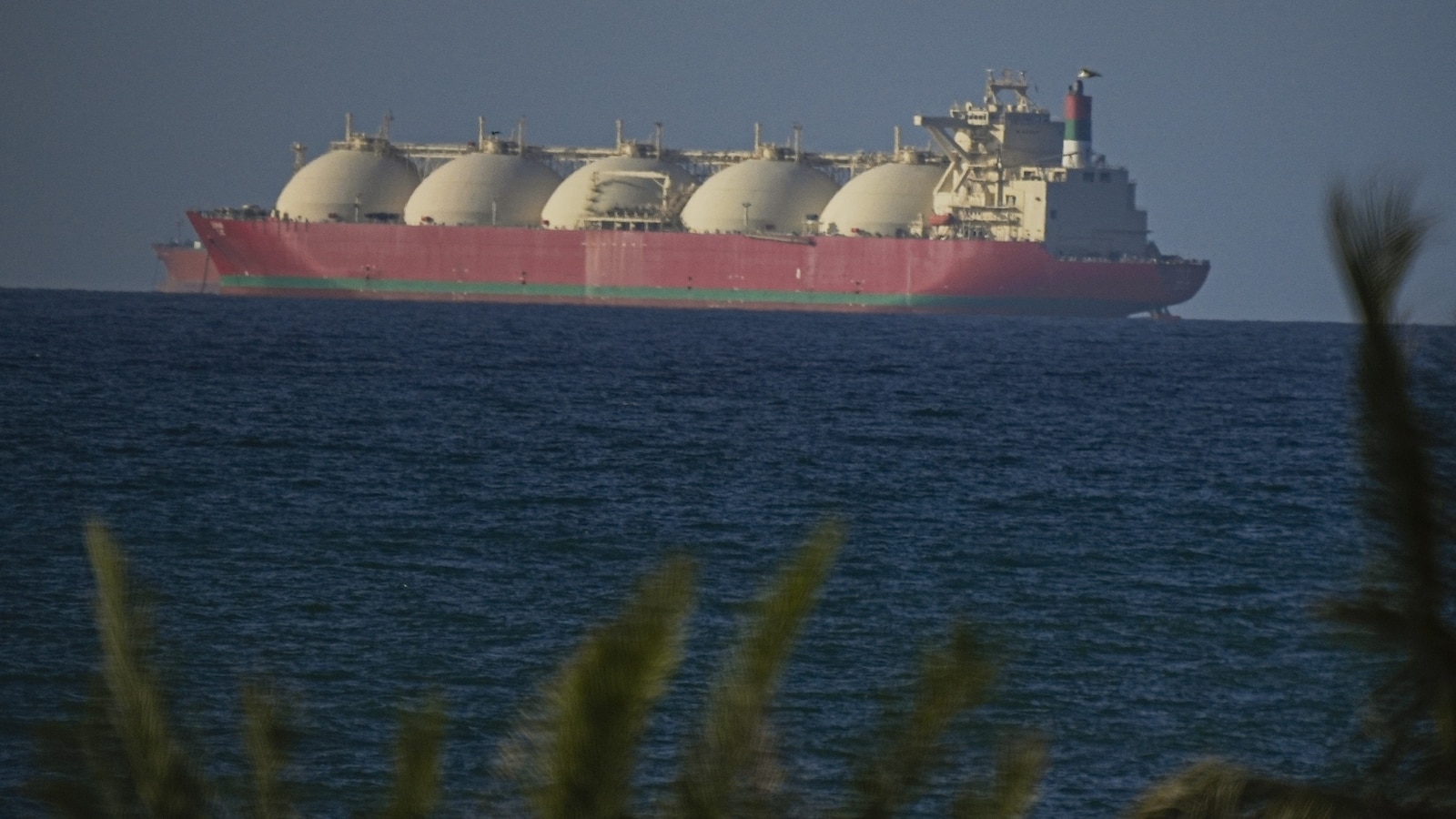
In what appeared to be a promising diplomatic breakthrough, the United States and Iran reached a temporary ceasefire agreement on Tuesday night, just hours before President Trump’s deadline threatened catastrophic consequences if peace wasn’t achieved. The deal centered on reopening the Strait of Hormuz, one of the world’s most critical maritime passages for oil and trade. Defense Secretary Pete Hegseth and General Dan Caine, Chairman of the Joint Chiefs of Staff, announced on Wednesday that the strait had indeed reopened according to the agreement’s terms. However, this optimism proved premature. After allowing only a handful of vessels, including two oil tankers, to pass through on Wednesday, Iran abruptly announced it was closing the passage once again. The reversal came with serious accusations: Iran claimed Israel had violated the ceasefire by launching a major attack on Lebanon, effectively destroying the fragile peace before it could even take root. This rapid deterioration from hope to renewed tension illustrated just how precarious Middle Eastern diplomacy remains, even when facing the most severe threats.
Conflicting Interpretations and Accusations
The heart of the renewed conflict lies in fundamentally different interpretations of what the ceasefire actually covered. Iran’s Foreign Minister Abbas Araghchi made his country’s position crystal clear in a forceful social media statement: “The Iran-U.S. Ceasefire terms are clear and explicit: the U.S. must choose — ceasefire or continued war via Israel. It cannot have both.” He emphasized that the world was watching “massacres in Lebanon” and placed responsibility squarely on the United States to honor its commitments. To support his position, Araghchi referenced a statement from Pakistan Prime Minister Shehbaz Sharif, who had helped broker the deal, noting that both nations had agreed to “an immediate ceasefire everywhere, including Lebanon.” The Islamic Revolutionary Guard Corps escalated the rhetoric further, warning Israel and the United States that continued attacks on Lebanon would provoke a “regretful response.” Meanwhile, President Trump offered a completely different interpretation during a PBS interview, stating flatly that Lebanon was never part of the ceasefire agreement and noting that Hezbollah, Iran’s proxy force, had been launching attacks on Israel from Lebanese territory. White House Press Secretary Karoline Leavitt reinforced this position during her briefing: “Lebanon is not part of the ceasefire. That has been relayed to all parties involved.” This fundamental disagreement about the scope of the ceasefire revealed either a serious breakdown in diplomatic communication or potentially bad faith negotiating on one or both sides.
Iran’s Broader List of Grievances
Beyond the Lebanon dispute, Iran’s Parliament Speaker Mohammad Bagher Ghalibaf outlined additional concerns, accusing the United States of violating multiple aspects of Iran’s 10-point peace proposal that had been presented as a counterproposal framework. His complaints went beyond the Israeli strike on Lebanon to include what he described as violations of Iranian airspace by an “intruding drone” and American opposition to Iran’s right to enrich uranium. These accusations revealed deeper tensions underlying the immediate crisis—issues of sovereignty, nuclear capabilities, and surveillance that have been flashpoints in U.S.-Iran relations for decades. “The deep historical distrust we hold toward the United States stems from its repeated violations of all forms of commitments, a pattern that has regrettably been repeated once again,” Ghalibaf stated, capturing the broader sense of grievance that many Iranian officials harbor. His statement suggested that even if the immediate Lebanon issue could be resolved, numerous other obstacles stood in the path of genuine peace. The complexity of these interlocking disputes demonstrated why achieving lasting peace in the region remains so difficult, with each party maintaining fundamentally different narratives about who bears responsibility for the cycle of conflict and retaliation.
American Confidence and Global Responsibilities
Despite Iran’s decision to re-close the strait, American officials maintained a confident posture about their diplomatic achievement. Secretary Hegseth emphasized during Wednesday’s briefing that “commerce will flow,” pointing to positive market reactions as evidence that international observers believed the opening would hold. General Caine confirmed his belief that the strait remained open “based on the diplomatic negotiation,” though events would soon prove this assessment overly optimistic. President Trump himself had announced late Tuesday that Iran had agreed to a “COMPLETE, IMMEDIATE, and SAFE OPENING of the Strait of Hormuz,” adding that the United States would help manage the traffic buildup that had accumulated during the closure. Interestingly, Hegseth noted that the United States itself depends very little on the strait for oil transportation, suggesting that the crisis had minimal direct impact on American energy security. He used this point to argue that “it’s time for the rest of the world to step up and ensure that that stays open, after President Trump and the War Department brought Iran to the place where they are voluntarily opening it right now.” This comment revealed an American perspective that framed the reopening as a favor to the international community rather than a mutual concession, and suggested the Trump administration expected other nations to take more responsibility for maintaining maritime security in the region going forward.
Pakistan’s Mediation and Calls for Restraint
Pakistan Prime Minister Shehbaz Sharif emerged as a key diplomatic figure throughout this crisis, having helped broker the original ceasefire agreement. His position became increasingly delicate as both sides accused each other of violations. In a carefully worded social media statement following the Israeli attack on Lebanon, Sharif acknowledged that “violations of [the] ceasefire have been reported at few places across the conflict zone, which undermine the spirit of the peace process.” Notably, he did not specify where these violations occurred or assign blame to any particular party, attempting to maintain his credibility as an honest broker. His appeal was heartfelt and urgent: “I earnestly and sincerely urge all parties to exercise restraint and respect the ceasefire for two weeks, as agreed upon, so that diplomacy can take a lead role towards peaceful settlement of the conflict.” Sharif’s mediation efforts highlighted the role that neutral third parties can play in international conflicts, even as his careful neutrality also revealed the limitations of such mediation when fundamental disagreements exist about basic facts. Vice President JD Vance’s description of the agreement as a “fragile truce” during a news conference in Hungary seemed prescient in retrospect. Vance had outlined the basic framework: “The Iranians have agreed to open up the strait. The United States has agreed to stop attacking, and not just the United States, but also our allies have agreed to stop attacking.” The simplicity of this formulation belied the complex reality on the ground, where proxy forces, allied nations, and disputed territories created endless opportunities for misunderstanding and accusations of bad faith.
Economic Impact and Uncertain Future
The rapid opening and closing of the Strait of Hormuz created significant uncertainty for the global shipping industry, which depends on the passage for a substantial portion of the world’s oil supply. Ed Finley-Richardson, a shipping investment analyst for Contango Research, described the emotional rollercoaster that shipowners experienced: “The overnight news from both Washington and Tehran created an atmosphere of hope, for the first time since the war started. The optimism was such that charterers started working on new cargo loadings, the first from within the gulf scheduled since the war started.” However, he noted that “all of that fell apart when Iran deemed that the ceasefire had been violated.” Despite this setback, he remained somewhat hopeful: “However, clearly the conditions are ripe for at least a partial resumption of shipping traffic.” Major shipping companies took a more cautious approach. Maersk, one of the world’s largest container shipping companies, issued a statement emphasizing that while the ceasefire “may create transit opportunities, it does not yet provide maritime certainty.” The company noted that information remained “very limited” and that it needed “further clarity” before sending vessels through the contested waters. Maersk’s statement captured the private sector’s dilemma when caught between political agreements and on-the-ground realities: “The safety of our seafarers, vessels and cargo remains Maersk’s highest priority. Any decision to transit the Strait of Hormuz will be based on continuous risk assessments, close monitoring of the security situation, and available guidance from relevant authorities and partners.” The economic stakes extended far beyond individual shipping companies, affecting global oil prices, insurance rates, and the broader stability of international trade, making the resolution of this crisis a matter of worldwide concern rather than just a regional dispute.