



America’s Wealthiest Retirees and the Social Security Debate: A Six-Figure Dilemma
The Surprising Reality of High-End Social Security Benefits
When most Americans think about Social Security, they picture modest monthly checks helping seniors cover basic expenses like groceries, utilities, and medication. However, a new analysis has revealed a surprising truth that’s sparking heated debate across the country: approximately one million individual Social Security beneficiaries are receiving annual payments of at least $50,000, with some married couples collecting over $100,000 combined each year. This revelation, brought to light by the Committee for a Responsible Federal Budget (CRFB), a nonpartisan think tank that focuses on fiscal responsibility, has raised important questions about fairness, sustainability, and the original purpose of America’s most beloved retirement program. While these high earners represent less than 2% of the roughly 56 million Americans aged 65 and older who receive Social Security benefits, experts predict this percentage will steadily climb in the coming years due to annual cost-of-living adjustments and the wave of baby boomers reaching retirement age. The discovery has prompted the CRFB to propose a controversial solution: capping Social Security benefits at $100,000 for couples and $50,000 for individuals as one measure to help prevent the program from becoming insolvent by its projected insolvency date of 2032.
Understanding the Proposed Cap and Its Potential Impact
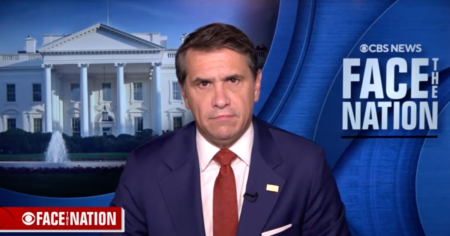
The CRFB’s proposal isn’t just about limiting benefits for wealthy seniors—it’s about addressing a looming financial crisis that could affect every American who depends on Social Security. According to their analysis, implementing a cap on benefits at $100,000 for couples or $50,000 for single retirees could save the Social Security system as much as $190 billion over the next decade. More significantly, this single measure could close at least 20% of the program’s solvency gap, buying crucial time and potentially preventing across-the-board benefit cuts that would devastate middle and lower-income retirees. Marc Goldwein, the CRFB’s senior policy director, explained the rationale behind this proposal by reminding us of Social Security’s original mission. “This is a program that, when you go back to its founding, was a measure of protection against falling into poverty,” he told CBS News. “The fact that an income support program would pay six figures is a little silly.” The proposal includes thoughtful protections for average Americans, suggesting that the $100,000 benefit threshold should be indexed to either inflation or wages, which would ensure that cost-of-living adjustments don’t gradually pull middle and lower-income households under the cap. The CRFB also acknowledges that this measure alone won’t solve Social Security’s funding challenges—it would need to be combined with other potential fixes, such as lifting the income exemption for Social Security taxes or increasing the payroll tax rate that workers and employers pay.
Who Actually Receives These Six-Figure Benefits?
Understanding who receives these substantial Social Security payments helps clarify why this issue matters and whom the proposed cap would affect. The couples receiving more than $100,000 in combined annual Social Security benefits aren’t ordinary retirees—they’re individuals who have consistently earned at or above the Social Security taxable maximum income throughout their careers. Currently, that maximum stands at $184,500 per year, though it has been lower in previous decades. To qualify for such generous benefits, both members of a couple would need to have earned at least this maximum amount for at least 35 years and then claim their benefits at their full retirement age, which is now 67 years old. According to CRFB calculations, a maximum-earning couple, both age 67 and claiming benefits this year, would receive approximately $101,000 in annual benefits, translating to about $8,416 in monthly payments. This stark contrast becomes even more apparent when compared to the average Social Security recipient, who receives just $2,071 per month according to official Social Security Administration data. These high-earning beneficiaries have certainly paid substantial amounts into the Social Security system throughout their working lives, but critics argue that the program was never designed to provide luxury retirement income for the wealthy—it was meant to prevent elderly poverty and provide a basic safety net for all Americans.
The Looming Insolvency Crisis and What It Means for Everyone
The urgency behind proposals like the CRFB’s benefit cap becomes crystal clear when we examine the dire financial situation facing Social Security. Without significant reforms, the retirement program’s trust fund is projected to become insolvent by 2032—just eight years from now. When that happens, Social Security won’t disappear, but it will only be able to pay out what it collects in payroll taxes, which means all beneficiaries would face automatic benefit cuts of approximately 20% across the board. For the millions of American seniors who rely on Social Security for all or most of their income, such a reduction would be catastrophic. Many would be forced to make impossible choices between paying for medications, keeping their homes, or buying food. Poverty rates among older Americans, which have been declining for decades thanks to Social Security, would likely skyrocket. The wealthy beneficiaries receiving six-figure payouts would certainly feel the pinch of a 20% reduction, but they typically have other retirement savings, investments, and income sources to cushion the blow. In contrast, for the typical Social Security recipient living primarily on that $2,071 monthly check, losing 20% would mean cutting nearly $415 from an already modest budget—potentially the difference between stability and destitution in their golden years.
AARP’s Opposition and the Broader Political Landscape
Not everyone agrees that capping benefits for wealthy retirees is the right approach to solving Social Security’s financial troubles. AARP, the powerful advocacy organization representing Americans aged 50 and older, has pushed back strongly against the CRFB’s proposal, framing it as potentially opening the door to broader benefit cuts that could eventually harm middle-class retirees. “Proposals that focus on capping Social Security don’t address the problem in front of Congress: ensuring every American gets every dollar they have earned,” said Jenn Jones, AARP’s vice president for financial security and livable communities. The organization’s statement continued with a warning: “What’s worse, ideas like this risk becoming a backdoor to broader cuts.” Jones emphasized that older Americans are adamantly opposed to seeing their benefits reduced after paying into the program throughout their entire working careers, regardless of their current wealth status. This opposition reflects a fundamental philosophical divide in the Social Security debate. Some argue that Social Security should function as a true insurance program where benefits correspond proportionally to contributions, meaning high earners who paid the maximum payroll taxes for decades deserve their full calculated benefits. Others contend that Social Security should primarily serve its original purpose as an anti-poverty program, with benefits weighted more heavily toward those who need them most to survive, rather than providing substantial supplemental income to retirees who are already financially comfortable.
Finding a Path Forward: Balancing Fairness and Sustainability
The debate over capping Social Security benefits for wealthy retirees illustrates the complex challenges facing policymakers as they search for solutions to shore up the program before insolvency becomes reality. The truth is that fixing Social Security will likely require a combination of approaches rather than any single silver bullet. Beyond benefit caps, other proposals on the table include raising or eliminating the current cap on income subject to Social Security payroll taxes (currently set at $184,500, meaning income above that amount isn’t taxed for Social Security purposes), gradually increasing the full retirement age, adjusting the formula used to calculate cost-of-living increases, or simply raising the payroll tax rate that workers and employers pay. Each option involves trade-offs and will affect different groups of Americans in different ways. What makes this issue particularly challenging is that it requires balancing competing values that most Americans hold dear: honoring commitments made to workers who paid into the system, protecting the most vulnerable seniors from poverty, maintaining the program’s financial sustainability for future generations, and treating all participants fairly regardless of their income level. The clock is ticking toward 2032, and the longer Congress waits to act, the more painful and dramatic the eventual fixes will need to be. Whether capping benefits for the wealthiest retirees becomes part of the solution remains to be seen, but one thing is certain: the conversation about Social Security’s future is only going to become more urgent and contentious in the years ahead. Americans across the political spectrum will need to engage in honest discussions about what we want Social Security to be and what sacrifices we’re willing to make to preserve this vital program for current and future retirees.