

Sheriff’s Election Investigation Halted Amid Legal Battle Over Ballot Seizure
Investigation Comes to a Standstill
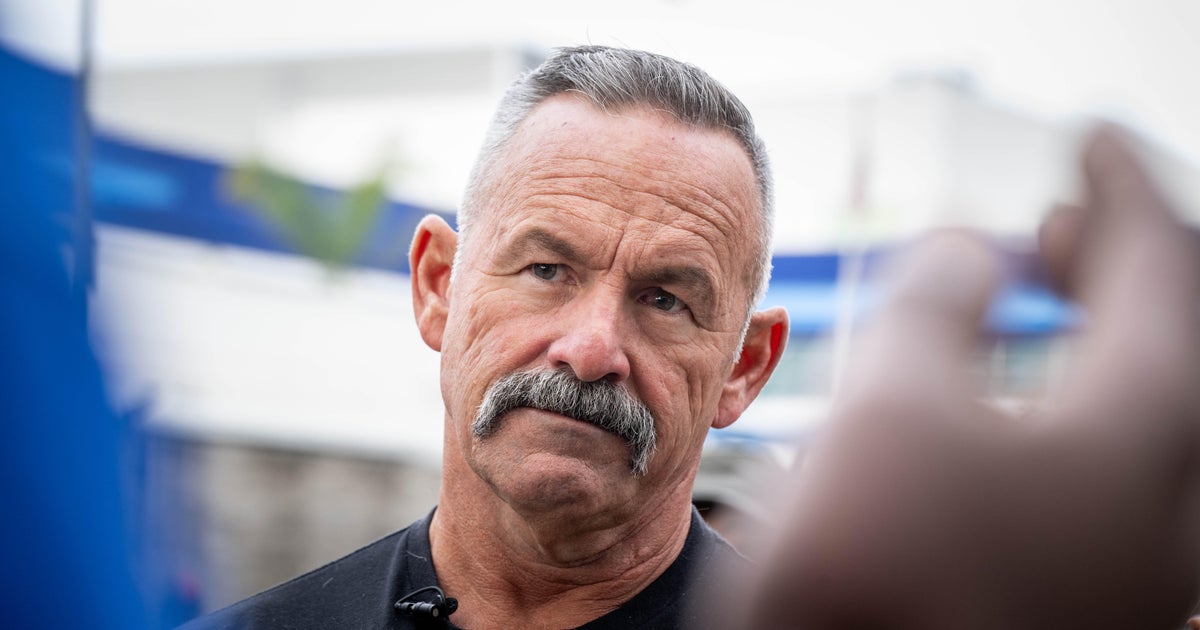
Riverside County Sheriff Chad Bianco found himself at the center of a brewing political storm this week after announcing that his controversial election fraud investigation has been forced into an indefinite pause. The investigation, which began after Bianco seized more than 611,000 ballots from last fall’s Proposition 50 Special Election, has hit a legal roadblock thanks to aggressive pushback from California Attorney General Rob Bonta. What started as what Bianco called a “simple” effort to verify ballot counts has now evolved into a constitutional showdown that raises questions about the limits of law enforcement authority, the integrity of election processes, and the intersection of politics and justice in America’s most populous state.
The investigation centers around Proposition 50, a redistricting measure that California voters approved with a substantial 64% majority. The measure had significant political implications, as it shifted the boundaries of five Republican-held seats in the U.S. House of Representatives to configurations more favorable to Democratic candidates in upcoming midterm elections. According to Sheriff Bianco, a concerned citizens group brought to his attention what they believed was a troubling discrepancy—approximately 45,000 votes difference between the number of ballots that were reportedly counted and the number that were actually cast. For Bianco, the solution seemed straightforward: physically count every ballot and compare that total with the official results reported by election authorities. During a press conference held shortly after the ballots were seized, he framed the investigation as a matter of basic accountability and transparency, arguing that citizens deserved to know whether their votes had been accurately tallied.
Attorney General’s Forceful Opposition
California Attorney General Rob Bonta wasted no time in challenging Sheriff Bianco’s actions, characterizing the ballot seizure as an illegal overreach that violated both the California Constitution and state law. Bonta’s office has been unequivocal in its position, stating that Bianco had no legal authority to remove ballots from the Riverside County Registrar’s custody and initiate his own recount. Furthermore, Bonta has pointed out that the sheriff has failed to identify any specific crimes that would justify such an extraordinary intervention into the electoral process. In a strongly worded statement, Bonta’s office declared that “the facts have not changed” and that Bianco continues to “directly defy the Attorney General’s instructions.” The statement concluded with a warning that the office was “evaluating next steps to ensure a swift and appropriate resolution to this matter.”
The legal pressure intensified when the UCLA Voting Rights Project joined the fray, filing a petition with the California Supreme Court arguing that the ballot seizure violated established state laws governing the handling of election materials. These laws exist specifically to protect the chain of custody for ballots and ensure that election materials are handled only by authorized personnel following strict protocols. Despite Bianco initially receiving a favorable ruling when a California court denied Bonta’s appeal to immediately halt the investigation, the mounting legal challenges appear to have had their intended effect. On Sunday, Bianco announced that his investigation would be placed on indefinite hold, though he framed the delay not as a legal necessity but as the result of what he called “politically motivated lawsuits and court filings.” This characterization suggests that Bianco views the opposition to his investigation as less about legitimate legal concerns and more about partisan efforts to prevent scrutiny of the election results.
Questions About Political Motivations
The timing and circumstances of Bianco’s investigation have raised eyebrows among political observers, particularly given that the sheriff is currently running for governor of California. Luis Alvarado, a Republican political analyst, didn’t mince words when assessing the situation, calling Bianco’s actions “absolutely unprecedented” and noting that no other sheriff in California history has undertaken anything similar. Alvarado pointed out that if another sheriff were to embark on such an investigation, they would typically do so with the full support and participation of county attorneys, state attorneys, and most importantly, the county registrar of voters standing alongside them as partners in the process. The fact that Bianco appears to be operating largely alone, without these traditional institutional supports, raises questions about whether proper procedures are being followed.
Alvarado suggested that Bianco’s gubernatorial ambitions might be influencing his approach to this matter. “He’s running for governor, and you have to understand that when you’re running for governor, you have to fight to get on TV and get your name elected,” Alvarado explained. This perspective frames the investigation as potentially serving dual purposes—ostensibly seeking election integrity while simultaneously generating media attention for a political candidate who might otherwise struggle to gain visibility in California’s crowded political landscape. Notably, when CBS Los Angeles attempted to interview Bianco in the days following the ballot seizure, he was unavailable for comment, though he did appear on Lindell TV (a network founded by MyPillow CEO Mike Lindell, who has been prominently associated with election fraud claims). During that television appearance, Bianco questioned why California’s Democratic leadership was so determined to prevent his ballot count from proceeding, asking rhetorically, “You would have thought the world was ending, and every single Democrat leader in California is now doing everything they can to prevent this count from happening and it really makes you question: why?”
Election Officials Debunk Fraud Claims
While the political drama has unfolded in press conferences and courtrooms, local election officials in Riverside County have been working to address the specific allegations that prompted Bianco’s investigation in the first place. These officials have systematically debunked the claims of voting irregularities, explaining that the supposed 45,000-ballot discrepancy identified by the citizens group was based on a fundamental misunderstanding of election data. The numbers the group used came from raw, preliminary data that naturally includes ballots that were ultimately not counted in the final tally for legitimate reasons—such as ballots that arrived without signatures, ballots that were damaged or improperly filled out, or provisional ballots that were later determined to have been cast by ineligible voters.
This explanation highlights a common source of confusion about election processes: the difference between ballots received and ballots counted. In any election, a certain percentage of received ballots will not be included in the final count because they don’t meet legal requirements. This is not evidence of fraud but rather evidence that the system is working as designed, filtering out invalid votes while counting legitimate ones. Election officials emphasized that standard procedures were followed throughout the Proposition 50 election and that the final vote counts went through multiple verification steps before being certified. Political experts have also noted another important fact that seems to undermine the practical significance of Bianco’s investigation: Proposition 50 passed by an overwhelming margin, with 64% of voters approving the measure. Even if there were some discrepancy in the vote count—and election officials maintain there isn’t—it would be mathematically impossible for it to change the outcome of the election given the wide margin of victory.
Democracy and Public Confidence at Stake
Beyond the immediate legal and political questions, this controversy raises deeper concerns about the potential impact on public trust in democratic institutions. Alvarado articulated these concerns when he warned about the consequences of introducing doubt about electoral processes without solid evidence. “The bad thing is, when you try to introduce a doubt about the electoral process, people sometimes are afraid to come out and vote,” he explained. “That is actually a fight against democracy.” This observation touches on a critical vulnerability in democratic systems: they depend not just on fair procedures but on public confidence that those procedures are fair. When officials—particularly law enforcement officials with considerable public credibility—suggest that elections may not be trustworthy, it can have a chilling effect on civic participation, even if those suggestions ultimately prove unfounded.
Sheriff Bianco has insisted that his investigation has “absolutely nothing” to do with his gubernatorial campaign, maintaining that he is simply responding to legitimate concerns raised by citizens and fulfilling his duty to investigate potential crimes. However, the perception of political motivation is difficult to dispel given the timing and the unusual nature of his intervention in the electoral process. The situation has created a complex tangle of questions: What authority do sheriffs have to investigate election processes? What constitutes sufficient evidence to justify seizing ballots? How should the legal system balance the need to investigate credible allegations of election fraud with the need to protect election integrity and prevent politically motivated interference? These questions don’t have simple answers, and the legal proceedings continuing in California courts will likely help establish important precedents for how similar situations might be handled in the future. A hearing was scheduled for Monday morning to review Attorney General Bonta’s petition asking the Riverside County Superior Court to formally stop the investigation, a proceeding that could determine whether Bianco’s ballot examination ever resumes or whether the seized ballots are returned to proper election custody without further review.