


Former Congressman on Trial: The Venezuela Lobbying Case That Brought Marco Rubio to Court
A High-Stakes Criminal Trial Unfolds in Miami
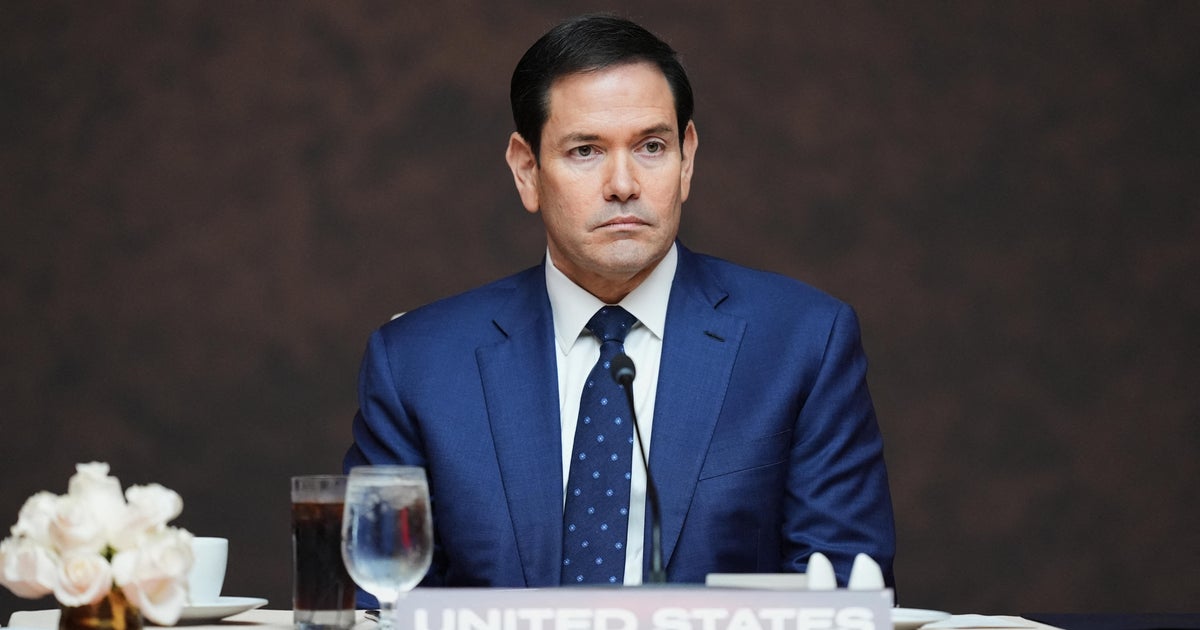
In a courtroom drama that has captured national attention, Secretary of State Marco Rubio is preparing to take the witness stand in a federal criminal trial that touches the highest levels of American diplomacy and foreign policy. The case centers on former Florida Congressman David Rivera, who stands accused alongside his business partner Esther Nuhfer of secretly working as unregistered lobbyists for the Venezuelan government during President Trump’s first term in office. What makes this testimony particularly remarkable is that Rubio will become the first sitting Cabinet member to testify in a criminal proceeding since 1983, highlighting just how significant this case has become. The trial represents a tangled web of old friendships, alleged betrayals, and the murky world where foreign influence meets American politics. While Rubio himself faces no charges and has not been accused of any wrongdoing, his expected appearance on Tuesday underscores the serious nature of the allegations and the complicated relationships at the heart of this case.
The Allegations: A $50 Million Secret Deal
Federal prosecutors have laid out what they describe as a brazen scheme involving an eye-popping sum of money and the highest echelons of Venezuelan power. According to the indictment filed by the Southern District of Florida U.S. Attorney’s Office in 2022, Rivera and Nuhfer allegedly entered into a staggering $50 million contract to conduct just three months of lobbying work in 2017. The work was supposedly on behalf of CITGO, the U.S.-based subsidiary of PDVSA, Venezuela’s state-owned oil company. However, prosecutors argue that the true beneficiaries of this lobbying effort were then-Venezuelan dictator Nicolas Maduro and his Foreign Minister Delcy Rodriguez, who has since become the country’s interim president following Maduro’s dramatic removal from power and extradition to the United States to face narco-terrorism charges. The prosecution’s case rests on allegations that Rivera and Nuhfer failed to register as foreign agents as required by law and engaged in money laundering to conceal the true nature of their work. In his opening statement, prosecutor Roger Cruz didn’t mince words, telling jurors that “this case is about two things: greed and betrayal,” and that the evidence would demonstrate how the defendants “made a pact to secretly lobby for Nicolás Maduro, the communist director, and his second-in-command Delcy Rodríguez.” The goal of this alleged lobbying effort was supposedly to lower political tensions between Venezuela and the United States and to ease the economic sanctions that had been crippling the South American nation’s economy.
The Rubio Connection: Old Friends and Political Allies
The relationship between Marco Rubio and David Rivera adds a particularly compelling human dimension to this legal drama. These two men aren’t casual acquaintances or political contacts who met at fundraisers—they share a deep personal history that goes back decades. When both men served in the Florida state legislature, they were housemates in Tallahassee, sharing living quarters and undoubtedly countless conversations about their political ambitions and beliefs. Over the years, they maintained their friendship even as their careers took different trajectories, with Rubio ascending to the U.S. Senate and eventually to his current role as Secretary of State. Prosecutors allege that Rivera and Nuhfer attempted to leverage this long-standing friendship, arranging two meetings between Rivera and then-Senator Rubio. The pair also allegedly tried to set up meetings with former White House advisor Kellyanne Conway, though those attempts were reportedly unsuccessful. What makes these alleged lobbying attempts particularly ironic is that Rubio had built a reputation as one of the most vocal critics of the Maduro regime in the entire U.S. Senate. His hard-line stance against the Venezuelan government and his advocacy for the Venezuelan people had made him a prominent voice on Latin American policy. In an interview with CBS News Miami conducted before Rivera was formally indicted, Rubio addressed the situation directly, stating that Rivera’s lobbying work had “nothing to do” with him or their relationship. “He’s someone I’ve known for a very long time. We’ve worked closely but not on this. And there’s not a single person claiming otherwise,” Rubio insisted, drawing a clear line between their personal friendship and any professional involvement in Rivera’s business dealings.
The Defense’s Counterargument: A Legal Loophole or Legitimate Work?
David Rivera’s legal team has mounted a vigorous defense, arguing that their client has been wrongly accused and that his actions fell within the boundaries of the law. Rivera’s attorney, Ed Shohat, delivered a colorful opening statement that characterized the prosecution’s case as fundamentally flawed. “This is like a murder case without a murder, a drugs case without drugs, a kidnapping case without a kidnapping,” Shohat told the jury, suggesting that the government was trying to manufacture a crime where none existed. The defense’s central argument rests on a claimed exemption from the Foreign Agents Registration Act, the law that requires people working on behalf of foreign governments to register with the U.S. government. Rivera’s attorneys contend that his lobbying work was actually focused on bringing the oil giant Exxon back to Venezuela to work with CITGO, the Texas-based subsidiary, and that this type of commercial work doesn’t trigger the registration requirements. Furthermore, Shohat argued that “not one single policy” in the United States was actually impacted or changed as a result of Rivera’s work, suggesting that if no harm was done and no policies were altered, then no crime was committed. Regarding the meetings with Rubio that form part of the prosecution’s case, the defense claims these conversations were unrelated to any consulting work for the Maduro regime and were instead focused on the legitimate business goal of encouraging Exxon’s return to Venezuela. The defense is essentially painting a picture of a businessman engaged in legal consulting work who has been caught up in a prosecutorial overreach driven by political considerations rather than actual criminal conduct.
The Broader Context: Venezuela, Sanctions, and Geopolitical Chess
To fully understand this case, it’s important to consider the broader geopolitical landscape during the period when this alleged lobbying occurred. In 2017, Venezuela was in the midst of a deepening economic and humanitarian crisis, with the Maduro regime facing increasing international isolation and punishing economic sanctions from the United States and other countries. The sanctions were designed to pressure Maduro to restore democratic governance and respect human rights, but they also had severe impacts on the Venezuelan economy and ordinary citizens. For the Maduro government, finding ways to ease these sanctions and improve relations with the United States would have been an absolute priority, making the alleged $50 million payment for three months of lobbying work seem almost reasonable from their desperate perspective. The fact that CITGO, a Venezuelan-owned company operating on American soil, was allegedly used as the vehicle for this lobbying effort adds another layer of complexity. CITGO had long been a valuable asset for Venezuela, generating hard currency and providing a foothold in the crucial American energy market. The case also reflects the shadowy world of international lobbying, where the lines between legitimate business consulting and illegal foreign influence campaigns can become blurred. The recent dramatic developments—including Maduro’s removal from power, his extradition to the United States to face narco-terrorism charges, and Delcy Rodriguez’s elevation to interim president—have given this trial an even more surreal quality, as the defendants stand accused of secretly working for foreign leaders who are now themselves facing justice or scrambling to maintain power.
What Happens Next: Implications for Justice and Diplomacy
As Marco Rubio prepares to take the stand, his testimony will be closely watched not just for what it reveals about this specific case, but for what it might signal about accountability, friendship, and the intersection of personal relationships and public duty. Rubio’s position is undoubtedly uncomfortable—testifying in a criminal trial against a longtime friend, while simultaneously managing complex diplomatic crises in his role as Secretary of State, including the ongoing situation in Iran. His testimony will need to walk a careful line, providing truthful information about his interactions with Rivera while making clear that he had no knowledge of or involvement in any illegal activity. For Rivera and Nuhfer, the stakes couldn’t be higher. If convicted on the money laundering and foreign agent charges, they could face significant prison time. The prosecution will need to prove beyond a reasonable doubt that the defendants knowingly worked on behalf of the Venezuelan government without proper registration and that they took steps to conceal the true nature of their work and the source of their funding. The defense will continue to argue that this was legitimate commercial work that has been misconstrued as something more sinister. For the broader public, this trial serves as a reminder of the constant need for vigilance about foreign influence in American politics. The Foreign Agents Registration Act exists precisely to ensure transparency about who is working on behalf of foreign governments and what they’re trying to accomplish. Whether Rivera and Nuhfer are ultimately found guilty or acquitted, their trial illuminates the challenges of policing the shadowy world where international business, diplomatic relationships, and political influence intersect—a world where old friendships can be tested, enormous sums of money change hands, and the national interest can sometimes conflict with personal loyalties.