



Russell Brand Faces Serious Criminal Charges: A Fall from Grace for the Controversial Media Figure
Court Appearance and New Allegations
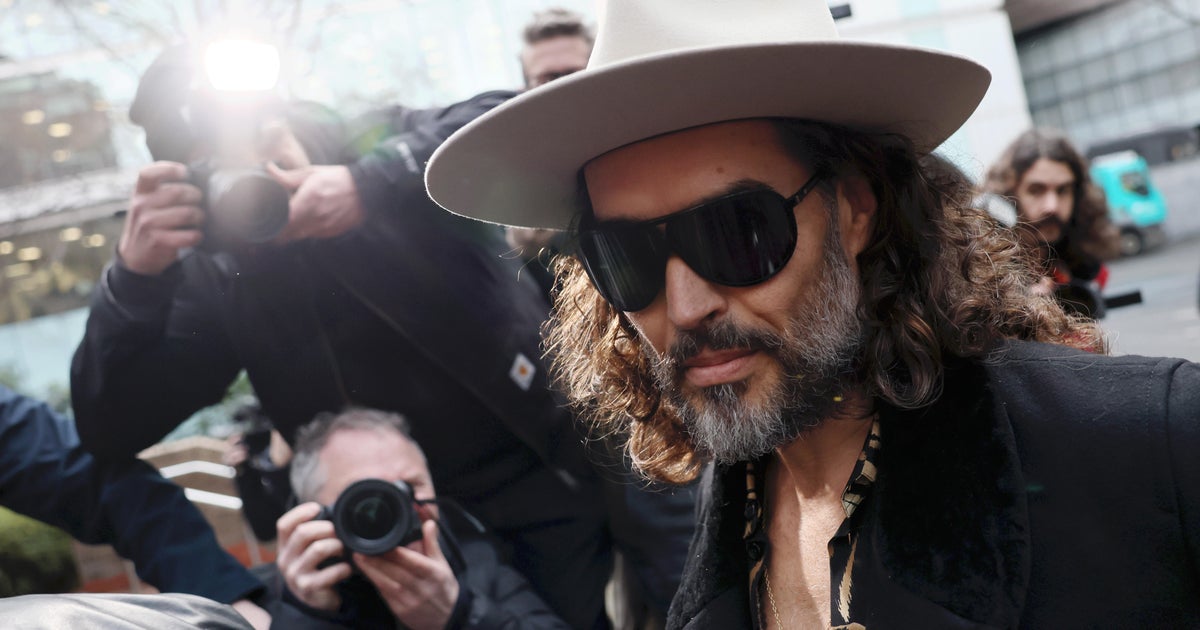
Russell Brand, the British media personality who transformed from edgy comedian to alternative political commentator, appeared at London’s Southwark Crown Court this week to face troubling new criminal charges. The 50-year-old arrived at court in characteristic flamboyant fashion—wearing a fedora hat, a leopard-print shirt unbuttoned to reveal much of his chest, and a dark overcoat. Perhaps most notably, he carried a Bible with several pages bookmarked, a detail that speaks to his more recent public persona as someone exploring spiritual and philosophical themes. During the brief hearing, Brand entered not guilty pleas to two serious charges: sexually assaulting a woman in London in 2009 and raping another woman during that same year, also in the British capital. The court renewed his bail following the hearing, and he’s now scheduled to stand trial in June of this year. These latest allegations add to an already mounting legal crisis for the once-celebrated entertainer, whose career has taken many unexpected turns over the past two decades.
The Growing List of Accusations
The charges Brand faced this week represent only part of a larger pattern of allegations that have emerged against him. According to London’s Metropolitan Police, the comedian is now facing sexual offense charges involving a total of six different women spanning more than a decade. Back in May of last year, Brand had already pleaded not guilty to five other charges relating to four women—these included one count of rape, one count of oral rape, two counts of sexual assault, and one count of indecent assault. Those earlier charges covered alleged incidents that took place between 1999 and 2005, a period when Brand was establishing himself in British entertainment. When announcing the December charges, the Metropolitan Police clarified that “these new charges are in relation to two further women and are in addition to the charges issued to Brand in April 2025 which involved four women.” Under British law, the identities of people alleging sexual violence are legally protected, meaning the accusers’ names cannot be publicly disclosed. This protection exists to encourage victims of sexual crimes to come forward without fear of public exposure or harassment. The timeline of alleged offenses stretches across years when Brand was at various stages of his career—from his early days breaking into comedy to his peak years as a mainstream media figure.
From Working-Class Roots to Comedy Stardom
To understand how significant Brand’s fall has been, it’s worth looking at the journey that brought him to prominence. Born in 1975 to working-class parents in Essex, located east of London, Brand didn’t come from privilege or entertainment industry connections. He began performing stand-up comedy as a teenager, displaying the quick wit and boundary-pushing style that would become his trademark. His talent and charisma eventually led him beyond the comedy club circuit to television work, where he became an MTV presenter and later hosted reality TV programs. Brand’s edgy, provocative style resonated with younger audiences who appreciated his willingness to challenge social norms and discuss taboo subjects. His career continued to ascend as he landed roles in Hollywood films, bringing his distinctively British humor to American audiences. Between 2006 and 2008, he presented a show on BBC Radio 2, one of Britain’s most popular radio stations, which seemed to cement his status as a mainstream media personality. However, this position ended abruptly following a controversy that foreshadowed his later troubles—Brand quit the radio show after an on-air prank went too far. He and a colleague left a sexually explicit voicemail for Andrew Sachs, the beloved actor known for playing Manuel in the classic British sitcom “Fawlty Towers,” with the message making crude references to Sachs’s granddaughter. The incident caused a public outcry and demonstrated Brand’s tendency to cross lines of acceptable behavior, particularly regarding sexual matters.
Political Transformation and Social Media Reinvention
After his mainstream media career became complicated by controversies, Brand embarked on a remarkable reinvention. He initially positioned himself as a left-leaning political activist and social commentator, critiquing capitalism, advocating for wealth redistribution, and encouraging political revolution among young people. He published books exploring spiritual and political themes, interviewed politicians and activists, and seemed genuinely engaged with progressive causes. However, in more recent years, Brand has undergone another transformation, this time rebranding himself as a conservative-leaning guru to millions of social media followers. This shift has been dramatic, with Brand moving away from his earlier leftist positions to embrace talking points more commonly associated with conservative and alternative media figures. He’s built a substantial following on platforms like YouTube, where he discusses topics ranging from government overreach and media manipulation to wellness and spirituality. His content often appeals to people skeptical of mainstream institutions, and he’s cultivated an image as someone willing to ask difficult questions and challenge official narratives. This evolution from leftist revolutionary to conservative-adjacent influencer has been controversial in itself, with critics suggesting he’s simply following where the money and audience attention lead. His social media presence has proven financially lucrative, allowing him to maintain relevance and income even as traditional media opportunities have become scarcer.
The Broader Context of Accountability
Brand’s legal troubles emerge within a broader cultural moment of reckoning regarding sexual misconduct, particularly by powerful men in entertainment and media. The #MeToo movement, which gained global prominence in 2017, created space for victims of sexual assault and harassment to come forward with their stories, often about incidents that occurred years or even decades earlier. Many high-profile figures have faced consequences as allegations surfaced, leading to a societal conversation about power dynamics, consent, and accountability. Brand’s case is complicated by his public persona, which has always involved discussions of sexuality, often in provocative or transgressive ways. His comedy and public statements have frequently pushed boundaries around sexual topics, which he and his defenders might characterize as edgy humor and honest discussion of human nature. However, critics have long suggested that this public persona potentially normalized problematic behavior and attitudes toward women. The legal principle of “innocent until proven guilty” remains essential—Brand has entered not guilty pleas to all charges, and everyone accused of crimes deserves a fair trial where the prosecution must prove guilt beyond reasonable doubt. The courts will ultimately determine the truth of these allegations through the proper legal process. Nevertheless, the volume and consistency of allegations from six different women spanning many years presents serious questions that will need to be addressed during the trial proceedings scheduled for June.
What Comes Next for Brand and His Accusers
As Brand awaits his June trial, he remains free on bail, able to continue his social media activities and public commentary. His substantial online following means he retains a platform and presumably an income stream, though some platforms have already taken action against him following the emergence of allegations. The trial itself will be a significant moment—not just for Brand and the women who have accused him, but potentially for broader conversations about celebrity, power, and sexual misconduct. The legal proceedings will examine evidence, hear testimony, and attempt to establish what actually occurred during the alleged incidents from 1999 to 2009. For the six women involved, the process of seeing their allegations addressed through the criminal justice system may bring some measure of validation, regardless of the outcome, though participating in such trials can be traumatic in itself. British law’s protection of their identities offers some shield from public scrutiny, but the process of giving evidence and facing cross-examination remains difficult. For Brand, the stakes could hardly be higher—convictions on these charges could result in significant prison time and would certainly end whatever remains of his public career. The trial will be closely watched by media observers, those interested in celebrity accountability, and Brand’s supporters and critics alike. Whatever the outcome, the case represents a dramatic chapter in the story of a complicated public figure whose career has always courted controversy, but who now faces the most serious allegations of his life. The June trial will ultimately determine whether Russell Brand is held criminally accountable for the actions alleged by these six women, or whether he’ll be acquitted and attempt yet another reinvention of his endlessly controversial public persona.