


Moscow Concert Hall Attack: Justice Delivered in One of Russia’s Deadliest Terror Incidents
The Tragic Night That Shook Moscow
On March 22, 2024, what should have been an evening of music and entertainment turned into one of the darkest chapters in Moscow’s recent history. The Crocus City Hall, a popular concert venue in the Russian capital, became the site of an unimaginable tragedy when gunmen opened fire on innocent concertgoers who had gathered to enjoy a performance by a well-loved rock band. The attack claimed 149 lives and left more than 600 people wounded, making it one of the deadliest terrorist incidents Moscow has experienced in years. The sheer scale of the violence sent shockwaves throughout Russia and the international community, as families waited anxiously for news of their loved ones while emergency services worked through the night to rescue survivors from the burning building. The attackers not only shot indiscriminately at the crowd but also set fire to the venue, compounding the horror and making rescue efforts incredibly dangerous and difficult. This senseless act of violence targeted ordinary people—families, friends, music lovers—who were simply trying to enjoy a night out, forever changing the lives of thousands who either lost someone or survived the ordeal themselves.
The Perpetrators and the Investigation
Russian authorities quickly identified four gunmen as the primary attackers, all of whom were citizens of Tajikistan, a former Soviet republic in Central Asia. The investigation moved swiftly, with the suspects arrested just hours after the attack as they attempted to flee toward the Ukrainian border. When they first appeared in a Moscow court shortly after their capture, the accused showed visible signs of severe beatings, raising questions about their treatment during detention, though Russian authorities did not publicly address these concerns. The faction of the Islamic State that claimed responsibility for the massacre added an international dimension to the tragedy, highlighting the ongoing threat of global terrorism. However, the investigation didn’t stop with the four gunmen. Russian authorities cast a wider net, eventually identifying and arresting a total of 19 individuals allegedly connected to the attack in various capacities. This expanded group of defendants included people accused of providing logistical support to the attackers, such as three men who sold the gunmen a vehicle, a landlord who rented them an apartment, and ten others who were accused of having ties to terrorist organizations. The breadth of the charges suggested that authorities believed the attack required significant planning and a support network, rather than being the work of isolated individuals.
The Trial and Verdicts
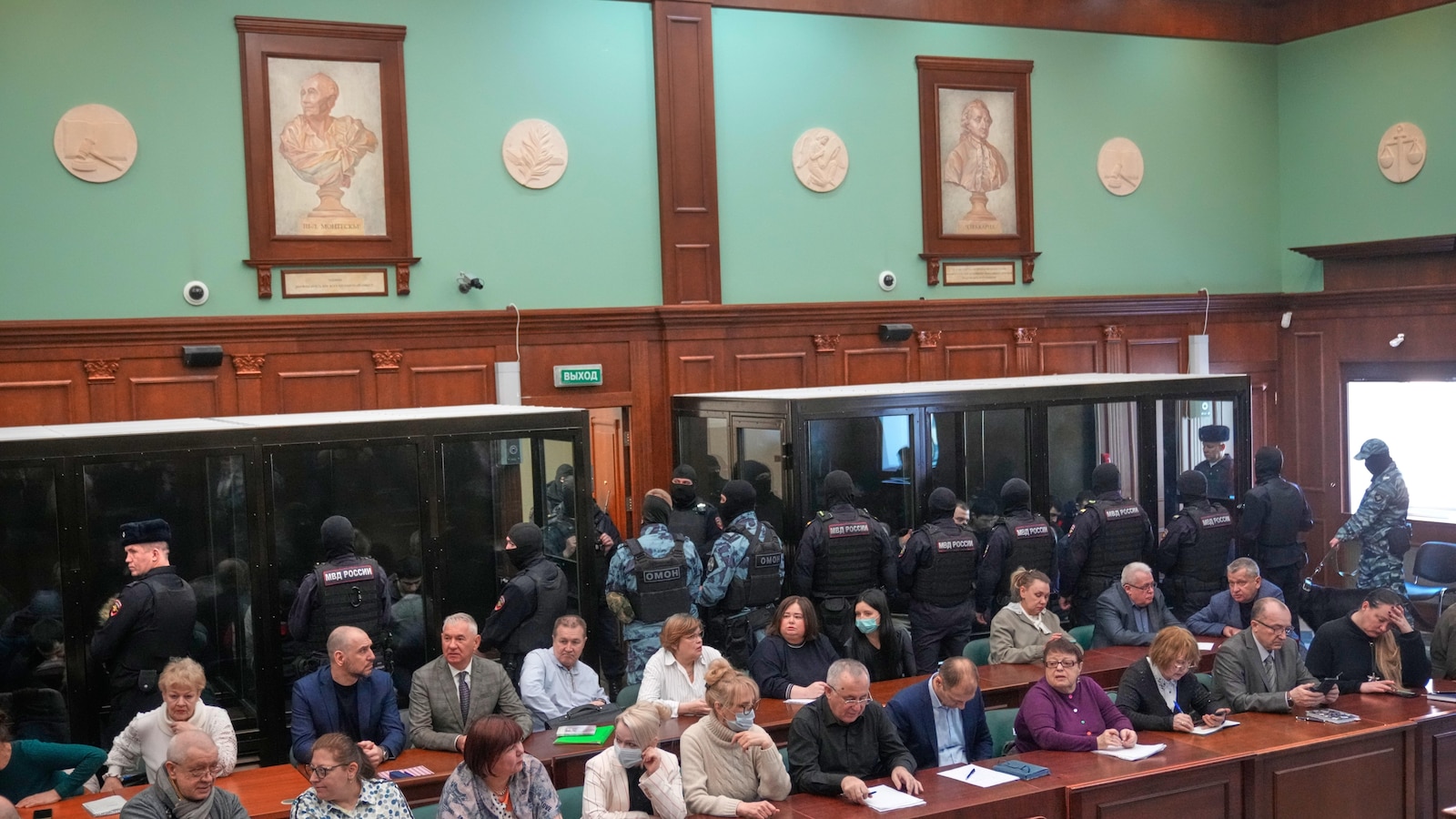
The legal proceedings began in August 2025, more than a year after the attack, when the 19 defendants were brought before a military court in Moscow. As is standard practice in Russia for cases involving terrorism charges, the trial was held in a military court rather than a civilian one, with three military judges presiding over the proceedings. Citing security concerns, authorities decided to conduct the trial behind closed doors, meaning the public and media had limited access to the details of the evidence presented and the testimonies given. This secrecy, while explained as necessary for national security, left many questions unanswered for the families of victims and the general public who wanted to understand exactly how such a devastating attack could have been planned and executed. On Thursday, after months of deliberations, the court delivered its verdicts, handing down some of the harshest sentences available under Russian law. Fifteen of the defendants received life sentences, the most severe punishment in Russia’s legal system following the country’s moratorium on the death penalty. One defendant was sentenced to 22 and a half years in prison, while three others received sentences of 19 years and 11 months each. Those receiving life sentences will spend part of their incarceration in standard prisons before being transferred to special regime penal colonies, facilities known for their particularly harsh conditions and reserved for the most serious offenders. Additionally, all defendants were ordered to pay substantial fines ranging from 500,000 rubles (approximately $6,300) to 2.7 million rubles (about $34,000), though it remains unclear whether these fines will ever be collected given the circumstances of the convicted individuals.
The Political Dimension and Ukrainian Allegations
From the very beginning, the Moscow concert hall attack became entangled in the broader geopolitical tensions between Russia and Ukraine. Despite the Islamic State’s claim of responsibility—a group with a documented history of similar attacks around the world—President Vladimir Putin and other senior Russian officials persistently suggested, without providing concrete evidence, that Ukraine had some role in planning or facilitating the massacre. These accusations were vehemently denied by Ukrainian officials, who called the claims baseless propaganda designed to further justify Russia’s ongoing military operations in Ukraine. Russia’s Investigative Committee, the country’s premier criminal investigation agency, went so far as to state officially that the attack was “planned and carried out in the interests of the current leadership of Ukraine in order to destabilize the political situation in our country.” This claim struck many international observers as politically motivated, particularly given the lack of evidence presented to support it and the Islamic State’s clear claim of responsibility. The Russian narrative pointed to the fact that the four gunmen attempted to flee toward Ukraine after the attack as supposed proof of Ukrainian involvement, though this detail could just as easily be explained by simple geography and the existence of conflict zones where fugitives might hope to disappear. The international community largely remained skeptical of Russia’s claims, with Western intelligence agencies seeing no credible evidence linking Ukraine to the attack and instead viewing it as consistent with Islamic State operations. This political dimension added another layer of complexity to an already tragic situation, as the search for truth became intertwined with ongoing geopolitical conflicts and propaganda efforts on both sides of the Russia-Ukraine war.
The Human Cost and Survivors’ Stories
Beyond the statistics and court proceedings lies the immeasurable human cost of this tragedy. One hundred forty-nine people lost their lives that night—mothers and fathers, sons and daughters, friends and colleagues—each with their own stories, dreams, and loved ones left behind to grieve. The more than 600 people who were wounded faced not only physical injuries, many of them severe and life-altering, but also profound psychological trauma that will likely affect them for the rest of their lives. Survivors have had to grapple with the horror of what they witnessed, the guilt that sometimes accompanies survival, and the challenge of rebuilding their sense of safety in a world that suddenly seemed far more dangerous. Families of victims have faced the impossible task of moving forward without their loved ones, seeking answers about why this happened and whether it could have been prevented. The community surrounding Crocus City Hall was also deeply affected, as the venue that once represented joy and cultural enrichment became associated with unspeakable tragedy. In the months following the attack, memorial services were held throughout Moscow, and impromptu shrines appeared near the concert hall where people left flowers, candles, photographs, and messages honoring the victims. The psychological impact extended throughout Moscow and across Russia, as people reconsidered their sense of security in public spaces and grappled with the reality that such violence could strike anywhere, at any time. Support services for survivors and victims’ families were established, though many have noted that no amount of counseling or compensation can truly address the magnitude of such loss. The verdict and lengthy sentences handed down may provide some sense that justice has been served, but for those most directly affected, no legal outcome can bring back the loved ones they lost or erase the memories of that terrible night.
Looking Forward: Security Implications and Prevention
The Moscow concert hall attack has forced Russia and the international community to confront difficult questions about security, intelligence failures, and the prevention of future attacks. Despite Russia’s extensive security apparatus and its experience dealing with terrorism—particularly from militant groups in the North Caucasus region—the attackers were able to carry out their plan with devastating effectiveness. This has led to calls for investigations into whether warning signs were missed, whether intelligence about potential threats was properly shared and acted upon, and whether security measures at large public venues like concert halls were adequate. Some reports suggested that Western intelligence agencies had provided warnings to Russia about potential attacks in crowded public spaces in the weeks before the massacre, though the specifics of what was shared and how it was handled remain unclear. The incident has also highlighted the ongoing challenge of monitoring and preventing attacks by individuals radicalized by transnational terrorist organizations like the Islamic State, particularly when those individuals may have no previous criminal records or obvious connections to extremist networks. The support network that apparently helped the gunmen—providing transportation, housing, and other logistics—demonstrates that lone-wolf attacks are often not as isolated as they might initially appear, and that disrupting these support systems is crucial to prevention. Moving forward, Russian authorities will need to balance increased security measures with preserving the openness and accessibility that make cultural venues like concert halls important parts of urban life. The trial’s conclusion, with its severe sentences, sends a clear message about how Russia intends to punish those involved in such attacks, but punishment after the fact is no substitute for prevention. As Moscow and other major cities around the world continue to face terrorist threats, the lessons from Crocus City Hall—about vigilance, intelligence sharing, security protocols, and community resilience—will hopefully contribute to preventing future tragedies of similar magnitude.