


Tragedy Strikes Ukrainian Family as Drone Attack Claims Four Lives
A Devastating Loss in Kharkiv Region
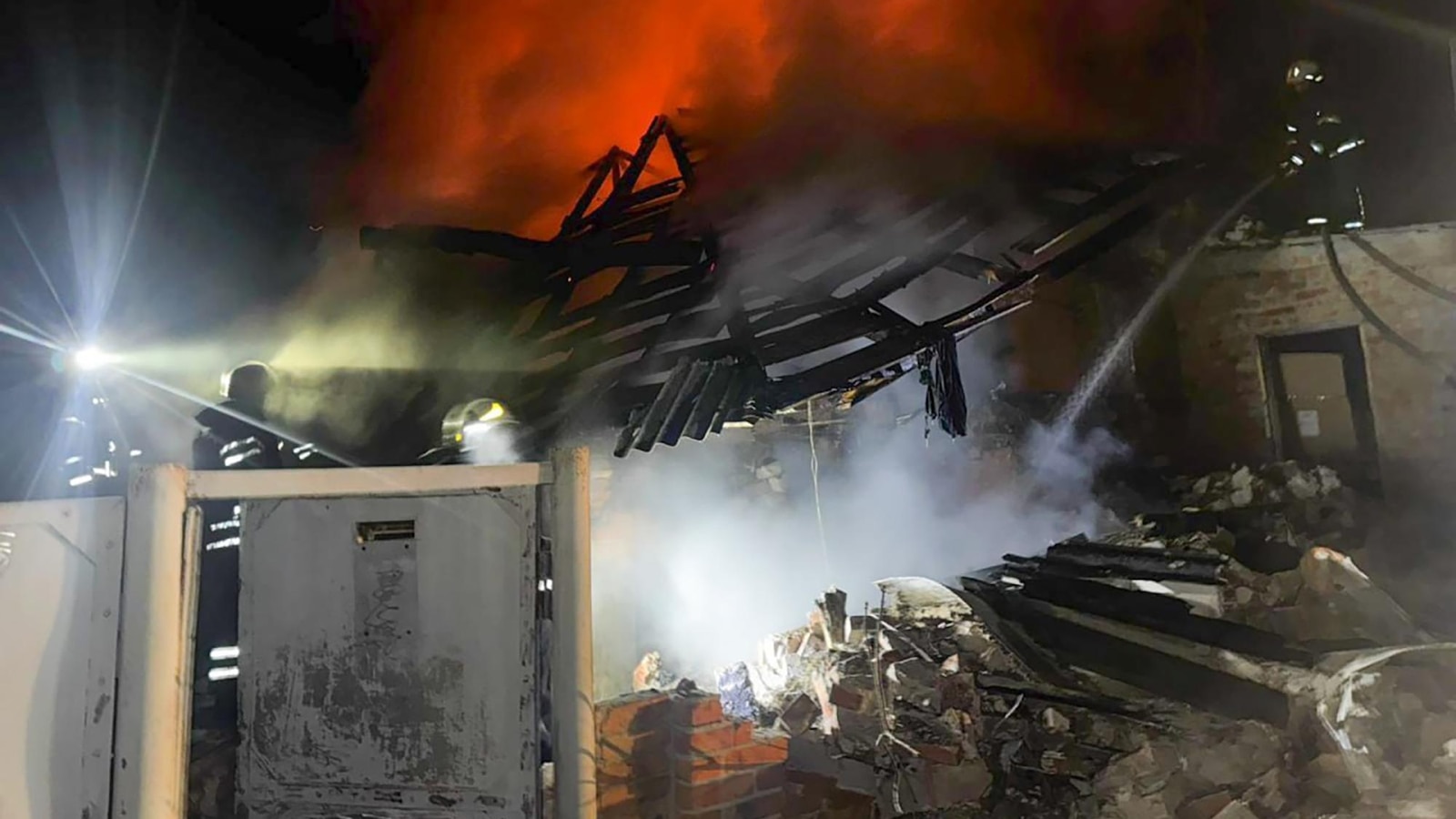
In the early hours of Wednesday morning, an unspeakable tragedy unfolded in the northeastern Ukrainian town of Bohodukhiv when a Russian drone strike tore through a family home, claiming the lives of a young father and his three small children. The victims included 34-year-old father and his precious trio of toddlers—twin boys who had just celebrated their second birthday and their baby sister, only one year old. The children’s mother, who is 35 weeks pregnant and was expecting to bring new life into the world within weeks, was pulled from the rubble alive but seriously injured. She now fights for her life in a hospital bed, having sustained blast injuries, a traumatic brain injury, severe burns, and hearing loss. The weapon responsible for this devastation was identified as a Geran-2 drone, a Russian-manufactured version of the Iranian Shahed drone. The strike completely leveled the brick house and ignited a fierce fire, trapping the family beneath tons of rubble. This single incident encapsulates the ongoing horror faced by Ukrainian civilians who have endured relentless aerial attacks for nearly four years since Russia’s invasion began. Bohodukhiv, a town that once had a pre-war population of 15,000 residents, sits precariously close to danger—just 13 miles from the Russian border—making it vulnerable to such attacks that have become tragically commonplace.
The Human Cost of an Endless War
The numbers behind Ukraine’s suffering tell a story that statistics can barely capture. According to the U.N. Human Rights Monitoring Mission operating in Ukraine, 2025 marked the deadliest year for Ukrainian civilians since 2022, with Russia dramatically intensifying its aerial bombardments targeting areas far behind the front lines. The mission documented that 2,514 civilians were killed and an additional 12,142 were injured throughout the year—a staggering 31% increase compared to 2024. These aren’t just numbers on a page; they represent mothers, fathers, children, grandparents, and entire families whose lives were cut short or forever altered by violence. Behind each statistic is a story like that of the family in Bohodukhiv—ordinary people trying to live their lives, raise their children, and maintain hope for the future despite the constant threat hanging over their heads. The mayor of Bohodukhiv, Volodymyr Bielyi, captured the community’s grief in his heartbreaking Facebook post: “We lost what is most precious—our future. There are no words to console the family; there is no prayer that could heal the heart of a mother who has lost her children.” His words reflect not just the loss of four individual lives, but the collective trauma experienced by communities across Ukraine who have witnessed similar tragedies repeatedly. In response to this latest atrocity, Bielyi announced three days of mourning during which national flags would be lowered and all entertainment and organized public events canceled, allowing the community to process their grief together.
A Pattern of Targeting and International Response
This attack on the family home in Bohodukhiv fits within a broader pattern that Ukraine and international observers have documented throughout the nearly four-year conflict. Ukraine has consistently accused Russian forces of committing countless war crimes, and European institutions have mobilized to hold Russia accountable for these actions. The International Criminal Court in The Hague has issued multiple outstanding arrest warrants for Russian officials charged with war crimes, including one for President Vladimir Putin himself, who stands accused of personal responsibility for the systematic abduction of Ukrainian children. Ukrainian President Volodymyr Zelenskyy responded to the Bohodukhiv attack by highlighting how such strikes undermine diplomatic efforts to end the war: “Each such Russian strike undermines trust in everything being done through diplomacy to end this war, and again and again proves that only strong pressure on Russia and clear security guarantees for Ukraine are the real key to stopping the killings.” It remains unclear whether there was any Ukrainian military infrastructure near the targeted house, raising questions about whether civilians were deliberately targeted or if they were considered acceptable collateral damage in Russia’s military calculations. Regardless of the answer, international humanitarian law is clear that parties to a conflict must distinguish between military and civilian targets and take all feasible precautions to avoid civilian casualties.
Ukraine’s Struggle to Defend Its Skies and People
Faced with relentless aerial attacks, Ukraine continues to struggle with the challenge of defending its airspace and protecting its civilian population. President Zelenskyy announced late Tuesday that Ukraine is implementing “many changes” in how it counters Russian aerial attacks, with particular focus on enhancing short-range air defense capabilities. He has also identified training and replenishing troop numbers as critical priorities for Ukraine’s defense. The country faces significant manpower challenges as it battles against Russia’s considerably larger military force. Defense Minister Mykhailo Fedorov revealed last month that wide-scale desertions and approximately 2 million draft-dodgers represent major obstacles for Ukraine’s military efforts, though Russian forces have still managed only incremental territorial gains despite their numerical advantage. Zelenskyy has repeatedly pressed Western partners to provide more sophisticated air defense systems and missiles that could better protect Ukrainian cities and civilians from the constant barrage of drones and missiles. On the night of the Bohodukhiv attack alone, Ukraine’s Air Force reported that Russia launched 129 long-range drones at targets across the country, illustrating the massive scale of aerial threats Ukrainian defenders must contend with on a nightly basis. The challenge of intercepting such a large number of relatively inexpensive drones with costly defensive missiles creates both a tactical and economic dilemma for Ukraine’s military planners.
The Shifting Landscape of International Military Support
The international support that Ukraine has relied upon to sustain its defense is undergoing significant changes that will shape the conflict’s trajectory. According to research from Germany’s Kiel Institute, which carefully tracks military aid to Ukraine, total military assistance dropped by 13% in 2025 compared to the annual average between 2022 and 2024. This decline was primarily driven by U.S. President Donald Trump’s decision to halt American weapons shipments to Kyiv, representing a major shift in U.S. policy toward the conflict. However, European countries have substantially increased their commitment to Ukraine’s defense, stepping up to fill much of the gap left by reduced American assistance. The Kiel Institute’s report released Wednesday showed that European military aid surged by 67% compared with the 2022-2024 period, demonstrating Europe’s growing investment in Ukraine’s ability to resist Russian aggression. This shift reflects Europe’s strategic calculation that Ukraine’s defense is essential to broader European security. Beyond military aid, Ukraine also depends on foreign humanitarian and financial assistance to maintain basic government functions and support its displaced population. This support declined by 5% in 2025 compared to the previous three years, according to the Kiel Institute, potentially creating challenges for Ukraine’s ability to care for civilians affected by the war and maintain essential services in areas under constant attack.
The Broader Context and Path Forward
The attack on Bohodukhiv occurred against a backdrop of escalating violence on both sides of the conflict, though the scale and nature of casualties differ dramatically. Ukrainian forces have also conducted drone attacks against targets in Russian territory, including a strike that caused a fire at an industrial plant in the city of Volgograd. The region’s governor reported that drone fragments damaged an apartment building, and eight Russian airports temporarily suspended flights overnight due to drone attacks. While these Ukrainian strikes demonstrate Kyiv’s growing capability to project force into Russian territory, they pale in comparison to the systematic aerial campaign Russia has waged against Ukrainian population centers. As the war approaches its fourth year with no clear end in sight, the tragedy in Bohodukhiv serves as a grim reminder of the human cost of this conflict. Mayor Bielyi’s pledge—”We will endure. We will remember. We will never forgive this horror on our land”—captures the determination of Ukrainians to continue resisting despite unimaginable losses. The survival of the pregnant mother, now facing the prospect of bringing a new child into the world while grieving the loss of her husband and three babies, symbolizes both the resilience of the Ukrainian people and the profound trauma they carry. As diplomatic efforts continue alongside military operations, incidents like this underscore the urgency of finding a path to peace that can prevent future families from experiencing similar devastation while ensuring that those responsible for war crimes face accountability for their actions.