


Commercial Satellite Companies Restrict Access to Middle East Imagery Amid Rising Tensions
A Significant Shift in Open-Source Intelligence Availability
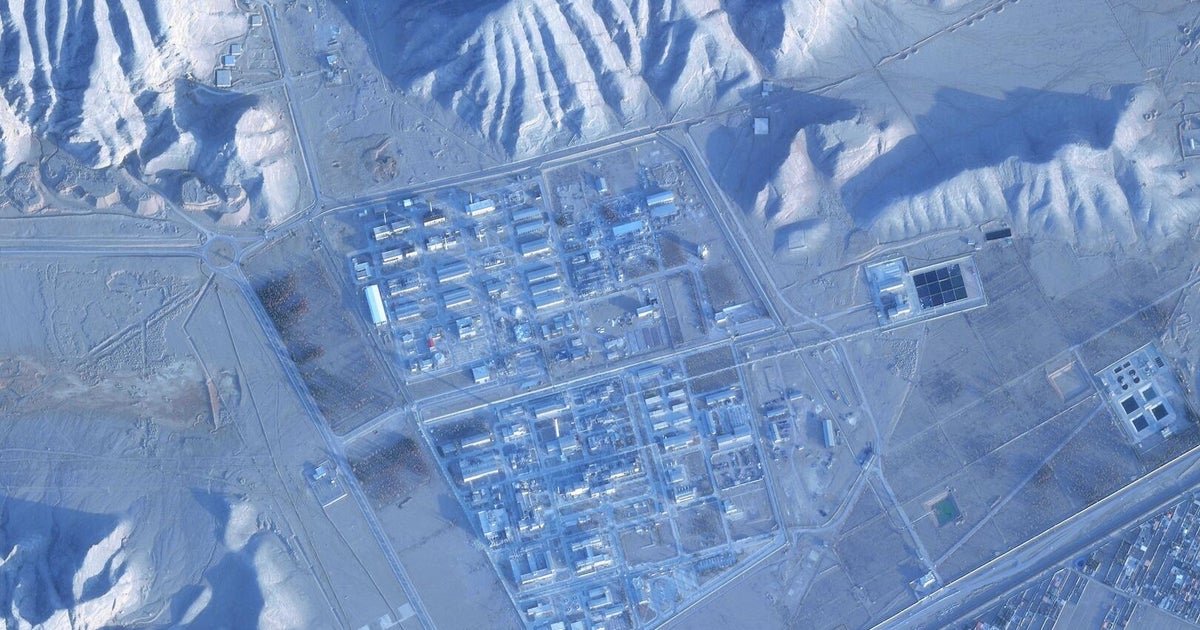
In an unprecedented move that has sent ripples through the journalism and research communities, major commercial satellite imagery providers have imposed significant restrictions on access to images covering Iran and the broader Middle East region. This decision marks a dramatic departure from the long-standing practice of making such imagery readily available to the public, including news organizations, academic researchers, and independent analysts who have come to rely on this data for their work. Planet Labs, one of the industry’s leading providers whose satellite images have been regularly featured by prominent news outlets including CBS News, announced earlier this month that it would be implementing a 14-day delay on the release of all new imagery covering Iran, the Persian Gulf region, U.S.-allied military bases, and existing conflict zones. This decision comes at a particularly crucial time, as tensions in the region have escalated following retaliatory actions involving Iran and U.S. military installations. The restrictions represent a significant challenge for journalists and researchers who have increasingly depended on commercial satellite imagery to provide independent verification of events in areas where traditional on-the-ground reporting has become difficult or impossible due to security concerns, government restrictions, or active combat operations.
The Rationale Behind the Restrictions
The companies implementing these new restrictions have cited serious security concerns as their primary motivation, though the decision has sparked debate about the balance between transparency and security. In a customer notification dated March 9, Planet Labs explained that there were “genuine concerns of use of Planet data over Iran, as well as an extended window of risk for recent imagery.” The company’s statement emphasized that this proactive measure was designed to prevent their imagery from being “tactically leveraged by adversarial actors to target allied and NATO-partner personnel and civilians.” This concern reflects a growing awareness within the commercial satellite industry about the potential dual-use nature of their products – while the imagery serves valuable civilian and journalistic purposes, there is a theoretical risk that hostile actors could use the same images for military targeting or intelligence gathering. Vantor, the company formerly known as Maxar and another major player in the commercial satellite imagery market, has implemented similar controls on imagery from parts of the Middle East. According to a company spokesperson, these controls can include limiting who has the ability to request new images or purchase historical imagery from “areas where U.S., NATO, and other allied and partner forces are actively operating, as well as over areas that are being actively targeted by adversaries.” Vantor noted that such restrictions on images of U.S. bases and other sensitive sites have actually been in place for years, suggesting that Planet Labs’ announcement represents an expansion of an existing industry practice rather than an entirely new approach.
The Crucial Role of Satellite Imagery in Modern Journalism
The timing of these restrictions is particularly significant given the vital role that commercial satellite imagery has played in contemporary conflict reporting and human rights investigations. Over recent years, these images taken from space have become indispensable tools for journalists covering conflicts around the world, providing independent verification that would otherwise be impossible to obtain. The imagery has been especially crucial during Russia’s full-scale invasion of Ukraine and throughout the Israel-Hamas war in Gaza, where reporters and researchers have used satellite photos to document widespread destruction, track population movements, and investigate alleged war crimes and massacres. In many cases, these areas are either too remote or too dangerous for journalists to access directly, making satellite imagery the only reliable source of visual information. The photographs from space have provided concrete evidence that has been used in international investigations, human rights reports, and journalistic accounts that have shaped global understanding of these conflicts. Without access to this imagery, journalists face the prospect of having to rely more heavily on government sources, combatant claims, or incomplete information, potentially compromising the independence and accuracy of their reporting. The restrictions therefore raise important questions about the public’s right to know what is happening in conflict zones and the media’s ability to provide independent verification of events that have significant implications for international relations, humanitarian concerns, and global security.
A Critical Case Study: The Minab School Strike
The practical importance of satellite imagery is starkly illustrated by its role in documenting a deadly missile strike on a school in Minab, located in southern Iran, which occurred in the early hours of recent conflict. This incident demonstrates exactly why access to commercial satellite imagery has become so essential for independent reporting and investigation. The strike, which took place on February 28, was the subject of conflicting claims and incomplete information from official sources. However, satellite imagery proved key in establishing what actually happened on the ground. CBS News analysis of images provided by Planet Labs revealed that the strike hit not only buildings belonging to an Iranian Revolutionary Guard Corps (IRGC) Navy compound but also severely damaged a nearby girls’ school, where Iranian authorities claim that 175 people were killed. A preliminary assessment suggested the strike was likely carried out by the United States, though this has not been officially confirmed. The before-and-after satellite images of the area showed buildings that appeared to be within the compound of a known Iranian military base that were completely destroyed, along with another building where a hole could clearly be seen in the roof in the later photograph. This type of analysis, made possible only through access to commercial satellite imagery, provides crucial independent verification that helps separate fact from propaganda, allows journalists to hold governments accountable, and gives the public a clearer understanding of the human cost of military operations. The Minab incident exemplifies why many journalists and researchers are concerned about the new restrictions – without such imagery, it would be far more difficult to independently verify what happened, who was responsible, and what the actual impact was on civilian populations and infrastructure.
Government Connections and Corporate Independence
The relationship between commercial satellite companies and government agencies adds another layer of complexity to the debate over these restrictions. Both Planet Labs and Vantor maintain active contracts with the U.S. government, which naturally raises questions about whether government influence played a role in the decision to restrict imagery access. However, both companies have been careful to address this concern in their public statements. Planet Labs indicated that it had consulted with both government officials and external experts before making its decision, suggesting a collaborative approach rather than a simple top-down mandate. Vantor was even more explicit, stressing that its decisions regarding imagery restrictions were not mandated by any government authority, implying that the company made these choices independently based on its own assessment of the security situation and potential risks. Despite these assurances, the timing of the restrictions – coinciding with escalating tensions between Iran and the United States and its allies – has led some observers to question whether the companies faced informal pressure or whether their close working relationships with government agencies influenced their decision-making process. The companies argue that they are simply being responsible corporate citizens, taking reasonable precautions to ensure their commercial products are not misused for harmful purposes. Critics, however, worry that this sets a precedent that could lead to broader restrictions on information flow during times of international tension, potentially giving governments more control over what the public can see and know about military operations and their consequences.
The Future of Open-Source Intelligence and Transparency
Looking ahead, Planet Labs’ statement to customers acknowledged the difficult balance the company is trying to strike, recognizing “that timely data is important to your operations” and stating that it did not take the decision lightly. The company expressed its intention “to resume standard service as soon as safety and security conditions permit,” suggesting that the current restrictions are viewed as temporary measures rather than a permanent change in policy. Vantor similarly indicated its ongoing commitment to supporting “responsible journalism” by proactively providing imagery of Iran and the Middle East to journalists around the world, while maintaining what it describes as appropriate safeguards. However, the vague nature of these commitments – with no specific timeline for when normal access might resume and no clear criteria for what would constitute safe conditions – leaves considerable uncertainty for the journalists, researchers, and analysts who depend on this data. The incident raises broader questions about the future of open-source intelligence and the role of commercial satellite imagery in promoting transparency and accountability in international affairs. As these companies have grown and their capabilities have expanded, they have become essential infrastructure for independent verification of events in conflict zones. The current restrictions, however reasonable they may be from a security standpoint, demonstrate the vulnerability of this system and the potential for access to be restricted during precisely those moments when independent verification is most needed. This situation may prompt calls for clearer standards about when and how such restrictions can be imposed, greater transparency about the decision-making process, and perhaps even regulatory frameworks to ensure that legitimate security concerns are balanced against the public interest in maintaining access to information about conflicts and their human costs.