


Crisis in Somalia: How Distant Conflicts and Funding Cuts Are Devastating Lives
The Heartbreaking Reality at Ladan Displacement Camp
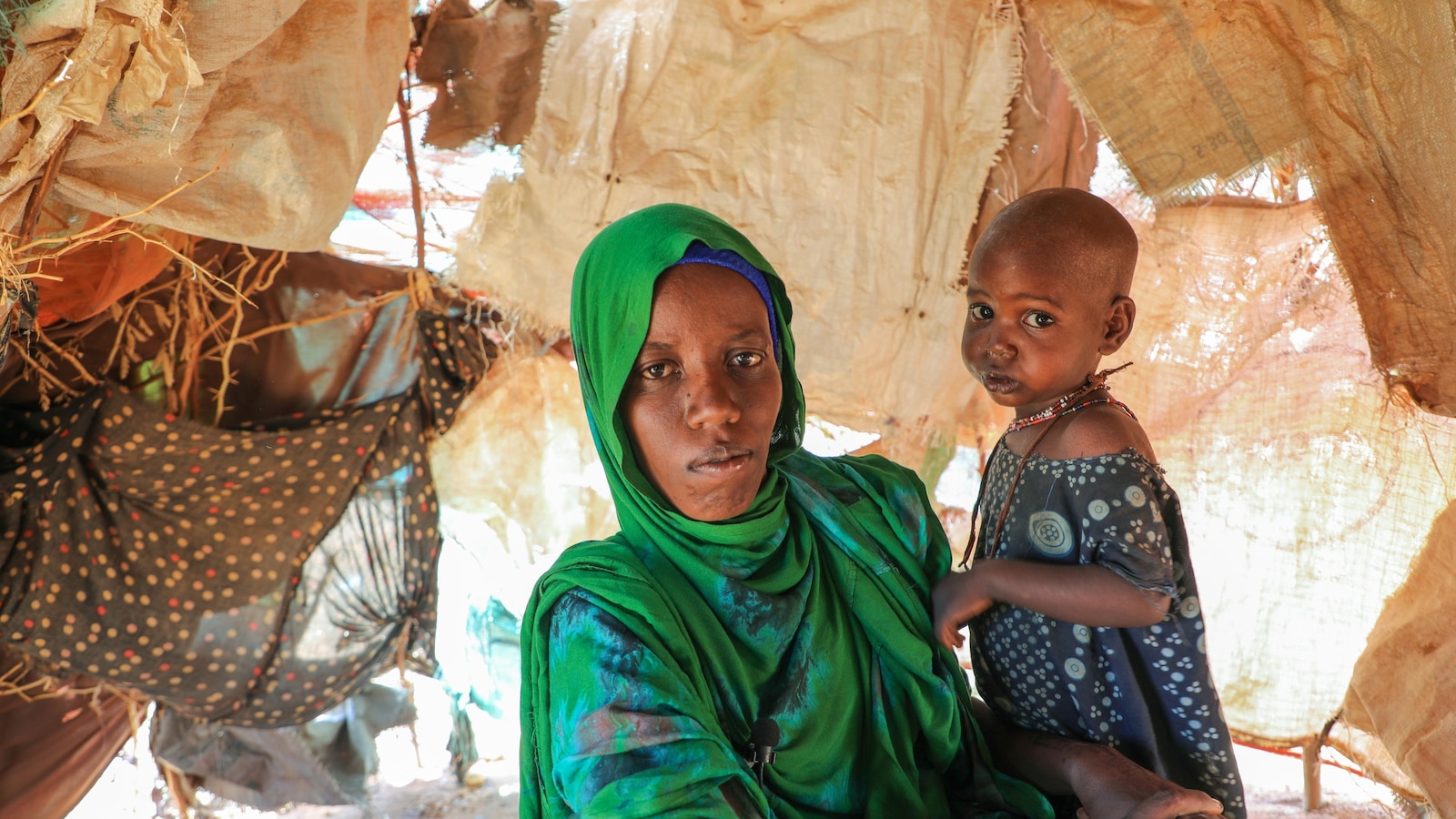
In the dusty outskirts of Dollow, a town in southern Somalia, thousands of families cling to survival in conditions that test the limits of human endurance. The Ladan displacement camp has become home to approximately 4,500 households who have fled the devastating consequences of four consecutive failed rain seasons. Their makeshift shelters—cobbled together from plastic sheets, torn fabric, sticks, and thorn branches—offer little protection from the harsh sun beating down on the arid landscape. Within these fragile structures, mothers cradle malnourished children, their minds consumed by a single, overwhelming priority: keeping their children alive. The sound of a crying child, which might seem distressing elsewhere, is actually a sign of hope here. Aid workers have learned that the most severely malnourished children lack even the energy to cry, their small bodies too depleted to produce tears or sounds of distress. Twenty-year-old widow Shamso Nur Hussein embodies the desperation shared by countless mothers in the camp. After losing all her farm animals to drought, she fled her village in the Bakool region with her three children and nothing else. Her cooking hearth—a simple arrangement of three stones surrounded by ash—stood cold when she spoke to journalists, evidence that no meal had been prepared there in some time. “Since morning we have only had black tea,” she explained, a statement that reveals the cruel arithmetic of survival in Ladan camp. For these displaced families, the geopolitical tensions playing out thousands of kilometers away in the Middle East, or the complex logistics of how UNICEF manages its supply chains, are irrelevant abstractions. Their world has narrowed to the fundamental question of whether their children will survive another day.
How the Iran War Is Creating Ripple Effects Across Africa
While the mothers of Ladan camp focus solely on their children’s survival, a conflict more than 3,000 kilometers away is making their already desperate situation even worse. The war involving Iran has disrupted global supply chains in ways that reach far beyond the Middle East, creating what Catherine Russell, UNICEF’s executive director, describes as a “shock to the system” for humanitarian operations in Somalia. During her visit to Dollow, Russell explained how the conflict has tangibly affected aid delivery: supplies are harder to obtain, and fuel costs have skyrocketed, creating additional barriers to helping those in need. The numbers tell a sobering story. UNICEF currently has $15.7 million worth of lifesaving supplies—including therapeutic food specially designed for malnourished children, vaccines to prevent disease outbreaks, and mosquito nets to protect against malaria—either in transit or being prepared for delivery to Somalia. However, all of these shipments now face significant uncertainty. The conflict has forced aid organizations to reroute supplies, creating backlogs and delays that could prove fatal for children already on the edge of survival. Transport costs, already a significant portion of humanitarian budgets, are projected to rise between 30% and 60%, with some routes experiencing cost increases of 100% or more. These aren’t just abstract financial figures—they translate directly into fewer supplies reaching fewer children, meaning more young lives at risk. The compounding effect of global instability on local crises demonstrates how interconnected our world has become, where a war in one region can quite literally determine whether a child in Somalia receives the nutrition needed to survive.
The Compounding Crisis: Funding Cuts and Facility Closures
As if drought, displacement, and disrupted supply chains weren’t enough, Somalia’s humanitarian crisis has been further exacerbated by significant reductions in international funding. Over the past year, more than 400 health and nutrition facilities across the country have been forced to close their doors, primarily due to cuts in U.S. funding. These closures have left countless communities without access to essential health services, creating medical deserts in areas where vulnerable populations desperately need support. Aid agencies warn that additional closures are likely if funding trends continue, potentially leaving even more Somalis without access to basic healthcare and nutrition services. The impact of these closures is immediately visible in facilities that remain open. At the hospital in Dollow, medical staff report a dramatic change in the severity of cases they’re treating. Liban Roble, a nutrition program coordinator, explained that the facility previously treated mainly “moderate cases” of malnutrition. Now, however, they’re receiving children in “extremely critical condition—severely malnourished, weak, and in some cases almost skeletal.” The hospital’s corridors tell the story: mothers sit shoulder to shoulder on narrow beds, holding frail children, some too weak to even whimper. Perhaps most alarming is Roble’s assessment of the hospital’s supply situation. Current stocks will only last until mid-to-late April. “If new stock doesn’t arrive, more children will deteriorate and potentially die,” he stated plainly. At the camp’s nutrition center, health workers do what they can with available resources, weighing children and dispensing a peanut-based therapeutic paste directly into their mouths. Nurse Abdimajid Adan Hussein describes this paste as a lifeline, a crucial intervention that can prevent the rapid decline of malnourished children whose weakened bodies make them dangerously vulnerable to pneumonia, diarrhea, and other illnesses that healthy children might easily overcome.
The Broader Context: Somalia’s Mounting Challenges
The humanitarian emergency unfolding in camps like Ladan doesn’t exist in isolation but rather as part of a larger, deeply complex crisis facing Somalia as a nation. Last month, the government in Mogadishu issued a stark warning: nearly 6.5 million people—roughly one-third of Somalia’s population of more than 20 million—face severe hunger as the drought continues to worsen. This alarming figure represents not just a humanitarian catastrophe but also a development crisis that threatens to undermine years of progress. The situation is further complicated by Somalia’s ongoing security challenges. The government continues to wage a long-running war against al-Shabab, an al-Qaida-linked militant group that controls significant territory across the country. This conflict diverts resources, disrupts agricultural production, makes aid delivery dangerous, and creates additional waves of displacement as families flee fighting. The Somali government finds itself fighting on multiple fronts simultaneously: against extremist militants, against climate-driven drought, and now against the indirect effects of global conflicts and reduced international support. According to the latest data from the Integrated Food Security Phase Classification, a global hunger monitoring group that provides standardized assessments of food crises, the outlook for Somalia’s children is particularly grim. The organization estimates that 1.84 million children under the age of five in Somalia are expected to suffer from acute malnutrition in 2026. This staggering figure represents not just a statistical projection but nearly two million individual young lives at risk, each one a child like those in Ladan camp, each one a son or daughter whose survival depends on whether sufficient aid reaches them in time.
Life on the Edge: Daily Survival in Displacement
The physical environment of Ladan camp reflects the precariousness of its residents’ existence. Rows of makeshift shelters stretch across the dusty landscape under the relentless sun, each one a testament to both human resilience and vulnerability. These structures, assembled from whatever materials displaced families could gather—plastic sheeting, scraps of fabric, sticks, and thorn branches—provide minimal shelter and no real protection from the elements. The camp’s deputy chairman, Abdifatah Mohamed Osman, reports that support for the camp’s residents has diminished dramatically. “We used to receive assistance from humanitarian agencies, but that stopped in September 2025,” he explained. Now, the limited support that does reach the camp consists primarily of therapeutic food for malnourished children, leaving other basic needs—shelter materials, clean water, sanitation facilities, and general food supplies—largely unmet. This reduction in comprehensive aid means that families like Shamso Nur Hussein’s are left to survive on almost nothing, with black tea sometimes representing the only sustenance available for an entire day. The children of Ladan exist in a state of perpetual vulnerability. UNICEF’s Catherine Russell, after witnessing conditions firsthand, summarized the situation starkly: “What we’re seeing is that children are really on the edge already.” This edge represents the thin line between survival and mortality, between a child weak with hunger and a child who has crossed into medical emergency territory. For aid workers and medical staff, the challenge is not just treating current cases but preventing the next wave of deterioration, knowing that their supplies are limited and that resupply is increasingly uncertain due to factors far beyond their control.
Looking Forward: An Uncertain Future for Somalia’s Children
The crisis in Somalia, exemplified by the desperate conditions at Ladan camp, represents a convergence of multiple global challenges: climate change manifesting as persistent drought, conflicts disrupting international supply chains, donor fatigue leading to funding cuts, and ongoing local security threats. Each of these factors alone would strain any nation’s capacity to respond; together, they create a perfect storm of humanitarian need that overwhelms available resources. Catherine Russell’s assessment that the Iran war and its effects on aid delivery represent “another problem that we have to try to deal with” captures the exhausting reality facing humanitarian workers: just as they adapt to one challenge, another emerges, and “more and more children will suffer” as a result. The mothers in Ladan camp don’t have the luxury of contemplating these broader geopolitical and economic forces. Their focus remains necessarily narrow, concentrated on the immediate question of their children’s survival. Yet their individual struggles are deeply connected to global systems—trade routes, funding decisions made in distant capitals, conflicts they have no part in, and climate patterns altered by emissions they contributed virtually nothing to producing. The therapeutic paste squeezed into children’s mouths at the nutrition center, the narrow hospital beds where mothers sit with skeletal children, the cold cooking hearths where no food is being prepared—these are the local manifestations of global failures. As stocks dwindle and the mid-to-late April deadline approaches when current supplies will run out, the question facing the international community is stark: will sufficient aid arrive in time, or will the world allow preventable deaths to occur in places like Ladan camp? For nearly two million Somali children expected to face acute malnutrition in 2026, the answer will quite literally determine whether they live or die.