

CBS Blocks Stephen Colbert’s Interview with Texas Senate Candidate: A Clash Over Free Speech and Political Balance
The On-Air Confrontation
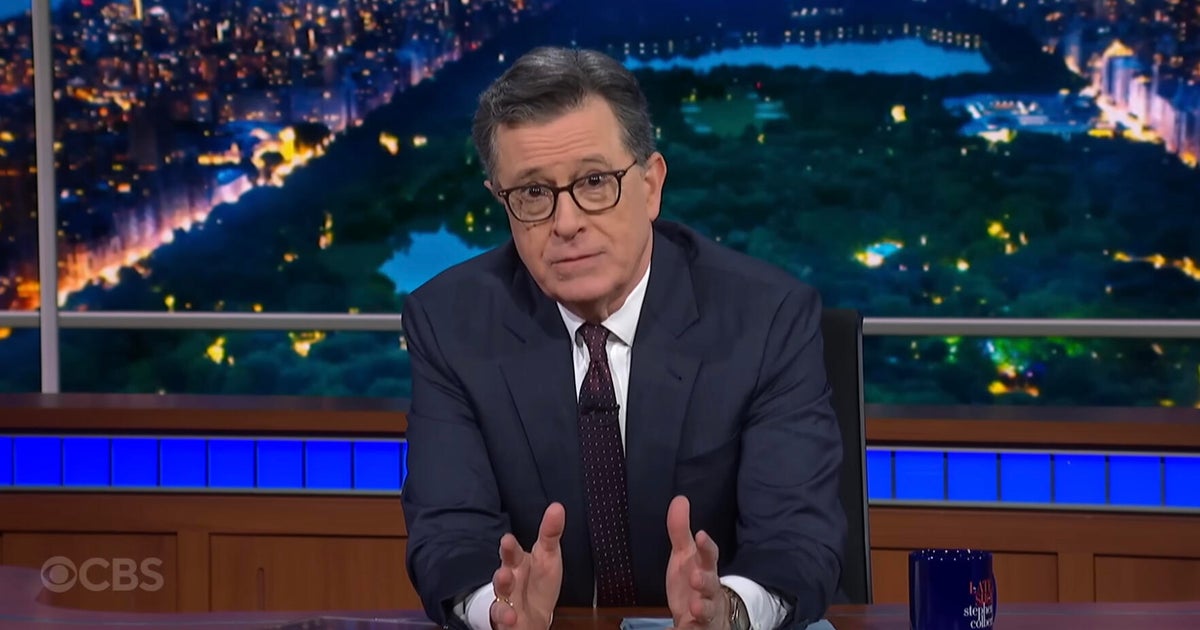
Stephen Colbert didn’t hold back during Monday night’s episode of “The Late Show” when he openly criticized his own network, CBS, for blocking an interview with Texas State Representative James Talarico from being broadcast on television. In a moment of rare transparency, Colbert told his studio audience that he had been instructed “in no uncertain terms” by the network’s lawyers not to feature Talarico on the show. What made the situation even more contentious was that Colbert was initially told he couldn’t even mention the fact that the interview had been censored. With characteristic defiance, the late-night host declared, “And because my network clearly doesn’t want us to talk about this, let’s talk about this.” The incident has sparked a broader conversation about political censorship, the role of federal regulations in entertainment programming, and the Trump administration’s relationship with media outlets that have been critical of the president.
The FCC Rule at the Center of the Controversy
The reason CBS provided for preventing the Talarico interview from airing relates to recent guidance from the Federal Communications Commission (FCC) regarding equal time requirements for political candidates. Last month, the FCC issued a notice reminding broadcasters that daytime talk shows and late-night programs must provide equal opportunities to opposing candidates when they feature political figures on their airwaves. This guidance is based on a decades-old federal law that requires FCC-licensed broadcasters who allow a political candidate to appear on their programming to offer “equal opportunities” to all other candidates running for the same office. However, the law does include exemptions for “bona fide newscasts” and news interviews. For years, late-night talk shows operated under the assumption that they qualified for these exemptions, but the FCC’s recent notice has challenged that interpretation. CBS claimed in their statement that they weren’t prohibiting the interview entirely but rather providing “legal guidance” about the equal-time rule implications, since Talarico is competing against other candidates including U.S. Representative Jasmine Crockett. The network said they presented options for how equal time could be fulfilled, but “The Late Show” chose instead to post the interview on YouTube, where FCC regulations don’t apply. While CBS couldn’t give viewers a direct URL or QR code due to network restrictions, Colbert encouraged his audience to find the interview on the show’s YouTube page.
The Political Context and Players Involved
James Talarico, a Democrat who has served as a Texas state representative since 2018, is currently campaigning in the Democratic primary for a U.S. Senate seat. He faces U.S. Representative Jasmine Crockett and businessman Ahmad Hassan in the primary, with early voting having begun on Tuesday. The winner of this contest will face the Republican primary victor, where longtime GOP Senator John Cornyn is being challenged by Texas Attorney General Ken Paxton and U.S. Representative Wesley Hunt. Both primaries could potentially go to runoffs if no candidate receives at least 50% of the vote. The timing of this controversy is particularly significant given Texas’s political landscape and the national attention on whether the traditionally red state might be shifting politically. Talarico himself framed the CBS decision in explicitly political terms, sharing a clip on social media claiming, “This is the interview Donald Trump didn’t want you to see. His FCC refused to air my interview with Stephen Colbert. Trump is worried we’re about to flip Texas.” This statement reflects the broader narrative among Democrats that the FCC’s renewed enforcement of equal-time rules is less about fairness and more about suppressing voices critical of the Trump administration.
The FCC’s Position and Political Motivations
The controversy has revealed significant divisions within the FCC itself regarding the proper application of equal-time rules to entertainment programming. FCC Chair Brendan Carr, who was appointed by President Trump and is considered an ally of the administration, defended the policy on social media platform X, writing: “For years, legacy TV networks assumed that their late night & daytime talk shows qualify as ‘bona fide news’ programs – even when motivated by purely partisan political purposes. Today, the FCC reminded them of their obligation to provide all candidates with equal opportunities.” However, FCC Commissioner Anna Gomez, who was nominated by former President Joe Biden, sharply criticized CBS’s decision to comply with this interpretation of the rules. Gomez stated that CBS is protected under the First Amendment “to determine what interviews it airs,” adding, “That makes its decision to yield to political pressure all the more disappointing. Corporate interests cannot justify retreating from airing newsworthy content.” This split within the FCC reflects the broader partisan divide over media regulation and the extent to which government agencies should influence programming decisions at major networks. Colbert himself didn’t mince words about what he believes is the real motivation behind the FCC’s stance, addressing Chairman Carr directly during his monologue: “Well, sir, you’re chairman of the FCC, so FCC U, because I think you are motivated by partisan purposes yourself.”
Colbert’s Fiery Response and Broader Implications
Stephen Colbert used his platform to deliver a scathing critique not just of CBS but of what he perceives as an attempt by the Trump administration to silence critics through regulatory pressure. “Let’s just call this what it is: Donald Trump’s administration wants to silence anyone who says anything bad about Trump on TV, because all Trump does is watch TV, OK? He’s like a toddler with too much screentime. He gets cranky and then drops a load in his diaper,” Colbert told his audience. This blunt assessment reflects growing concerns among media professionals and free speech advocates that equal-time rules, originally designed to ensure fairness in political broadcasting, are being weaponized to chill critical coverage of the administration. The incident comes at a particularly sensitive time for Colbert, who announced he will be wrapping up his final season of “The Late Show” in May when CBS retires the late-night franchise. While some observers have suggested the cancellation might be politically motivated given Colbert’s consistent criticism of Trump and his administration, CBS has maintained that the decision was purely financial. Nonetheless, the timing raises questions about whether networks are becoming more cautious about hosting voices critical of the current administration due to regulatory pressures and potential consequences from federal agencies.
The Future of Political Commentary in Late-Night Television
This controversy highlights the precarious position of late-night comedy shows that have increasingly become venues for political commentary and guest appearances by political figures. The question of whether these programs should be considered entertainment or news has significant implications for how they’re regulated and what content they can freely broadcast. Networks and individual shows have come under repeated fire from President Trump, who has at times called for broadcasters to lose their FCC licenses over what he characterizes as politically biased programming. The CBS-Colbert situation may represent a test case for how other networks will handle similar situations going forward. Will they risk potential FCC sanctions and the logistical burden of providing equal time to numerous candidates, or will they simply avoid featuring political candidates altogether on entertainment programs? The decision to post the Talarico interview on YouTube represents a workaround that may become more common—using digital platforms not subject to FCC regulation to present content deemed too risky for traditional broadcast. However, this solution raises its own concerns about accessibility and whether important political discourse is being pushed to platforms that may reach smaller or different audiences than traditional television. As the 2026 midterm elections approach and political tensions remain high, the balance between regulatory fairness, corporate caution, and freedom of expression in entertainment media will likely continue to be contested terrain, with cases like this serving as important precedents for how political candidates can engage with popular culture and reach voters through non-traditional media appearances.