



The Legacy of Surya Bonaly: From Penalty to Pioneer
Breaking the Ice with Grace and Defiance
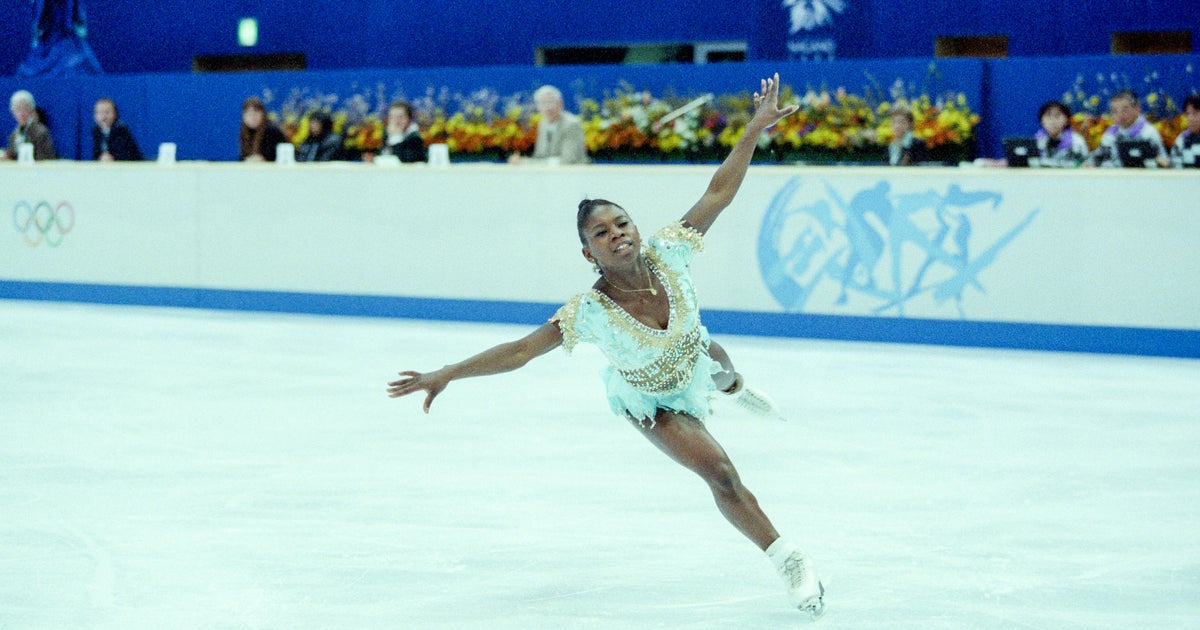
The moment remains etched in Olympic history—a figure skater launching into the air, executing a breathtaking backflip with legs extended, before landing flawlessly on a single blade. The crowd erupted in thunderous applause, stunned by the audacity and beauty of what they’d just witnessed. But this wasn’t a recent triumph at the Milano Cortina Winter Olympics, nor was it performed by America’s current skating sensation, Ilia Malinin. Instead, this groundbreaking moment occurred over two decades ago at the 1998 Nagano Winter Olympics, performed by French figure skating legend Surya Bonaly—and rather than earning her praise from judges, it resulted in a penalty. The backflip was then banned from competition, yet Bonaly chose to perform it anyway during what would be her final Olympic performance, creating a moment that would reverberate through the sport for generations. Today, as the ban has been lifted and young skaters like Malinin incorporate the move into their routines to widespread acclaim, Bonaly’s pioneering spirit and the price she paid for innovation deserve recognition and celebration.
A Courageous Choice in Nagano
At the 1998 Winter Olympics in Nagano, Japan, Surya Bonaly faced a pivotal moment in her career. The 24-year-old French skater was competing in her third and final Winter Games, still recovering from a ruptured Achilles tendon that had severely compromised her performance potential. Starting the competition in sixth place and knowing that a medal was essentially out of reach, Bonaly made a decision that would define her legacy far more than any podium finish could have. In those final moments on Olympic ice, she executed the first backflip by a woman in Olympic figure skating history—and she landed it on just one skate, making the feat even more remarkable. The technical difficulty and sheer athletic prowess required for this move cannot be overstated, yet the judges, bound by the International Skating Union’s rules that had banned backflips since 1977, had no choice but to dock her points. She finished in tenth place, but she had given the world something unforgettable: a moment of pure athleticism, artistry, and defiant courage that transcended competition scores.
The Long Shadow of a Ban and the Price of Being First
The backflip had been outlawed in figure skating since 1977 by the International Skating Union, which governed both figure and speed skating worldwide. Officials deemed the move too dangerous and argued that it violated fundamental figure skating principles, particularly the requirement of landing on one skate during jumps—ironically, exactly what Bonaly managed to do with her version of the move. The first skater to land a backflip in competition was American Terry Kubicka in 1976, just one year before the ban took effect, but he landed on both feet. For nearly half a century, the prohibition stood, effectively labeling anyone who attempted the move in competition as a rule-breaker rather than an innovator. Bonaly, reflecting on her experience, acknowledges the difficult position she occupied in the sport: “I came really early. I was always ahead of my time. So, people didn’t like that. Also, maybe jealousy, a sense of jealousy, a sense of fear—being next to me or competing with me.” Her words reveal the complex dynamics at play—not just about athletic rules, but about who gets to push boundaries and how they’re perceived when they do. The ban was only lifted two years ago, opening the door for athletes like Malinin to perform the move without penalty, receiving the celebration that Bonaly was denied.
Race, Gender, and the Double Standard in Figure Skating
The contrast between how Bonaly was treated and how contemporary skaters are celebrated for the same move has sparked important conversations about race and gender in figure skating. Bonaly, a Black woman in a predominantly white sport, faced criticism for being “brash” and “rebellious” when she performed her signature backflip. Today, Ilia Malinin, a white male skater, is praised as innovative and daring for incorporating the same move into his routines. Many supporters and observers have pointed to this disparity as evidence of the racism and sexism that have long pervaded figure skating. Bonaly herself reflected on the lack of representation she faced as a young athlete: “I didn’t have much example” to follow, she told CBS News. “I didn’t have that much encouragement beside my own, my parents and my team. Thirty years ago, people have more narrow minds, so we were not aware about what’s going on, how to treat or feel good being near a person of color.” She did, however, find inspiration in Debi Thomas, another Black figure skater who won a bronze medal at the 1988 Olympics when Bonaly was just 14 years old. Bonaly would go on to surpass Thomas in total major titles, claiming ten French national championships, five European titles, and three world silver medals, though an Olympic medal eluded her. Despite never standing on an Olympic podium, Bonaly’s impact on the sport—in terms of creativity, diversity, and acceptance—has been immeasurable.
Grace in Victory and in Being Surpassed
What’s perhaps most remarkable about Surya Bonaly today is her complete absence of bitterness about seeing younger skaters celebrated for the move that once cost her dearly. Now 52 years old and working as a coach at Minnesota’s Shattuck-St. Mary’s Figure Skating Center of Excellence, Bonaly speaks with genuine warmth about Malinin’s achievements. “I think it’s great,” she told CBS News, praising the 21-year-old American for “wanting to go further, going beyond, you know, the rules. I mean, that guy is amazing. So good for him to even try to go further, and doing the backflip.” She sees her role in the sport’s evolution with clarity and pride: “Because somebody had to start. It’s already difficult to be the first one for anything you try. I was a pioneer… great… (but) was not really welcome. But now I opened the doors or broke the ice for many people. And I think that is even more important.” This perspective reveals Bonaly’s true character—she understands that being first often means paying a price, but she values the path she created for others more than the recognition she might have received. The backflip has even been dubbed the “Bonaly backflip” in recognition of her contribution, a fitting tribute to the woman who risked penalty to push the boundaries of what was possible in her sport.
A Legacy Beyond Medals and a Message for Future Generations
Today, Surya Bonaly works not only as a coach but as a motivational speaker, sharing the lessons she learned from her groundbreaking career with new generations of athletes and dreamers. Her message emphasizes authenticity, courage, and humanity above all else. “It’s already better to be the first one to try something, and people will be able to look up to you and say ‘you’re being copied.’ I never copy anyone,” she says with evident pride. But her advice goes deeper than athletic achievement. “I believe that this new generation can do great things, but you have to keep your head over your shoulders. Stay cool, and stay human. Because even though you’re a champion or celebrity, you still have to be a nice person on a daily basis. It’s very important.” Perhaps most poignantly, she reminds aspiring athletes that their worth isn’t defined by medals or titles: “Even if you do not have a world title or medal around your neck, it still does not define you. You are still a great person.” These words carry particular weight coming from someone who never won an Olympic medal yet left an indelible mark on her sport. Meanwhile, Malinin has embraced a similar philosophy about pushing boundaries over winning. After falling out of medal contention at a recent competition, he reflected, “I think it’s more important for me to just push the sport forward. A lot of the time, it’s not a lot of people (who) talk about the Olympic champions anymore, and it’s more about what image you leave for the sport.” He plans to continue performing the backflip, calling it “honestly just a really big wow factor.” In this way, the torch Bonaly lit in Nagano continues to burn bright, carried forward by athletes who understand that true legacy is measured not in points or medals, but in the doors we open and the possibilities we create for those who follow.